In short
- A food station (in Italian isola, angolo or postazione) is a point of the buffet dedicated to one type of food or drink.
- The most requested in Rome: cheese and cured meats, fried food, raw seafood, pasta, carving, desserts, bar, and more and more often sushi.
- For space, industry guides suggest about three metres of buffet per twenty guests, which can be split into several stations.
- Every station needs staff: industry guides recommend at least two people per station.
Food stations are how most wedding drinks receptions and corporate buffets are run. Instead of one long table with everything on it, guests find several points, each with a theme. It works if you choose the right stations for your event and put them in the right place.
What a food station is and why it works
A station is a self-contained point: a table or counter, the equipment it needs (ice, griddle, burners, slicer), one or more staff. Guests arrive, help themselves or are served, and move on to the next.
Compared with a single buffet, it has three practical advantages:
- shorter queues, because guests spread over several points;
- fresher food, because each station is topped up in small amounts;
- more visible choice, because each theme has its own space.
The downside is cost: more stations means more equipment and more people.
The most common stations
| Station | What it offers | Hot or cold | Typical staff |
|---|---|---|---|
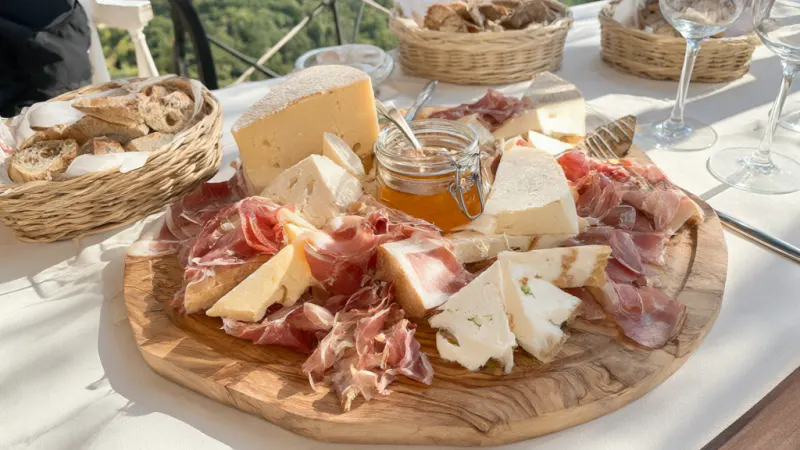
| Cheese and cured meats | Pecorino romano, ricotta, guanciale, prosciutto, porchetta | Cold | One or two slicers |
| Raw seafood and oysters | Oysters, tartares, carpaccios, raw fish | Cold, on ice | Oyster shucker, counter attendant |
| Roman fried food | Supplì, courgette flowers, artichokes, salt cod fillets | Hot | Fry cook, server |
| Live pasta | Cacio e pepe in the wheel, amatriciana, gricia | Hot | Cook in view, helper |
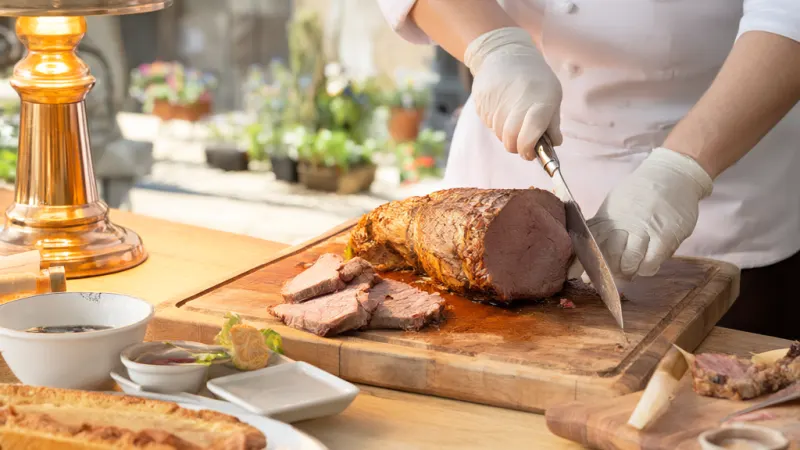
| Carving | Porchetta, roast beef, lamb carved to order | Hot or warm | Carver |
| Sushi | Nigiri, uramaki, sashimi | Cold, refrigerated | One or more sushi cooks |
| Desserts and fruit | Mini pastries, seasonal fruit, gelato | Cold | One attendant |
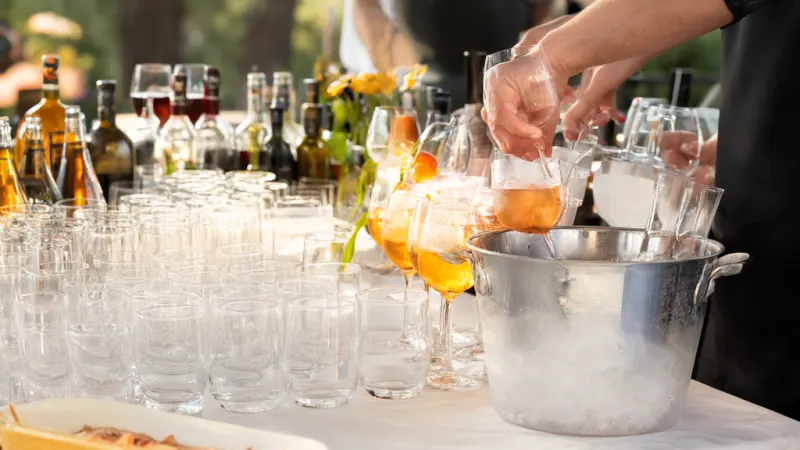
| Bar and cocktails | Bubbles, cocktails, alcohol-free drinks | Cold | One or more bartenders |
There are also more niche stations: pizza bianca and mortadella, buffalo mozzarella cut to order, vegetables and pinzimonio (raw vegetables with olive oil for dipping), bread and Lazio olive oil. Many are variations on the eight above.
How many stations to choose
The right question isn't "how many" but "what are they for". Three typical cases:
- Aperitivo before a served dinner. The stations are a starter. Two or three are almost always enough, ideally cold or light.
- Long aperitivo before dinner. If it lasts more than an hour and a half, add a hot station, such as fried food, so guests aren't left hungry.
- Apericena or cocktail dinatoire. The stations are the meal. You need more hot stations, a pasta station and a dessert station.
For space there's a useful reference. Guides on buffet receptions suggest about three metres of table per twenty guests. With 120 guests that's about eighteen metres, which you can split into three or four stations. It's an order of magnitude: the caterer adapts it to the menu and the venue.
For food quantities per person, there's a dedicated guide on how much food per person.
Table: stations by type of event
The combinations below are approximate: they come from the most common formats, not from a rule. Adapt them to guests, season and budget.
| Event | Suggested stations | Notes |
|---|---|---|
| Wedding, aperitivo before dinner | Cheese and cured meats, fried food, raw seafood or sushi, bar | Dinner follows: light stations |
| Wedding, apericena instead of dinner | The above, plus pasta and carving, desserts | Hot stations needed |
| Standing corporate dinner | Pasta, carving, cheeses, bar | Dishes to eat with one hand |
| Opening or cocktail reception | Fried food, cheeses, bar | Short event, few themes |
| Private party in a villa or farmhouse | Fried food, pasta, carving, desserts | Very convivial stations |
| Christening or first communion | Cheeses, pasta, desserts and fruit | Think of children and grandparents |
For the wedding aperitivo in detail, read the guide to the wedding aperitivo.
Layout and flow
Where you put the stations matters almost as much as what's on them.
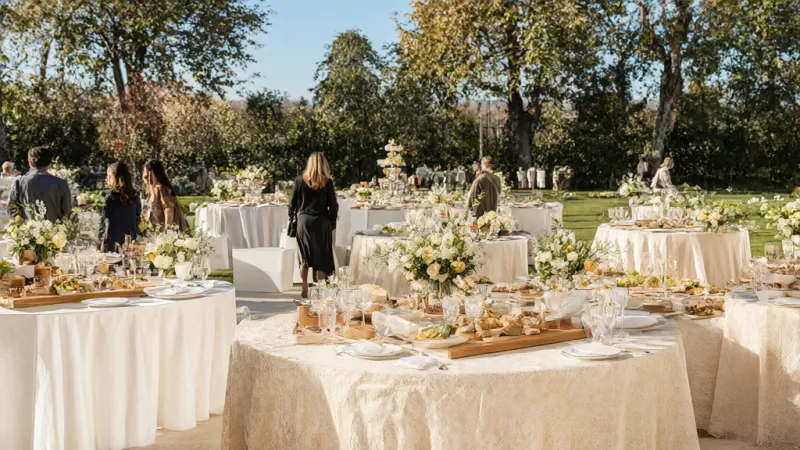
- Spaced apart. If stations are next to each other, the queues add up. Spread them out, even on two sides of the garden.
- The bar not by the entrance. Guests arrive and stop at the first point they find. If it's the bar, that's where the bottleneck forms.
- Hot stations near the back area. Fried food, pasta and carving need power, gas or supplies from the kitchen. Put them near the service point.
- Raw seafood and sushi in the shade. Away from the sun and the fryers.
- Seating nearby. Industry guides suggest seating for about half the guests at a buffet. Older guests and those with children look for a chair straight away.
In a villa on the Via Appia Antica or a farmhouse in the Castelli Romani there's usually space. On a terrace in the centre or in a historic hall there isn't: there, fewer stations, well spaced, and more waiters passing trays work better.
Staff for each station
Industry guides recommend at least two people per buffet station: one behind the counter and one going back and forth to the kitchen. Stations with a cook in view may need more, for example a cook and a helper.
So three stations means at least six people, plus those clearing among the guests. For ratios with other formats, read the guide on how many waiters you need.
Allergens and labels
Each station must have a label with the name of the dish and its allergens. EU Regulation 1169/2011 requires allergen information for unpackaged food too. Raw seafood, fried food and dessert stations have many: fish, crustaceans, molluscs, gluten, milk, eggs, nuts. Ask the caterer how they communicate them and check the current rules with the official sources.
Questions to ask the caterer
- How many stations do you suggest for our number of guests and the length of the event?
- Is each station priced separately or included in the per-person price?
- How many people are behind each station?
- Which stations need power, gas or water?
- Where would you put them at our venue?
- How do you top up the stations during the event?
- How do you show allergens at the stations?
- Is there a plan B if it rains or it's too hot for outdoor stations?
To choose
Start from the role of the aperitivo in the day, then pick two or three stations that reflect your idea of the party, and add others only if they're needed. If you don't know where to start, the find a caterer tool helps you choose by type of event, and the wedding catering section lists those who work at weddings. Once you've decided on the stations, request a quote with one line for each: comparing will be easier.
Sources
- Regulation (EU) No 1169/2011, EUR-Lex: https://eur-lex.europa.eu/legal-content/IT/TXT/?uri=CELEX:32011R1169