In short
- A carving station is a point where meat is carved on the spot, in front of the guests.
- The most common meats: roast beef, porchetta di Ariccia IGP, turkey or oven-baked ham and, in spring, abbacchio romano IGP (Roman milk-fed lamb) for a Lazio touch.
- You need a carving board, knives, heat lamps or hot plates to keep the right temperature, and an experienced carver.
- Always plan an alternative for guests who don't eat pork or meat.
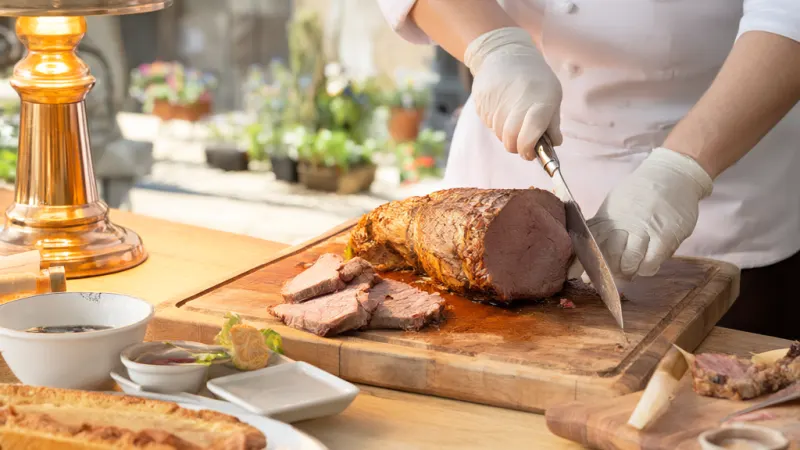
A carver with a long knife slicing a roast beef or a whole porchetta in front of the guests: with porchetta, in Rome it recalls the fraschette (simple country taverns) of the Castelli and the village food fairs. A carving station brings that conviviality to a wedding, a villa party or a standing corporate dinner. It works if the meat is right, the carving is quick and the temperature is correct.
The meats at the station
| Meat | How it's served | Serving temperature | Note |
|---|---|---|---|
| Porchetta di Ariccia IGP | Thinly sliced, on the plate or in bread | Warm or room temperature | IGP under EU Reg. 567/2011 |
| Roast beef | Thin slices, pink | Warm or cold | With sauces and vegetables |
| Abbacchio romano IGP | Roast leg or shoulder | Hot | A spring and Easter dish |
| Roast turkey or chicken | Slices | Hot or warm | Pork-free alternative |
| Oven-baked ham | Slices | Warm | A milder alternative |
| Whole roasted vegetables | Cauliflower, pumpkin, celeriac | Hot | For vegetarians |
Porchetta di Ariccia is registered as an IGP (Protected Geographical Indication) under Implementing Regulation (EU) No 567/2011. The product specification, published by ARSIAL, the Lazio agricultural agency, requires oven cooking and seasoning with salt, pepper, garlic and rosemary. If the caterer presents it as IGP, ask for the mark or the producer's invoice.
Abbacchio romano is an IGP too. It's the meat of the Roman spring: for an April wedding or a party around Easter it's the choice most tied to the area. If the rest of the menu is Roman, you'll find the other dishes in the guide to the Roman cuisine catering menu.
Equipment and space
A carving station is simple, but it can't be improvised. You need:
- a large, stable carving board;
- suitable knives and somewhere to wash or replace them;
- heat lamps or a hot plate, for meats served hot;
- a surface for plates, bread and sauces;
- power, if electric lamps or plates are used.
The station takes up less space than a pasta station, but the meat arrives from the kitchen or the caterer's premises already cooked, so you need a back area to hold it. In a villa on the Via Appia or a farmhouse in the Sabina hills, the station works well outdoors. In a historic hall, ask the venue whether it allows lamps and hot plates.
Temperatures and safety
Cooked meat is a sensitive food. Presidential Decree 327/1980 (Article 31) sets a temperature of +60 to +65 °C until service for cooked foods to be eaten hot. Meats served warm or cold, such as porchetta and roast beef, must be handled under the caterer's food safety (HACCP) procedures. Check the current text on Normattiva and ask the caterer how they meet these rules.
What to ask in practice:
- how long a joint stays on the station before it is replaced;
- how the meat is transported from the kitchen;
- whether hot meats are under a lamp or on a hot plate.
Bread, sauces and sides
A carving station becomes richer with a few well-chosen accompaniments:
- bread: rosette rolls, pane casereccio di Genzano IGP, pizza bianca (Roman plain flatbread). Porchetta in bread is a classic;
- sauces: salsa verde, mustard, a red wine reduction for the roast beef;
- sides: sautéed chicory, roast potatoes, artichokes in spring, puntarelle in winter;
- wine: a red from Lazio, such as Cesanese. Read the guide to Lazio wines for events.
Portions and quantities
There is no official source for carving stations. The estimate is approximate and depends on:
- whether the station is part of an aperitivo before a dinner, or the main dish of an apericena (an aperitivo that replaces dinner);
- how many other stations there are;
- whether the meat is served in bread (smaller portions) or on the plate.
Two things to know when you read a quote:
- meat loses weight when cooked;
- bones, fat and crackling are not all served.
So ask the caterer for the grams served per person, not the raw weight of the joint. For main-course grams at a full buffet, read the guide on how much food per person.
Staff
At least one carver, ideally with a helper who portions, plates and keeps the bread topped up. Carving is a craft: thin, even slices mean more portions and less waste. Ask whether the carver is one of the caterer's cooks.
Alternatives and diets
Porchetta is pork. Some guests don't eat pork for religious or personal reasons, others don't eat meat. Plan:
- a second joint without pork, such as roast beef or turkey;
- a plant-based station or whole roasted vegetables, served like the meat;
- for kosher and halal: certified meat, separate preparation and service. Read the guide to kosher catering.
Allergens
Meat itself is not among the 14 allergens in EU Regulation 1169/2011, but sauces and sides are: mustard, celery, gluten in the bread, milk in sauces, sulphites in wine reductions. Labels are needed here too.
Questions to ask the caterer
- Which meats do you offer for the station? From which producer?
- Is the porchetta di Ariccia IGP? Can I see the mark?
- How do you keep the meat at temperature at the station?
- How long is a joint on display before it is replaced?
- How many grams served per person do you plan?
- Who carves? How many people are at the station?
- Which bread, sauces and sides are included?
- What pork-free and plant-based alternative do you offer?
- Does the station need power?
To finish
A carving station is a simple, convivial way to serve meat at an event, as long as the carving is quick and the temperature is right. To see how it fits with the other stations, read the guide to buffet food stations. For a villa or garden party, look at the catering for private parties section, then request a quote with the station on a separate line.
Sources
- Implementing Regulation (EU) No 567/2011 (Porchetta di Ariccia IGP), EUR-Lex: https://eur-lex.europa.eu/eli/reg_impl/2011/567/oj
- ARSIAL, Porchetta di Ariccia IGP product specification: https://www.arsial.it/wp-content/uploads/2025/06/PorchettaAricciaIGP.pdf
- Abbacchio Romano IGP, eAmbrosia register: https://ec.europa.eu/agriculture/eambrosia/
- Presidential Decree No 327/1980, Normattiva: https://www.normattiva.it
- Regulation (EU) No 1169/2011, EUR-Lex: https://eur-lex.europa.eu/legal-content/IT/TXT/?uri=CELEX:32011R1169