In short
- A Roman wedding menu works if you follow the season: artichokes in spring, courgette flowers in summer, mushrooms and chestnuts in autumn, broccoli and puntarelle in winter.
- Trattoria dishes need rethinking in format: tasting portions, pasta tossed in front of the guests, mains that are easy to serve.
- Lazio's protected-origin products (Pecorino Romano DOP, Abbacchio Romano IGP, Porchetta di Ariccia IGP) give the menu a clear provenance.
- Always try the dishes at the tasting, in real portions.
You want a wedding menu that tastes of Rome without feeling like Sunday lunch in a trattoria. It can be done: Roman and Lazio cooking has dishes for every stage of the reception. The key is choosing the right ones for the season and for the type of service.
It is one choice among many: caterers in Rome also offer seafood, creative or international menus, and many couples add just a few Roman dishes to a different menu. To compare styles, see the wedding menu examples.
Where to start: format and number of courses
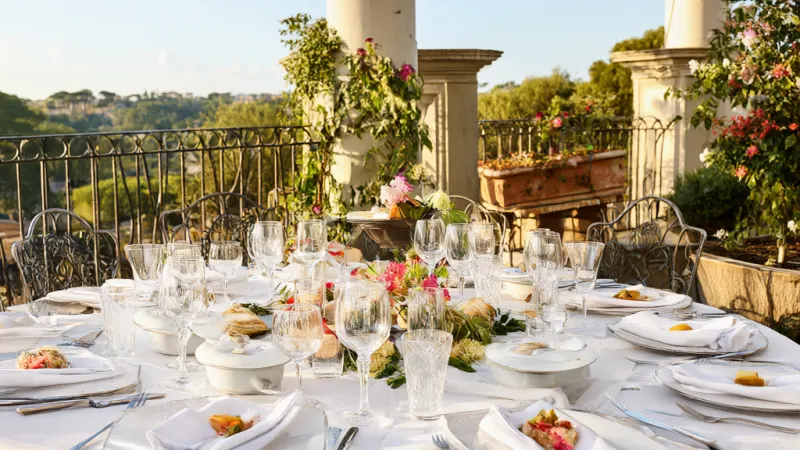
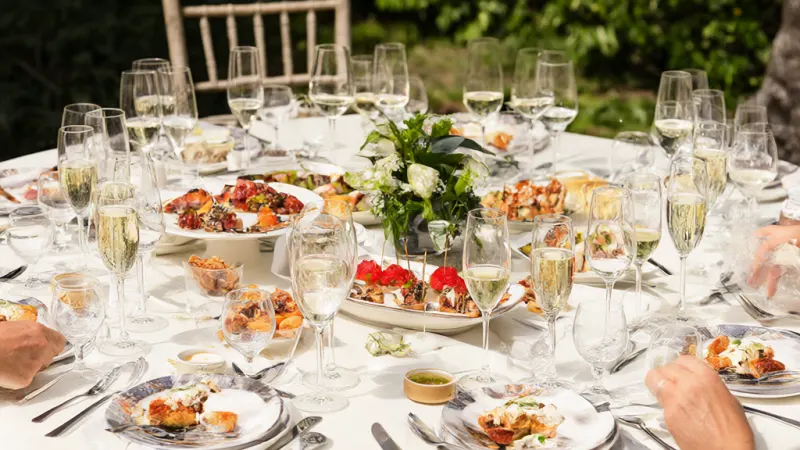
Decide the format before the menu. A seated service, a buffet or themed food stations change the dishes you can offer.
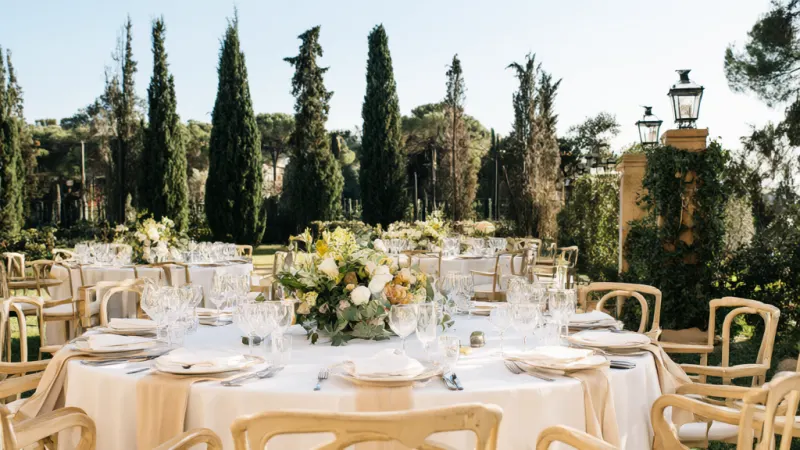
- Seated service: ideal for creamy pasta dishes and plated mains. Predictable timings.
- Themed stations: perfect for Roman street food (supplì, pizza bianca, porchetta) and for cacio e pepe made in front of the guests.
- Mixed format: aperitivo at stations, seated dinner, desserts as a buffet. It is the most common format at Roman weddings.
On the number of courses, common sense applies: after a generous aperitivo, two pasta dishes in tasting portions and one main are enough. Better a few courses done well than a parade of lukewarm plates.
The menu season by season
The table brings together typical local dishes and produce. It is not a fixed menu: it is a starting point for talking to the caterer.
| Season | Aperitivo | Pasta and first courses | Mains | Sides |
|---|---|---|---|---|
| Spring (Mar-May) | Mini Jewish-style artichokes, broad beans and pecorino | Gricia with artichokes, ricotta and pea ravioli | Roast or grilled abbacchio | Vignarola, sautéed chicory |
| Summer (Jun-Aug) | Courgette flowers with mozzarella and anchovy, supplì | Cacio e pepe spaghetti with courgettes, tonnarelli with tomato | Fish from the coast, chicken with peppers | Roman courgettes, panzanella |
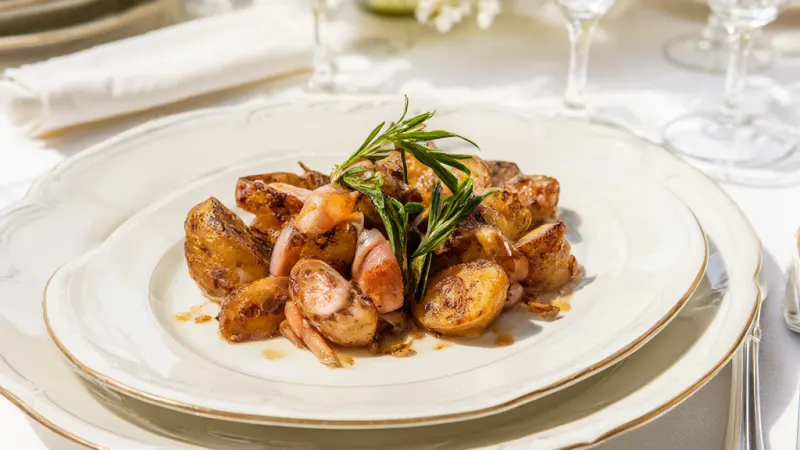
| Autumn (Sep-Nov) | Amatriciana supplì, bruschetta with new-season olive oil | Fettuccine with mushrooms, amatriciana | Saltimbocca alla romana, porchetta di Ariccia | Rosemary potatoes, sautéed mushrooms |
| Winter (Dec-Feb) | Meatballs in tomato sauce, pizza bianca with mortadella | Broccoli and skate soup served in a cup, carbonara | Boned oxtail stew (coda alla vaccinara), abbacchio | Puntarelle, Romanesco broccoli |
One useful fact about the Roman artichoke: according to Turismo Roma it is available from January to May, at its peak in March and April. For an April wedding it is the natural star. For a fuller calendar of produce, read the guide to the seasonal menu in Rome.
The aperitivo: the most Roman moment
Roman food shines at the aperitivo, the drinks-and-nibbles hour before dinner, because so much of it is made to be eaten with your hands.
- Supplì: fried rice balls, classic with tomato sauce, or cacio e pepe or amatriciana. They should be fried on site or just before: a cold supplì loses everything.
- Filled pizza bianca: with mortadella, with porchetta di Ariccia IGP, with figs in summer.
- Pecorino Romano DOP in shavings with honey, or with fresh broad beans in May, as Romans do on the first of May.
- Jewish-style fried dishes: artichokes in season, salt cod fillets, courgette flowers. Roman Jewish cooking is part of the history of the Ghetto and makes a good story to tell your guests.
For details on quantities, stations and timing there is a dedicated guide to the wedding aperitivo.
The pasta: the caterer's real test
Cacio e pepe, gricia, amatriciana and carbonara are the four pasta dishes everyone knows. That is exactly what makes them hard: Roman guests have something to compare them with.
What works at a wedding:
- Tossed in front of the guests. Cacio e pepe finished in a wheel of pecorino or in pans at a station solves the problem of pasta drying out.
- Tasting portions. Two small pasta courses are worth more than one full plate, especially if dinner is long.
- Short or sturdy shapes (rigatoni, mezze maniche, tonnarelli) hold up better during service than thin spaghetti.
A note on carbonara: the egg needs precise cooking. Ask the caterer how they handle it for large numbers and taste it at the menu trial.
The mains: easy to serve
The Roman mains most suited to a reception are the ones that portion well:
- Abbacchio: Abbacchio Romano IGP is Lazio's milk-fed lamb. Boned and served in slices, it avoids bones at the table.
- Saltimbocca alla romana: ready-made portions, quick to cook.
- Porchetta di Ariccia IGP: excellent at a station or carved late in the evening.
- Fish from the coast: from Fiumicino to Anzio and Gaeta. Useful if you want a seafood menu with Lazio roots.
Coda alla vaccinara and tripe are loved by Romans but divide everyone else. If you want them, offer them as a tasting at a station, not as a main for everyone.
Roman desserts at the end of dinner
Alongside the wedding cake, traditional desserts work well as a buffet:
- Maritozzi with cream in mini size;
- ricotta and sour cherry tart, linked to the traditions of the Ghetto;
- bignè di San Giuseppe (cream puffs), if the wedding falls in March;
- ciambelline al vino (wine biscuits) with a glass of sweet wine from the Castelli.
More ideas in the guide to Roman desserts for events and, for the cake and the confettata (the sugared-almond table), in the one on wedding cake and confettata.
Lazio wine at the table
A Roman menu calls for local wines. Frascati and the other whites of the Castelli Romani go with fried dishes and pasta; Cesanese del Piglio is a red that suits abbacchio. Ask the caterer whether they list Lazio wines or whether you can bring your own, and at what cost. Read more in the guide to Lazio wines for events.
Allergies and diets: don't leave them out of a Roman menu
Roman cooking uses a lot of pecorino, eggs, guanciale and offal. That means lactose, eggs and pork in many dishes. Plan alternatives for guests who don't eat pork, for vegetarians and for coeliacs.
EU Regulation 1169/2011 requires anyone serving food to provide information on the 14 allergens, even for dishes that are not packaged. Ask for the menu's allergen matrix and check the current requirements on the Italian Ministry of Health website. For coeliac, vegan and kosher menus, read the guide to special diets.
Questions to ask the caterer
- Which Roman dishes have you already served at weddings, and for how many guests?
- Is the pasta finished on site or does it arrive from your kitchen?
- Are the aperitivo fried dishes made on site? With what equipment?
- Where do the abbacchio, pecorino and porchetta come from? Are they protected-origin products?
- Does the menu change if the date moves into another season?
- What alternatives do you offer for guests who don't eat pork, dairy or gluten?
- Does the tasting use the same portions and plating as on the wedding day?
- Can I bring Lazio wines I have chosen myself? Is there a corkage fee?
To finish
A well-made Roman menu tells the story of the place where you marry, dish by dish. To see the caterers who work at weddings, browse the wedding catering section and the guide to the Roman cuisine catering menu. Once you have a date and a guest count, request a quote from two or three caterers with the same base menu: they will be easier to compare.
Sources
- Turismo Roma, "I prodotti della campagna romana: le verdure romanesche protagoniste in cucina": https://turismoroma.it/it/node/127323
- Italia.it, Carciofo romanesco del Lazio: https://www.italia.it/it/lazio/cosa-fare/carciofo
- Regulation (EU) No 1169/2011, EUR-Lex: https://eur-lex.europa.eu/legal-content/IT/TXT/?uri=CELEX:32011R1169
- Italian Ministry of Agriculture, list of DOP and IGP products: https://www.masaf.gov.it