In short
- Collect diets and allergies together with the RSVPs, with names and tables.
- By law the caterer must inform you about the 14 allergens (EU Reg. 1169/2011), even for unpackaged dishes.
- Gluten-free for coeliacs means preventing cross-contamination, not just swapping ingredients.
- Kosher and halal require, for those who observe them, religious certification: ask who issues it.
These days it is rare to organise an event without at least one vegan, coeliac or allergic guest. Looking after them well is not complicated, but it takes method: knowing in advance who needs what, choosing a caterer that is prepared, and communicating clearly with the front-of-house staff too.
First rule: collect the right information
Add an open question to the confirmation form (RSVP or event registration): "Do you have any allergies or intolerances, or follow a particular diet?". Then organise the answers in a table to send to the caterer.
| Guest | Table | Need | Severity / notes |
|---|---|---|---|
| First name Surname | 4 | Coeliac disease | Cross-contamination must be avoided |
| First name Surname | 7 | Tree nut allergy | Severe, carries adrenaline |
| First name Surname | 2 | Vegan | — |
| First name Surname | 5 | Kosher | Requests a certified meal |
Always distinguish between a preference (vegetarian by choice), an intolerance (lactose) and an allergy or coeliac disease, where even traces can cause reactions. The level of care required is very different.
Allergies: what the law says
EU Regulation 1169/2011 establishes that substances causing allergies or intolerances, listed in Annex II, must be declared. Article 44 makes this information mandatory also for food offered without prepackaging to the final consumer or to mass caterers: this covers restaurants and catering.
The 14 allergens are: cereals containing gluten, crustaceans, eggs, fish, peanuts, soybeans, milk, tree nuts, celery, mustard, sesame seeds, sulphur dioxide and sulphites, lupin, molluscs.
What to ask the caterer about allergies
- Can you give me the allergen chart for the whole menu?
- How are allergens marked at the buffet: cards, QR codes, trained staff?
- Is the dish for the allergic guest prepared separately and sealed or labelled?
- Is it served first, before utensils and surfaces can become contaminated?
- How do you avoid cross-contamination from shared utensils at the buffet?
For severe allergies the buffet is the weakest point: one serving spoon moved from one tray to another is enough. For these guests a dedicated plate served at their seat is better.
Vegetarian and vegan
| Diet | Excludes | May include |
|---|---|---|
| Vegetarian | Meat, fish, seafood | Milk, cheese, eggs, honey |
| Vegan | All animal products | Plant ingredients only |
Watch out for hidden ingredients: meat stocks, animal gelatine, anchovies in dressings (think of puntarelle, the chicory shoots served with anchovy sauce), lard in some doughs, animal rennet in many aged cheeses. A good caterer knows them and points them out.
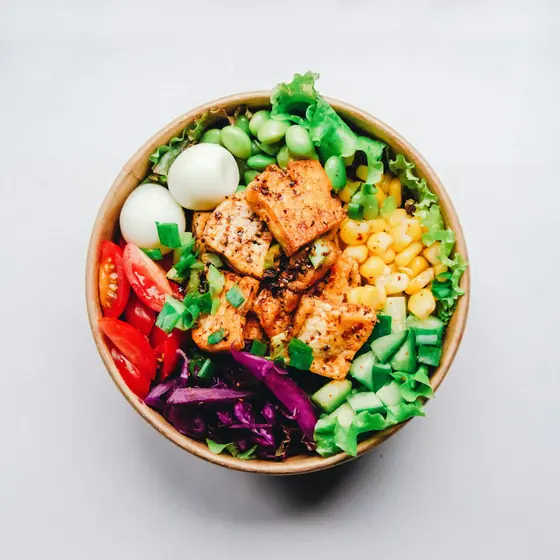
A vegan menu should not be an afterthought. Every cuisine has plant-based dishes with character: hummus and falafel, pulse curries, caponata, grilled vegetables, and among Roman dishes carciofi alla romana (braised artichokes) and sautéed chicory. You will find concrete ideas in the guide to vegan catering.
Gluten-free and coeliac disease
Coeliac disease requires gluten to be excluded, and even small amounts of cross-contamination matter. The Associazione Italiana Celiachia (AIC), the Italian Coeliac Association, points out that the 20 ppm gluten limit is the reference threshold for "gluten-free" products and that avoiding cross-contamination, including in food prepared away from home, is essential.
The AIC Alimentazione Fuori Casa programme
The AIC runs the Alimentazione Fuori Casa (AFC) programme, a network of businesses trained in coeliac disease. The types of business admitted include caterers and reception venues. According to the AIC, to join:
- staff take a training course on coeliac disease and the gluten-free diet;
- the business follows the AIC rules for preparation and service and uses only gluten-free ingredients for the dedicated dishes;
- a person responsible for the gluten-free service is appointed;
- the local AIC carries out regular checks, with at least one in-depth inspection a year.
The official list of members can be consulted on the AIC website. If the caterer is not a member, that does not automatically make it unsuitable, but it must be able to explain how it prevents cross-contamination:
- separate preparation areas or times;
- dedicated utensils, chopping boards and pans;
- dedicated oil and fryer for fried food (croquettes, tempura, supplì, courgette flowers);
- gluten-free bread, pasta and desserts stored separately;
- dishes for coeliacs labelled and served first.
Kosher
Rome's Jewish community
Rome's Jewish community is considered among the oldest in Europe, with a presence documented from the 2nd-1st century BC and uninterrupted through the centuries, as a study published by Sapienza University of Rome notes. The Community itself speaks of its "two-thousand-year" history. It is no surprise that in Rome Roman Jewish cooking has left dishes loved by everyone, such as carciofi alla giudia (Jewish-style fried artichokes).
What kosher catering means
A kosher meal follows the rules of kashrut: compliant animals and slaughter, separation of meat and dairy, checked ingredients and kitchen. For a guest who observes kashrut, "avoiding pork" is not enough: a certification issued by a rabbinical authority is needed, with supervision of the preparation.
In Rome the point of reference is the Rabbinical Office of the Jewish Community of Rome, which also deals with kashrut. The Community's website has a section on kosher in Rome, with a list of certified businesses, including caterers.
What to ask
- Is the kosher meal certified, and by whom?
- Is it meat (basar) or dairy (chalav)? The two are not mixed.
- Does it arrive sealed from the certified supplier? Many non-kosher caterers, for a few guests, rely on a certified supplier that delivers sealed meals.
- Do the staff know that they must not open or heat the meal with non-kosher tableware without instructions?
If there are many kosher guests, consider a fully certified caterer. In any case, ask the guest directly what level of observance they expect.
Halal
Halal means what is permitted under Islamic tradition. For food it mainly means:
- no pork or pork products;
- meat slaughtered according to the rite;
- no alcohol, including as a cooking ingredient.
There are halal certification bodies that check not only ingredients and recipes but the whole supply chain and logistics. Certified halal options in Italian catering are still limited. So for an event in Rome:
- ask whether the caterer uses halal-certified meat and who issues the certification;
- ask how it avoids cross-contamination with pork and alcohol in the kitchen and at the buffet;
- alternatively, consider vegetarian or fish dishes prepared without alcohol for halal guests, after talking to them about it;
- clearly label dishes containing pork or alcohol at the buffet (including in desserts and sauces).
Remember that many Italian menus use guanciale (cured pork cheek), pancetta, cured meats and lard: a menu with halal or kosher guests needs well-thought-out alternatives, not improvised ones.
Organising the service on the day
- Final list to the caterer with names, tables and needs, a few days before.
- Place cards or discreet signals for the front-of-house staff, agreed with the caterer.
- Staff briefing before service: who the guests with special needs are and what they will receive.
- Dedicated dishes served first and labelled.
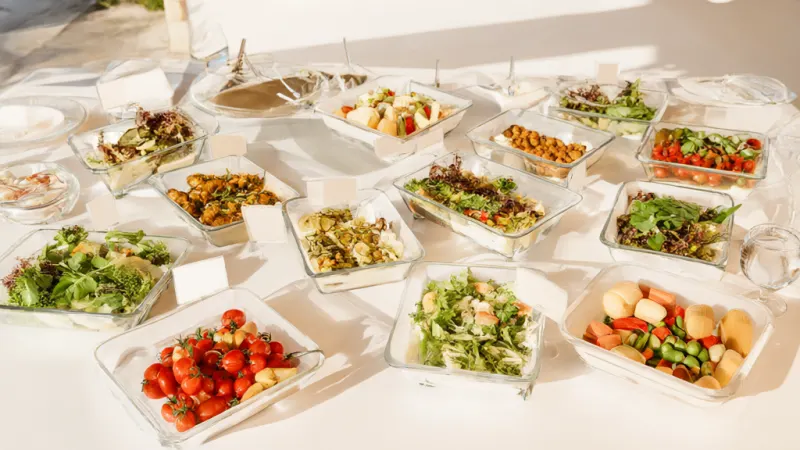
- Buffet cards with allergens and symbols for vegan, vegetarian and gluten-free.
- A contact person from the caterer whom guests can ask about ingredients.
For the other checks to make on the supplier (health registration, HACCP, contract), use the guide on how to choose a caterer. If you are planning a wedding, collecting diets needs to be planned with the RSVPs: you will find the timing in the section on wedding catering. When you are ready, request a quote, mentioning any special diets from the start.
Sources
- Regulation (EU) No 1169/2011, Article 44 and Annex II, EUR-Lex: https://eur-lex.europa.eu/legal-content/IT/TXT/?uri=CELEX:32011R1169
- Associazione Italiana Celiachia, Alimentazione Fuori Casa programme: https://www.celiachia.it/dieta-senza-glutine/progetto-alimentazione-fuori-casa/
- AIC, "Le contaminazioni nella dieta senza glutine" (cross-contamination in the gluten-free diet, 20 ppm threshold): https://static.celiachia.it/assets/uploads/2020/08/Le-contaminazioni-nella-dieta-Senza-Glutine_CN1_2017.pdf
- Jewish Community of Rome, Rabbinical Office: https://romaebraica.it/en/rabbinate/
- Jewish Community of Rome, page on its "two-thousand-year" history: https://romaebraica.it/en/?p=5960
- Semestrale di Studi e Ricerche di Geografia, Sapienza University of Rome (the Jewish community "among the oldest in Europe"): https://rosa.uniroma1.it/rosa03/semestrale_di_geografia/article/download/15181/14646/29010