In short
- Roman desserts lend themselves to the mini format and to the dessert buffet.
- Some are tied to a date: bignè in March, frappe at Carnival, pangiallo at Christmas.
- Cream and ricotta need care in the heat: filling at the last moment and a proper cold chain.
- Quantities are indicative and depend on what comes before (cake, fruit, ice cream).
The dessert buffet is when guests relax. In Rome it has an advantage: traditional desserts everyone recognises which, in a small format, can be eaten in two bites. The first bite of a mini maritozzo filled to order is enough to end an evening well.
Not every caterer in Rome offers them, and they do not have to be there: a dessert buffet can be classic Italian, French or international pastry. This guide is for those who want a Roman touch, on its own or alongside other desserts. For the dessert station in general, there is the guide to the dessert and fruit station.
Traditional Roman desserts
Maritozzo con la panna
A soft sweet bun, split and filled with whipped cream. It used to be the Roman breakfast pastry and has become a classic of dessert buffets and corporate coffee breaks. For an event, the mini format is used. It tastes freshest when filled shortly before service.
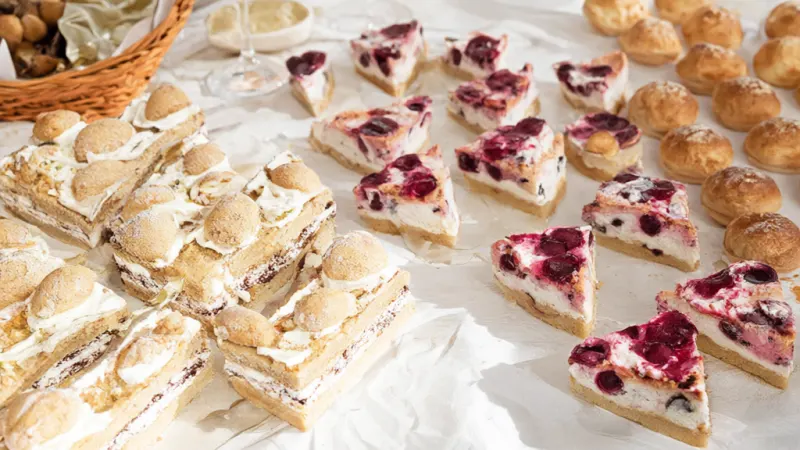
Ricotta and sour cherry tart
Shortcrust pastry, ricotta and visciole jam, made from wild sour cherries. It comes from the Roman Jewish tradition. Ricotta Romana is a PDO product of Lazio, according to the list kept by Arsial, the regional agricultural agency: if the caterer uses it, they can say so. Fresh visciole are an early-summer fruit, but the tart uses jam, so it works all year round.
Bignè di San Giuseppe
Choux pastry puffs, fried or baked, filled with pastry cream. They are tied to 19 March, the feast of St Joseph. For an event in March they are a choice Roman guests notice straight away.
Ciambelline al vino
Dry biscuits made with white or red wine, olive oil and sugar. Typical of the Castelli Romani. They are served with a sweet wine or at the end of the meal, and they hold up well on hot days too. Many recipes are naturally vegan: check with the caterer.
Pizza ebraica
A dense sweet from the Ghetto, with candied fruit, almonds, pine nuts and raisins, baked until the top darkens. It is served in small pieces.
Festive desserts
- Frappe and castagnole at Carnival, fried or baked
- Pangiallo at Christmas, with dried fruit and nuts, honey and candied peel
- Ciambellone (a ring cake) and fruit tarts all year round
The dessert buffet: how to organise it
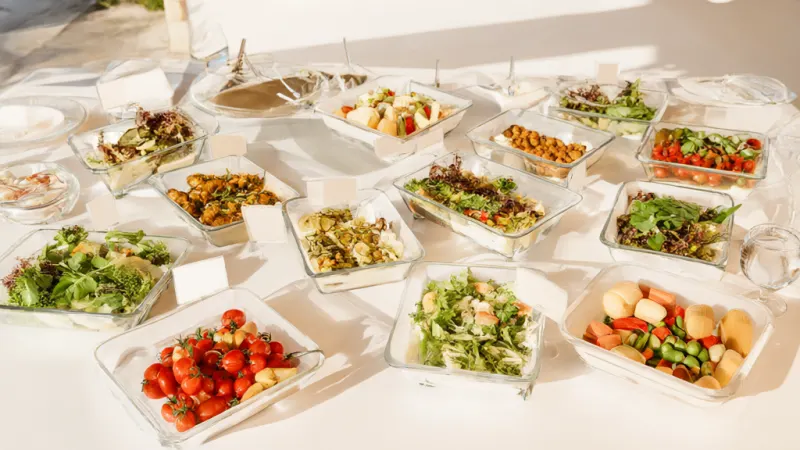
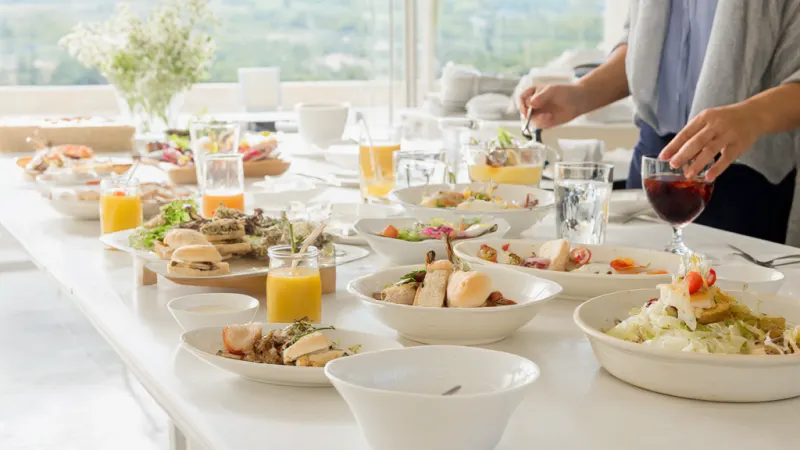
The dessert buffet works like a food station: a table, attractive cake stands, labels and someone to restock.
| Element | Guideline | Why |
|---|---|---|
| Variety | 5-8 kinds | Fewer kinds, more pieces of each, fewer queues |
| Pieces per person | 2-4 with cake, 4-6 without (indicative) | Depends on time, length and the preceding meal |
| Spoon desserts | Single-portion glasses | More hygienic and quicker to pick up |
| Fresh items (cream, custard, ricotta) | Refrigerated counter or frequent restocking | Heat ruins them quickly |
| Dry items (ciambelline, biscuits) | Can stay out longer | They last all evening |
| Seasonal fruit | Skewers or small cups | Lightens the buffet |
The quantities have no official source: they are an indicative starting point. At a wedding the dessert buffet comes after the cake and often after a served dinner, so fewer pieces are needed. At a graduation party with an apericena it may be the only dessert. For the wedding cake and the confettata (the table of sugared almonds), see the guide to the wedding cake and confettata.
Heat and the cold chain
Cream, pastry cream and ricotta are the most delicate fillings. At a terrace party in July or in a villa in the Castelli in June:
- fill to order the maritozzi or bignè;
- a refrigerated counter or frequent restocking from the caterer's fridge;
- a shaded position for the dessert table;
- dry desserts as the base of the buffet, fresh ones passed round by the waiters.
On a July day, a tray of maritozzi left in the sun for half an hour can no longer be served. Better small trays and frequent restocking, even if the table looks less full.
Special diets
- Gluten-free. All traditional Roman desserts contain wheat flour, with few exceptions. Gluten-free versions must be prepared separately. Take care with fried bignè: they need dedicated oil and a dedicated fryer.
- Vegan. Ciambelline al vino are often already vegan. Maritozzi and tarts need reformulated doughs and creams.
- Allergens. Milk, eggs, tree nuts and gluten are among the 14 allergens listed in EU Regulation 1169/2011: a dessert buffet almost always contains more than one. Ask for labels showing the allergens.
The full picture is in the guide to catering for special diets.
Wine pairings
A sweet local wine goes well with ciambelline and tarts. Cannellino di Frascati is one of Lazio's DOCG appellations and is a sweet white. You will find more ideas in the guide to Lazio wines for events.
Roman desserts beyond weddings
The dessert buffet is not only for weddings. A few ideas for other events.
Corporate coffee break. Mini maritozzi and ciambelline al vino next to coffee and fresh juices. These are desserts eaten standing, without cutlery, in a 20 or 30 minute break. Allow for most people taking one dessert and some taking two.
Christenings and communions. Long lunches, many children and grandparents: tarts, ciambellone and bignè work well, alongside the celebration cake.
Birthday parties. A table of mini desserts can sit alongside the cake, or replace it with a pyramid of bignè or maritozzi. Ask the caterer whether the arrangement is possible and how long it lasts out of the fridge.
Christmas parties. Pangiallo, panettone and torrone at the end of dinner, with a sweet wine from Lazio.
The principle is the same everywhere: few kinds, well made, in the right season. And one question to always ask: who makes the desserts, the caterer or an outside pastry shop? Freshness, delivery times and sometimes the price all change.
Questions to ask the caterer
- Are the desserts made in your own kitchen or by an outside pastry shop?
- Are the maritozzi and bignè filled on site?
- How do you keep cream, custard and ricotta cool?
- How many pieces per person do you plan, with and without a cake?
- Do you use Ricotta Romana PDO or other certified products?
- Do you have gluten-free and vegan versions? How do you prepare them?
- Is the dessert buffet included in the price or an extra?
- Who restocks the buffet during the evening?
- Can I bring desserts from an outside pastry shop? Is there a charge?
Before you ask for a quote
Say whether there will be a cake, the season and the number of guests. You can compare suppliers in the caterers section or, for a party, under birthday caterers. When you are ready, request a quote.
Sources
- Arsial, presentation on quality food production in Lazio: https://www.arsial.it/app/uploads/CATTA_291123_Multifunzionalita_RI.pdf
- Regulation (EU) No 1169/2011, EUR-Lex: https://eur-lex.europa.eu/legal-content/IT/TXT/?uri=CELEX:32011R1169
- Italian Coeliac Association (AIC), Eating Out programme: https://www.celiachia.it/dieta-senza-glutine/progetto-alimentazione-fuori-casa/