In short
- Five sample menus: served meat menu, served seafood, buffet stations, finger food and apericena, vegetarian.
- They are examples to adapt: season, venue and number of guests change the dishes and quantities.
- Industry estimates indicate around €125 per person for the banquet: a national average to use as a reference.
- For each menu you will find what to consider before choosing it.
One concrete example is worth more than ten adjectives. Here you will find five complete wedding menus, in different cooking styles (Roman, seafood, Mediterranean, international, vegetarian) and for different seasons, as caterers in and around Rome propose them, with the points to weigh up for each. Use them as a basis for talking to the caterer, not as menus to copy.
A note on prices. Industry estimates indicate a national average of around €125 per person for the banquet. When we write "above" or "below average" it is an indicative trend: the real quote depends on guests, venue, drinks and staff.
1. Classic served meat menu, Roman cooking (spring)
Designed for a Saturday in April or May, in a villa on the Appia Antica or in the Castelli, for a couple who want food rooted in the area. The same structure works with a meat menu from another tradition: the dishes change, not the courses.
Welcome aperitivo
- Carciofi alla giudia (Jewish-style fried artichokes) in mini portions, cacio e pepe supplì (fried rice balls)
- Pizza bianca with mortadella, fresh broad beans and Pecorino Romano PDO
- A station of cured meats and cheeses from Lazio
At the table
- Starter: asparagus flan with pecorino cream
- Tasting portions of first courses: tonnarelli cacio e pepe, ricotta ravioli with peas and wild mint
- Main: boned roast abbacchio (milk-fed lamb) with potatoes and sautéed chicory
- Lemon sorbet, if a fish main follows
- Dessert: ricotta and sour cherry tart, then the wedding cake
- Coffee and a digestif
What to consider. The abbacchio should be served boned, otherwise bones at the table cause awkwardness. According to Turismo Roma, the city's tourism board, the Roman artichoke is in peak season between March and April: in June it needs replacing. Indicative cost: in line with the average, higher if the aperitivo has many stations.
2. Served seafood menu (summer)
For a wedding in June or July on the coast, towards Fregene, Ostia or Anzio, or on a terrace in town.
Welcome aperitivo
- Courgette flowers with mozzarella and anchovy, battered salt cod
- Fish tartare on spoons, blast-chilled raw fish
- A station of frittura di paranza (fried small fish) in paper cones
At the table
- Starter: octopus with potatoes and celery, warm seafood salad
- Tasting portions of first courses: spaghetti with telline clams, scampi risotto
- Citrus sorbet
- Main: a steak of the catch of the day with grilled vegetables
- Dessert: seasonal fruit semifreddo, then the cake
- Coffee and limoncello
What to consider. Raw fish must be blast-chilled before service, as required by Regulation (EC) 853/2004. In hot weather the aperitivo needs a serious cold chain. "Catch of the day" protects against market prices and availability: accept it in writing. Indicative cost: usually above average, especially with raw fish and shellfish. Find out more in the guide to the seafood menu for events in Rome.
3. Buffet stations (autumn)
For a September wedding in a farmhouse in the Roman countryside, with guests who like to move around.
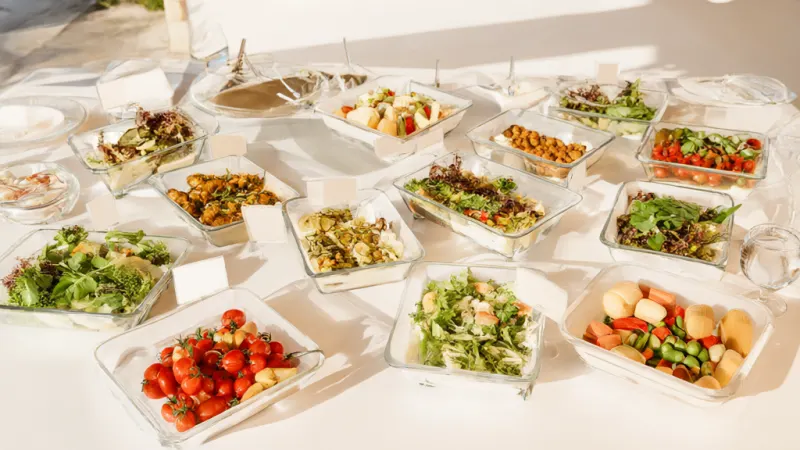
Stations
- A sushi and raw fish station, prepared to order
- A fried food station: croquettes, olive ascolane (stuffed fried olives), vegetables in tempura, supplì
- A first-course station with pasta finished in front of guests: mushroom risotto, fettuccine with white ragù, cacio e pepe
- Carving station: roast beef or porchetta di Ariccia PGI, roast vegetables
- A cheese station with honey and preserves
Desserts
- Dessert buffet with small fruit tarts, petits fours, figs
- Wedding cake and coffee
What to consider. Stations create movement but need staff: ask how many attendants per station. You need seating for everyone, even if the buffet is standing, especially for the grandparents. Stations are more convivial, but not always cheaper than a served meal: it depends on how many there are. You will find the details in the guide to buffet stations.
4. Finger food and apericena (evening, in town)
For a civil wedding at the Campidoglio followed by a party on a terrace in Trastevere or Pigneto, with 60-80 guests standing.
Finger food passed by waiters
- Mini supplì, potato croquettes, prawns in tempura
- Crostino with burrata and anchovies, meatballs in sauce on spoons
- Teriyaki or grilled chicken skewers with peppers
- Mini burgers, mini rolls with porchetta
Dishes in cups
- Paccheri with tomato or rigatoni alla gricia in cups
- Salmon poke or tuna tartare
- Spelt salad with seasonal vegetables
Desserts
- Mini cheesecakes, bignè, cut fruit
- Cake and toast
What to consider. If the apericena (an aperitivo generous enough to replace dinner) takes the place of dinner, there must be many pieces per person: the quantities are in the guide on how much food to plan per person. On a terrace, the lift, the wind and the neighbours' hours all count. Indicative cost: usually below the average for a served meal, but bar and staff can even out the bill.
5. Vegetarian menu (all year)
For a vegetarian couple who want a complete menu, not a list of side dishes. A winter example.
Welcome aperitivo
- Puntarelle in cups with a dressing without anchovies
- Romanesco broccoli in tempura, hummus with raw vegetables
- Focaccia with stracchino and vegetables
At the table
- Starter: pumpkin flan with pecorino fondue
- Tasting portions of first courses: mushroom risotto, gnocchi with broccoli cream
- Main: single-portion aubergine parmigiana or potato and leek tart
- Dessert: ricotta tart, wedding cake
- Coffee and a digestif
What to consider. Vegetarian does not mean vegan: cheese, eggs and milk stay. If there are vegan guests, plan separate dishes; you will find caterers in the vegan catering section. Watch for hidden ingredients: meat stock in the risotto, animal rennet in some aged cheeses. Indicative cost: often below average, because meat and fish weigh on the bill.
How to choose between the five
| Menu | Suited to | Critical point |
|---|---|---|
| Served meat menu | Classic weddings, many guests | Length of the dinner |
| Served seafood | Summer, coast, terraces | Cold chain and market prices |
| Buffet stations | Farmhouses, gardens, guests on the move | Staff and seating |
| Finger food and apericena | Town, evening, fewer guests | Quantities and bar |
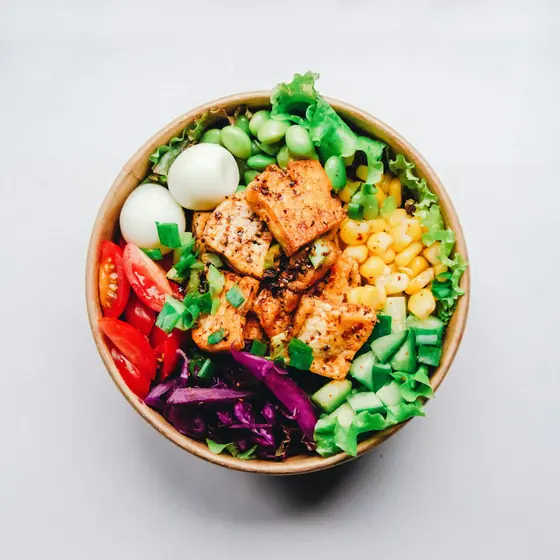
| Vegetarian | Vegetarian couples, winter or spring | Substantial dishes |
If you choose Roman cooking, you will find the dishes for each season in the guide to the Roman wedding menu; for seafood there is the seafood menu. For the order and names of the courses, read the guide to the courses of an event menu.
Questions to ask the caterer
- Is this menu designed for the month of my wedding?
- Does the price per person include aperitivo, dinner, desserts and cake?
- Which drinks are included and until what time?
- How many waiters serve the dinner? And how many people for each station?
- Can I swap one dish for another without changing the price?
- Is the fish blast-chilled? Where does it come from?
- Do you have a children's menu and a menu for the suppliers?
- Does the tasting include the dishes I have chosen, in the real portions?
To finish
Choose the menu starting from season, venue and number of guests, then adapt the dishes. For an idea of costs, read how much wedding catering costs in Rome. Caterers who work on weddings are in the wedding caterers section: when you have a basic menu, request a quote from several caterers with the same example.
Sources
- Turismo Roma, "I prodotti della campagna romana: le verdure romanesche protagoniste in cucina" (Roman countryside produce: Roman vegetables in the kitchen): https://turismoroma.it/it/node/127323
- Regulation (EC) No 853/2004, Annex III, Section VIII, EUR-Lex: https://eur-lex.europa.eu/legal-content/IT/TXT/?uri=CELEX:32004R0853