In short
- The classic order: aperitivo, antipasto, pasta courses, main with a side, sorbet, dessert, cake, coffee and an after-dinner liqueur.
- You don't need them all. After a long aperitivo, an antipasto at the table is often too much.
- Event portions are smaller than restaurant ones, because there are more courses.
- The timing between courses should be written into a running order agreed with the caterer.
Every event menu follows a sequence guests recognise, even without knowing it. Knowing it helps you read a quote, remove what isn't needed and understand why a dinner lasts three hours instead of two. Here are the courses in order, the right names and how many to choose for each type of event.
The courses in order
| Course | What it is | When to drop it |
|---|---|---|
| Welcome aperitivo | Finger food, stations and drinks, standing, while guests arrive | Almost never: it gives time for photos and arrivals |
| Antipasto | The first dish at the table, cold or hot | If the aperitivo was very generous |
| Primi (first courses) | Pasta, risotto, soups, often two in tasting portions | Rarely in Italy |
| Secondo with a side | Meat or fish with vegetables | At an aperitivo or apericena |
| Sorbet | A cool pause between two mains or between fish and meat | If there is only one main |
| Dessert | Plated dessert or a dessert buffet | If there is only the cake |
| Cake | The wedding, birthday or party cake | At corporate events |
| Coffee and ammazzacaffè | Espresso, amari, limoncello, grappa | Almost never: many people ask for it at the end of a meal |
Two notes on names. The dessert is the sweet served by the caterer, the cake is the party's own: they are often two different things and can have two prices in the quote. The ammazzacaffè (literally "coffee killer") is the digestif after coffee: amaro, grappa, sambuca, limoncello.
Welcome aperitivo: the first menu
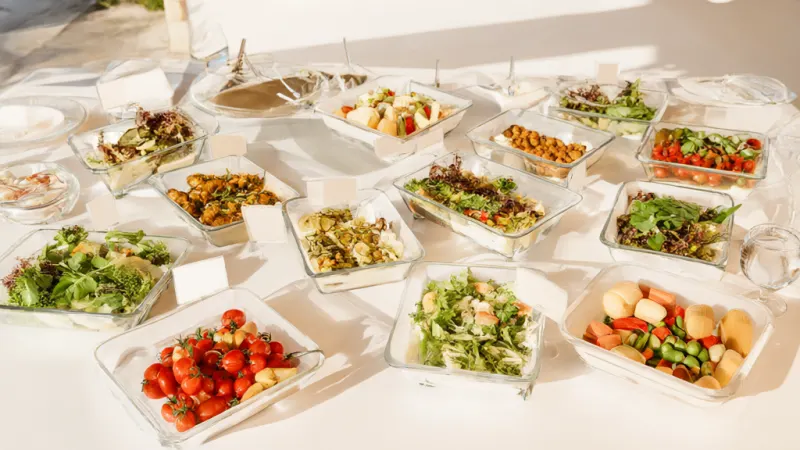
The aperitivo is already a meal. At weddings in Rome it can last an hour or more, with finger food, fried dishes, and stations of cheese, raw fish or sushi. That is why it is worth counting it as a real course.
If the aperitivo is long and generous, dinner can start straight from the pasta. If it is short, an antipasto at the table helps. You will find timing and quantities in the guide to the wedding aperitivo.
Antipasto, pasta and main: the heart of a seated dinner
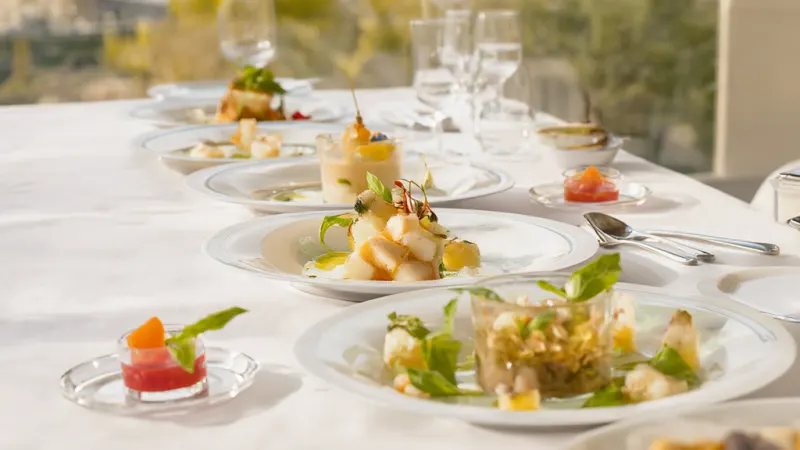
Antipasto. At the table, a single light dish works: a tartare, a fish carpaccio, a seasonal vegetable flan. Avoid heavy starters after a fried aperitivo.
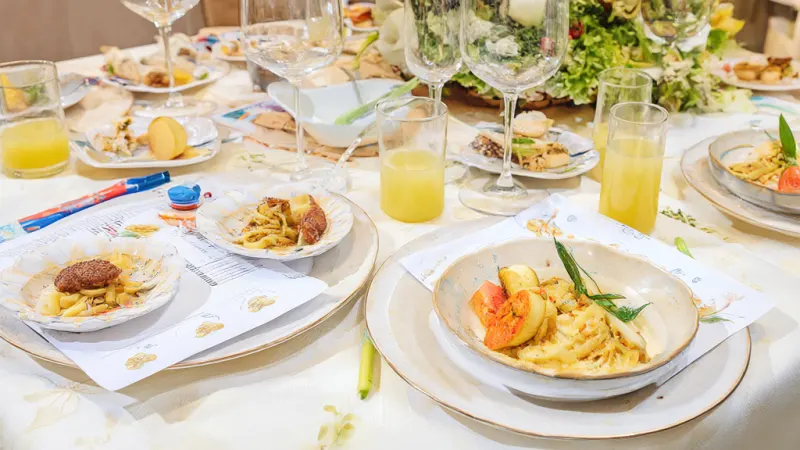
Pasta and first courses. In Italy this is the most anticipated course. At an event, two first courses in tasting portions are often served, meaning reduced portions of two different dishes, one after the other or on the same plate. This is also the dish guests judge the caterer on: a risotto, fresh pasta or a classic such as cacio e pepe should be tried at the tasting.
Main with a side. One is almost always enough. Two mains (fish and meat) lengthen the dinner and call for a sorbet in between. Choose mains that are easy to portion: fillet, boned meats, fish steaks.
Sorbet, dessert, cake and coffee
The sorbet is a pause, not a dessert. Lemon, mandarin or seasonal fruit, served in a small cup between two mains. If the menu has only one main, you can drop it.
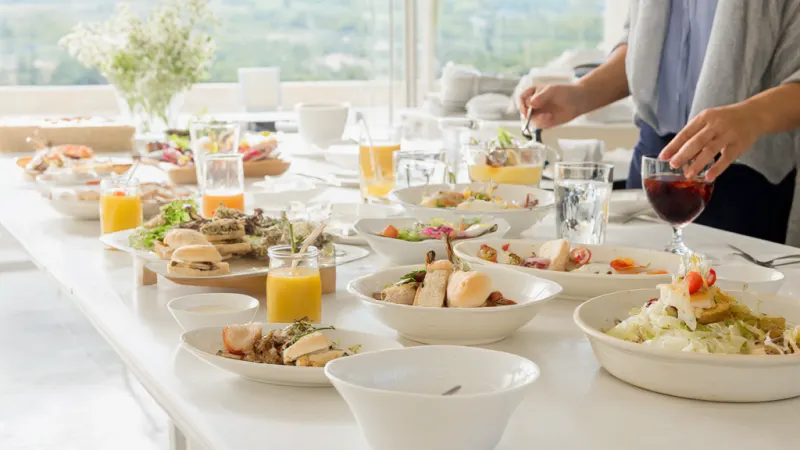
The dessert can be plated or served as a buffet. A dessert buffet gets guests on their feet and changes the pace of the evening. The cake comes after, with the cutting and the toast. For everything about cake and sugared almonds there is the guide to wedding cake and confettata.
Coffee closes the meal. Ask whether it is espresso made on site or coffee from a flask: you can taste the difference.
How many courses for each type of event
The table is indicative: it shows the most common structure, not a rule. It depends on the time of day, length and budget.
| Event | Typical structure |
|---|---|
| Seated wedding | Aperitivo, antipasto or none, two pasta dishes in tasting portions, main, dessert or dessert buffet, cake, coffee |
| Wedding with buffet or stations | Long aperitivo, stations for pasta and mains, dessert buffet, cake |
| Corporate gala dinner | Antipasto, pasta, main, dessert, coffee |
| Business lunch | One pasta dish or a complete plate, salad, fruit or dessert, coffee |
| First communion or christening lunch | Aperitivo, pasta, main, cake, coffee |
| Private party or apericena | Finger food, one or two hot dishes in small bowls, dessert |
To see these structures turned into complete menus, read the wedding menu examples for Rome and the corporate event menu examples.
Portions: why they are smaller
The more courses there are, the smaller each portion. A restaurant pasta dish fills you up; two restaurant-sized pasta dishes at a wedding, after an aperitivo, leave half the plate on the table.
For buffets, industry guides suggest about 120-150 g of pasta, 100-120 g of main and 80-100 g of side per person. These are references for a full buffet. For seated service there are no official sources: tasting portions are an indicative value to agree at the menu trial, looking at the real dish.
Complete quantities, drinks included, are in the guide on how much food to plan per person.
Timing between courses
The pace of dinner depends on three things: the number of guests, the number of waiters and interruptions (speeches, dances, videos, games). An indicative running order for a seated wedding:
| Moment | Indicative length |
|---|---|
| Welcome aperitivo | 60-90 minutes |
| Seating and antipasto | 20-30 minutes |
| Pasta courses | 15-20 minutes between one and the next |
| Main | 20-30 minutes |
| Pause, dances, sorbet | variable |
| Dessert, cake, coffee | 30-45 minutes |
These figures are for orientation, with no official source: they depend on the caterer and the evening. What matters is writing them down and sharing them with the caterer and with whoever handles music and photography.
A practical tip: make the pauses coincide with the moments of the party. A first dance between the pasta and the main works, as long as the kitchen knows and holds the dishes.
A few rules on the sequence
Some courses have a fixed place, whatever the cuisine. Fried dishes belong at the aperitivo, not halfway through dinner. The pasta is the caterer's real test. The main follows the season: light fish in summer, heartier meats in winter. At the end of dinner, petits fours or spoon desserts can sit alongside the cake. Complete examples are in the wedding menu examples; if you choose Roman cooking, with spring abbacchio and mini maritozzi, there is the guide to the Roman wedding menu.
Questions to ask the caterer
- How many courses does the menu include, and which are covered by the price per person?
- Are the portions tasting-size or full? Can I see them at the menu trial?
- Is the sorbet included? Can it be removed and deducted from the price?
- Are dessert and cake two separate items?
- Is the coffee espresso made on site?
- Is the after-dinner liqueur included or charged separately?
- How many waiters serve the dinner, and how long does service of each course take?
- Can you give me a written running order with the times of the courses?
To close
Courses are a tool: choose the ones your event needs and drop the others without regret. For the caterers who work at receptions, see the wedding catering section. Once you have settled the structure, request a quote from two or three caterers with the same courses: the prices will be comparable.