In short
- A light lunch generally lasts 30-45 minutes and is designed to get people back to work without feeling heavy.
- For a lunch with clients or partners, plated service at the table is more orderly, but takes more time and staff.
- Industry estimates suggest €12-18 per person for a light lunch (an indicative national average).
- A seasonal menu with produce from Lazio is lighter and often better value.
You need to feed twenty colleagues between one session and the next, or offer lunch to a client who has come down from Milan. Either way, lunch has to fit the schedule and not leave people sleepy at three in the afternoon. Here is how to choose the format, what to put on the menu and what to ask the caterer.
The right question first: working or hosting?
A working lunch has two sides.
- A functional lunch. Meetings, courses, training days. People need to eat well and quickly, then go back into the room.
- A hospitality lunch. Clients, partners, delegations. The lunch is part of the meeting: people talk at the table, and the service matters.
Format, length and budget all depend on this choice. Make it before asking for quotes.
The formats
| Format | How it works | Typical length | Suits |
|---|---|---|---|
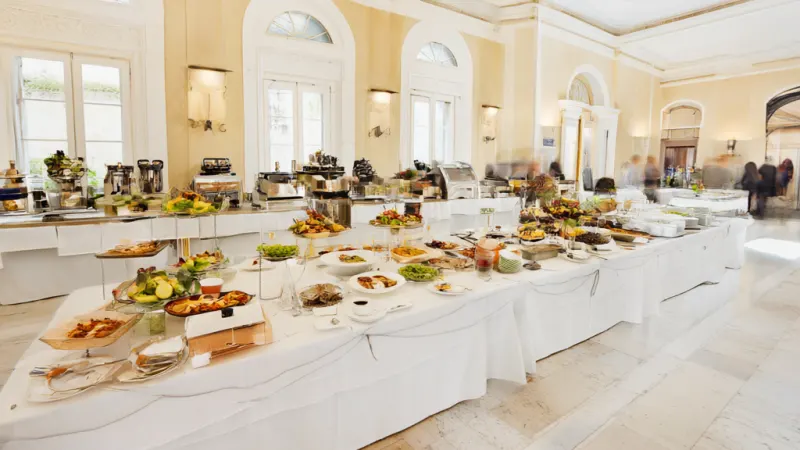
| Buffet light lunch | Stations with cold and warm dishes, guests help themselves | 30-45 min | Courses, conferences, meetings of more than 15 people |
| Lunch boxes | Individual labelled boxes | 20-30 min | Workshops in the room, long meetings, many different diets |
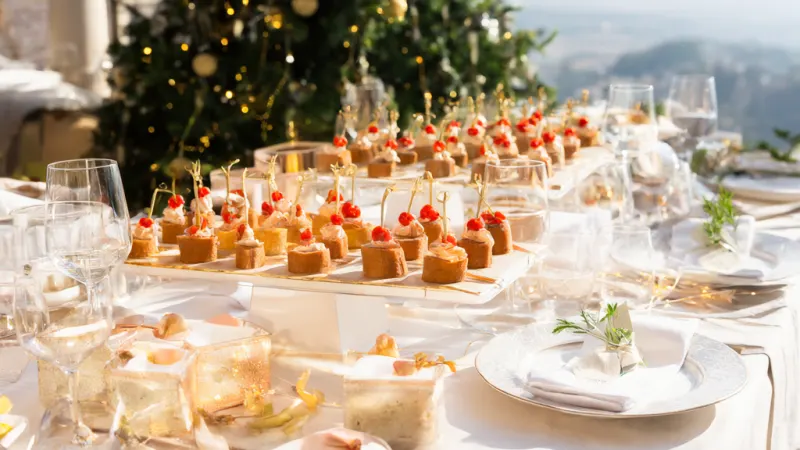
| Finger lunch | Bites and bowl dishes, standing | 30-45 min | Networking, presentations |
| Served lunch | Plated courses at the table | 1.5 hours or more | Clients, partners, board meetings |
Indicative lengths: they depend on the number of guests, the programme and the type of service.
Buffet light lunch
This is the most common format. It works if the buffet is double-sided or split into several points, so people do not form a single queue. Avoid dishes that need cutting with a knife and fork while standing: ready portions, bowls and salads are better.
Lunch boxes
Each participant receives their own box: a main dish, a side, bread, fruit or dessert, water. It is practical for rooms without space for a buffet and for people with allergies, because each box can carry a name and a list of allergens. In summer, ask how they are kept cool until they are handed out.
Served lunch
Two or three courses at the table, wine by the glass, coffee. It is the right format when the lunch is the heart of the meeting. Agree with the caterer on the timing between courses: if you have a train from Termini at 16:00, say so.
The menu: light and seasonal
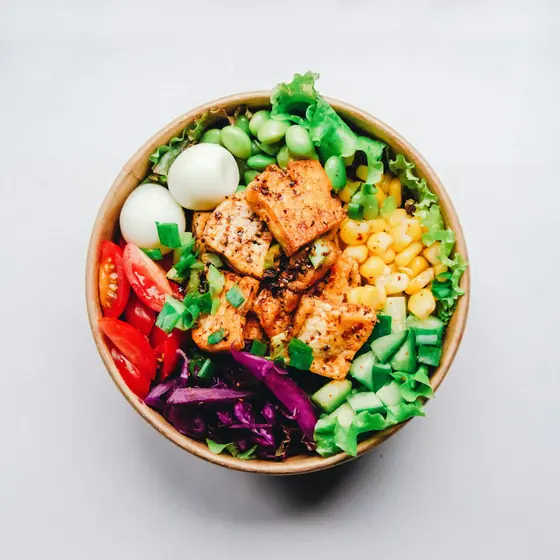
A working lunch should give energy without weighing people down. Little fried food, measured portions, seasonal vegetables. This applies to every style of cooking: Mediterranean, seafood, international with poke and bowls, or Roman if well chosen.
Autumn and winter
- Pasta e ceci or Romanesco broccoli soup, in a cup
- Puntarelle (chicory shoots) with anchovy dressing, a typical winter vegetable in Rome
- Spelt salad with sautéed chicory, or a grain bowl with pumpkin and chickpeas
- A light version of chicken with peppers, baked salmon or a vegetable frittata
Spring
- Carciofi alla romana (Roman-style braised artichokes), which Turismo Roma lists as in season from January to May
- Vignarola (broad beans, peas, artichokes, lettuce)
- Grain salads with seasonal vegetables, fish tartare or carpaccio
Summer
- Cold pasta with Roman courgettes and mint
- Tomatoes stuffed with rice, at room temperature
- Baked rather than fried courgette flowers, to keep things light
- Fish or tofu poke, gazpacho in a glass
Save creamy pasta dishes (risotto, carbonara, cacio e pepe) for the hospitality lunch, ideally finished to order. On a light lunch buffet they tend to lose their texture after a few minutes.
For the calendar of Lazio produce, read the guide to the seasonal menu; for more examples, there are the sample menus for corporate events.
Drinks and coffee
- Water, still and sparkling, in jugs or from dispensers: less plastic and less rubbish to dispose of at the office.
- Wine: often not served at a functional lunch. At a hospitality lunch a white from Lazio, such as a Frascati, goes well with vegetable, fish and white meat dishes.
- Coffee at the end of lunch: ask whether it is included and whether there is a barista or a self-service machine.
Diets and allergies
Collect dietary needs with the meeting invitation or the registration form. EU Regulation 1169/2011 requires the caterer to provide information on the 14 allergens even for unpackaged dishes: ask for the menu's allergen chart. Always plan at least one complete vegetarian dish, not just a side. For coeliac, vegan, kosher and halal diets there is the guide to special diets.
Logistics: office, meeting room, venue
The business lunch often takes place where people work: at the office, in a hotel meeting room, in a co-working space. Check:
- space for the buffet or for setting out the boxes, separate from the work table;
- access for the caterer: service entrance, goods lift, reception opening hours;
- rubbish: who takes it away? At an office, this is a question worth asking beforehand;
- ZTL: if the office is in the historic centre, ask the caterer how it handles access to the restricted traffic zone and check the current hours on the Roma Mobilità website.
In EUR, Prati or the business districts of Roma Nord access is generally easier, but the building's rules still apply.
Prices: what to consider
Industry estimates give national ranges of €12-18 per person for a light lunch and €20-50 for a simple lunch or dinner. In Rome you may find different figures. The items that change the bill:
- buffet, boxes or served;
- staff present and hours of service;
- drinks included or extra;
- ceramic or disposable tableware, hire of tables and table linen;
- delivery, collection and ZTL access;
- VAT included or excluded (for food served with staff normally 10%; for a simple delivery different rates may apply).
To compare formats, read the guide to corporate catering prices.
Questions to ask the caterer
- Is the menu designed to be eaten standing or seated?
- How many buffet service points do you plan for this number of people?
- Do the boxes carry a name and allergen list? How are they kept cool?
- How many staff will there be, and until what time?
- Is coffee included? With a barista or a self-service machine?
- Tableware and table linen: what do you bring and what do you collect?
- Who takes away rubbish and leftovers?
- Is the price inclusive of VAT? Do you issue an electronic invoice with our details?
- Until when can I change the number of participants?
- How do you handle access if our office is in the ZTL?
To close
A working lunch succeeds when nobody looks at the clock: people eat, talk and get back to the room on time. Choose first between a functional and a hospitality lunch, then the format. You will find suppliers in the corporate catering section and, if the lunch is part of a day with breaks, the guide to the corporate coffee break. Once you have guests, time and venue, request a quote from several caterers.
Sources
- Turismo Roma, "I prodotti della campagna romana: le verdure romanesche protagoniste in cucina" (the produce of the Roman countryside): https://turismoroma.it/it/node/127323
- Regulation (EU) No 1169/2011, EUR-Lex: https://eur-lex.europa.eu/legal-content/IT/TXT/?uri=CELEX:32011R1169
- Roma Mobilità, ZTL section: https://romamobilita.it/it/servizi/ztl