In short
- At a congress, catering is an ongoing service: welcome coffee, breaks, lunch, sometimes an evening aperitivo.
- With large numbers, service points and shifts count for more than the menu.
- Many conference centres in Rome have exclusive or accredited suppliers: ask about this first.
- Set a date for the final number of participants and a tolerance.
A two-day congress with five hundred delegates means thousands of coffees, hundreds of lunches and only a few minutes to serve them. Here the caterer is judged on punctuality: sessions start again at the time printed in the programme, and lunch must not eat into working time. Here is how to organise it with the caterer, step by step.
Congress catering, service by service
| Service | When | What is served | Critical point |
|---|---|---|---|
| Welcome coffee | Registration | Coffee, tea, juices, pastries | Arrivals bunched into the last few minutes |
| Coffee break | Between sessions | Coffee, tea, water, sweet and savoury, fruit | Everyone leaves the hall at once |
| Lunch | Lunch break | Buffet or boxes, cold and warm dishes | Queues and seating |
| Aperitivo or social dinner | End of the day | Finger food, served dinner | Often at another venue |
| Water in the hall | All day | Bottles or jugs for speakers and chairs | Who keeps it topped up |
The caterer works more smoothly if it receives the programme and follows it with a contact person in touch with the organising secretariat.
Large numbers: service points and shifts
The problem at a congress is not cooking a lot: it is serving a lot in a short time.
Service points
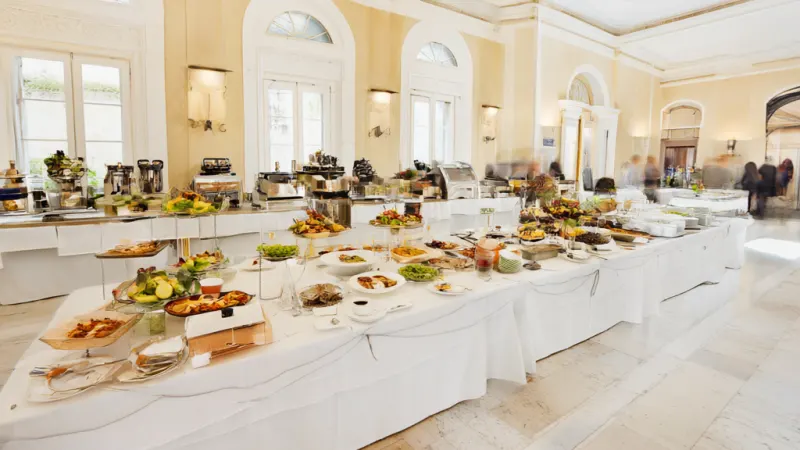
Spread the service across several points. Separate coffee, cold drinks and food. For lunch, buffets accessible from both sides halve the queue. Ask the caterer how many points it plans for your number of participants and why: the right number depends on the space, the type of coffee and the length of the break, not on a fixed rule.
Shifts
If the lunch room cannot hold everyone, stagger:
- by parallel session: room A comes out at 13:00, room B at 13:20;
- by badge: one colour per shift, communicated at registration;
- with takeaway boxes for those with a workshop straight afterwards.
The caterer needs to know in advance how many shifts there are and how many people are in each.
Breaks that get squeezed
If a session finishes late, the coffee break gets compressed and the caterer is left with full trays. Agree with the secretariat who tells the caterer about delays and how the service adapts.
Multi-day congresses
For a two- or three-day event, variety matters. The same participants eat at the same buffet several times: ask for different menus for each day and for morning and afternoon.
Other points to settle:
- a single contact at the caterer for all the days;
- set-up and take-down times consistent with those of the hall;
- an evening summary of actual numbers to adjust the next day's quantities;
- how leftovers are handled, in line with hygiene rules.
The venue in Rome
Rome hosts congresses in very different spaces. EUR has a concentration of conference centres and hotels with large halls; there are universities, hospitals and institutional buildings with main lecture halls; in the centre there are historic palazzi and reception rooms.
| Venue | What to check |
|---|---|
| Conference centre or hotel | Exclusive caterer or accredited suppliers, set-up times, back-up kitchens |
| Universities and hospitals | Internal rules on outside suppliers, space for lunch, access permits |
| Historic palazzo in the centre | ZTL, loading and unloading, no kitchen, restrictions on set-up |
| Company premises | Goods lift, reception desk, waste disposal |
In the historic centre, deliveries go through the ZTL (restricted traffic zones) and Roma Capitale's goods ZTL: the rules change often, so check current hours and permits on the Roma Mobilità website and ask the caterer how it handles access.
If the venue has an exclusive caterer, the choice of supplier has already been made: read the guide to venues with exclusive or open catering to see what you can still negotiate.
The menu: quick, light, recognisable
A congress runs to a tight schedule. The menu should be easy to eat standing and not weigh down people going back into the hall.
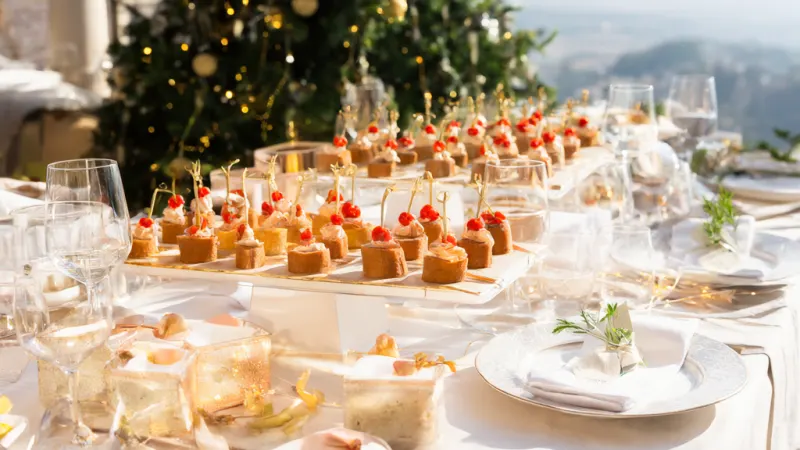
- Welcome coffee: pastries, mini cornetti (Italian croissants), ciambelline al vino (wine biscuits) or mini maritozzi (sweet cream-filled buns), fruit.
- Afternoon coffee break: squares of pizza bianca or small focaccias, something savoury, cold drinks in summer.
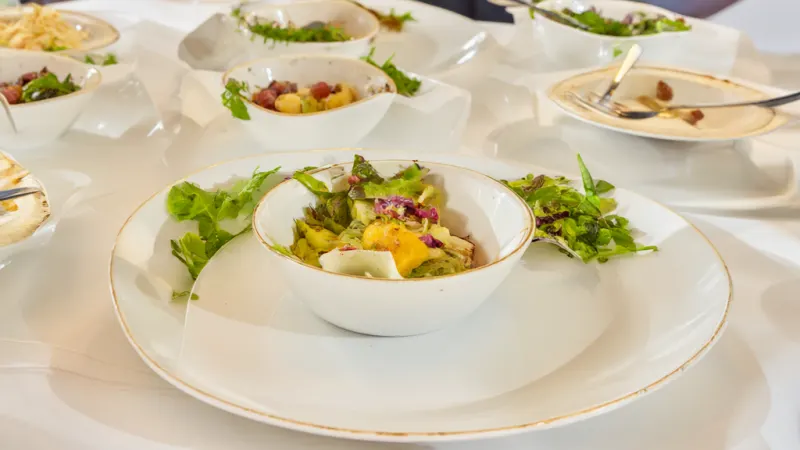
- Lunch: grain salads, seasonal vegetables, a warm pasta dish, a complete vegetarian dish, fruit.
- Social dinner: here there is room for a richer served menu, seafood, creative Italian or Roman cuisine for visitors from elsewhere.
At international congresses, cards with the name of each dish in Italian and English help a great deal.
Registrations, allergies and numbers
The registration form is your main tool.
- Ask about diets and allergies at registration.
- Give the caterer a list with names, needs and days of attendance.
- EU Reg. 1169/2011 requires information on the 14 allergens even for unpackaged dishes: ask for this to be shown on every tray.
- A mark on the badge helps staff recognise who has a dedicated meal.
For coeliac, vegan, kosher and halal menus, read the guide to special diets.
On numbers, registrations change until the last minute. Set in the contract a date for the final number and a tolerance up or down. No-shows at congresses are real: discuss them with the caterer so you do not pay for meals nobody eats, without the risk of running short.
Administration
- Invoicing: company name, VAT number, recipient code. If the organiser is a public body, the CIG tender code and specific procedures must be communicated beforehand.
- VAT: for food served with staff, 10% normally applies. If the service is a simple delivery, different rates may apply: have your finance department check.
- Daily packages: many congress quotes give a price per participant per day. Ask for the breakdown of each service included.
As orders of magnitude, industry estimates give €7-15 per person for a coffee break and €12-18 for a light lunch, as national averages. With large numbers over several days the per-person figure may change: it is one of the things to ask in the quote. You will find a comparison of the formats in the guide to corporate catering prices.
Questions to ask the caterer
- Have you worked at this venue before? Are you an accredited supplier?
- How many service points do you plan for coffee breaks and lunch, and why?
- How do you manage lunch shifts and sessions running late?
- Do the menus change from day to day?
- Who is the contact person on site for the whole congress?
- How do you manage diets and allergies by name? Do you label the trays?
- What is the date for the final number and what tolerance do you accept?
- How are water and drinks handled in the hall for speakers and chairs?
- What happens to the leftovers?
- Is the price per person per day? What does it include, and is VAT included or excluded?
To close
Congress catering is noticed when it works badly. If you organise it around the programme, the numbers and the venue, it becomes a service that nobody notices. You will find suppliers in the corporate catering section and a general guide to corporate catering in Rome. With the programme and an estimate of delegates in hand, request a quote from several caterers.
Sources
- Regulation (EU) No 1169/2011, EUR-Lex: https://eur-lex.europa.eu/legal-content/IT/TXT/?uri=CELEX:32011R1169
- Roma Mobilità, ZTL section: https://romamobilita.it/it/servizi/ztl