In short
- The cake can be made by the caterer, a pastry shop or a cake designer: price, style and logistics all change.
- If it comes from outside, ask whether there is a cutting fee (a charge for storing, cutting and serving it).
- In summer in Rome, decorations and fillings must be chosen with the heat in mind.
- Distinguish the showpiece cake from the portions: sometimes they are not the same cake.
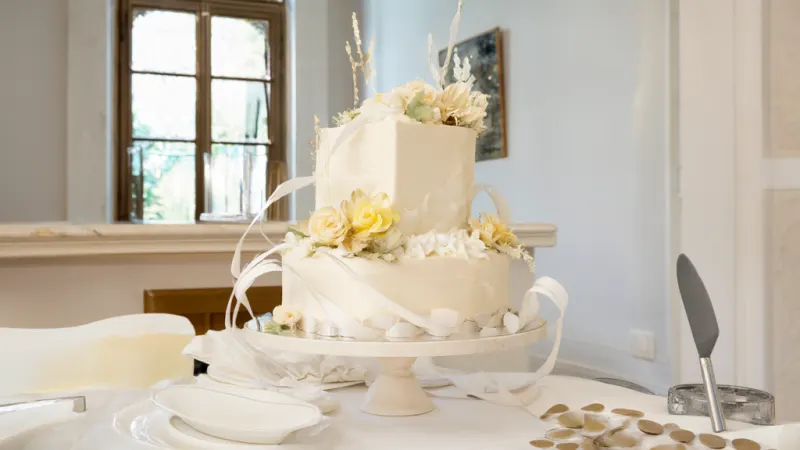
The cutting of the cake is one of the most photographed moments of the wedding. Behind that minute lie practical choices: who makes it, how it arrives, where it waits, who cuts it and how much it costs to serve. This guide covers the wedding cake and cake design (decorated tiered cakes, often in sugar paste or with modelled decorations). For the dessert buffet and the confettata (a table of sugared almonds), read the guide on wedding cake and confettata.
Three routes to the cake
| Who makes it | Advantages | What to check |
|---|---|---|
| The caterer | One point of contact, cake included or clearly priced, no delivery issues | Styles available, tasting, whether it is included in the menu |
| A pastry shop | The taste of a pastry shop you know, often traditional desserts | Delivery, cold chain, cutting fee |
| A cake designer | A made-to-measure showpiece cake, modelled decorations | Lead times, price, resistance to heat, cutting fee |
Some venues have their own pastry kitchen or fixed arrangements. Ask whether there are restrictions before ordering.
The cutting fee
When the cake comes from outside, the caterer has to receive it, keep it cool, display it, cut it, plate it and serve it. For this work some caterers charge a fee, often called the cutting fee (diritto di taglio or diritto di torta). It is a widespread practice, not a rule: it is not set by any law, and each supplier decides whether to charge it, how to calculate it (per person or as a flat fee) and what it includes.
Ask:
- whether there is a cutting fee and how much it is;
- what it covers: dessert plates, cutlery, fridge, staff;
- whether it changes if the cake is just for show and the portions come from the kitchen;
- whether it is added to other charges, such as one for sparkling wine brought from outside.
Have it written into the quote. It is one of the items people often discover only on the invoice: you will also find it among the extra catering costs.
Showpiece cake and portions
A decorated tiered cake is lovely to look at but isn't always the most practical to serve. Many couples choose two solutions together:
- a showpiece cake for the cutting and the photos, sometimes with decorated dummy tiers;
- portions prepared separately (a sheet cake in the kitchen, or mini desserts), served straight afterwards.
That way the cake on display can be smaller and the kitchen can serve everyone quickly. Ask the pastry chef and the caterer how they will coordinate.
Flavours and fillings
Choose the flavour before the decoration. A few ideas:
- custard and seasonal fruit (strawberries in May, figs in September);
- chocolate, pistachio, hazelnut, Chantilly cream;
- ricotta, if you want a flavour linked to Roman tradition;
- a millefoglie or a classic pastry-shop cake instead of cake design.
If you like Roman desserts, the guide to Roman desserts for events has ideas for a buffet alongside the cake. Remember special diets: if there are coeliac guests or people with allergies, ask the pastry chef how they manage ingredients and cross-contamination. European allergen rules (EU Regulation 1169/2011) require allergen information to be available: ask for it in writing.
The heat
In Rome, between June and August, heat is the cake's enemy. Cream, custards and some decorations don't last long out of the fridge. Sugar paste suffers in humidity and direct sun.
Ask the pastry chef:
- which fillings and decorations cope well with the heat;
- what time they deliver, to reduce time out of the fridge;
- what they need for storage at the venue.
And ask the caterer:
- whether there is a fridge large enough for the whole cake;
- where it will be displayed, and for how long;
- whether the cutting can take place indoors or in the shade.
Delivery and assembly
A tiered cake is often transported in pieces and assembled at the venue. You need:
- a delivery time agreed with the venue and the caterer;
- easy access (stairs, gravel, distance from the car park);
- a stable, level table, out of the sun;
- someone from the caterer who receives it and is responsible for it from that moment.
In the historic centre, delivery also depends on the ZTL (limited traffic zone) and loading times: read the guide to catering in the historic centre.
The moment of cutting
The cutting must go into the running order. The caterer needs to know when to get ready with dessert plates and sparkling wine, and the musicians when to start the chosen song. We cover this in the guide on music and entertainment. Decide where it happens too: in front of everyone, in the garden, under lighting suited to photos. If the cutting is outdoors after sunset, ask the photographer and the caterer how to light the cake table: dedicated lighting makes a big difference to the photos and helps whoever is cutting.
How much it costs
We don't give figures: the price of a wedding cake depends on the number of portions, the tiers, the decorations, the ingredients and the pastry chef's work. To compare two offers, add everything up: cake, delivery, assembly, any cutting fee, any dummy tiers. A cheaper cake from a pastry shop can cost the same or more once service is added. Another way to keep the cost down is the small showpiece cake with kitchen portions, described above.
Questions to ask the caterer
- Is the cake included in the menu? Which styles and flavours do you offer?
- Can I bring a cake from a pastry shop? Are there restrictions?
- Do you charge a cutting fee? How much is it and what does it cover?
- Do you have a fridge to keep it in until the cutting?
- Who receives the cake and who is responsible for it?
- Do you also serve the portions if the displayed cake is just for show?
- How do you handle coeliac disease and allergies in desserts?
And for the pastry chef: ordering lead times, tasting, delivery and assembly, resistance to heat, allergens.
To finish
The cake is an extra supplier only if it comes from outside. In that case, put the pastry chef and the caterer in touch, be clear about who is responsible for the cake from arrival to cutting, and have every cost put in writing. For the full picture of the services around the food, read the guide to catering extras.
Look at the wedding caterers and ask each one how they work with outside cakes. When you have the date and guest numbers, request a quote and ask for the cutting fee to be shown separately.