In short
- According to industry guides, the centre's daytime ZTL is active Monday-Friday 6:30-18:00 and Saturday 14:00-18:00: the caterer needs a permit or must enter outside those hours.
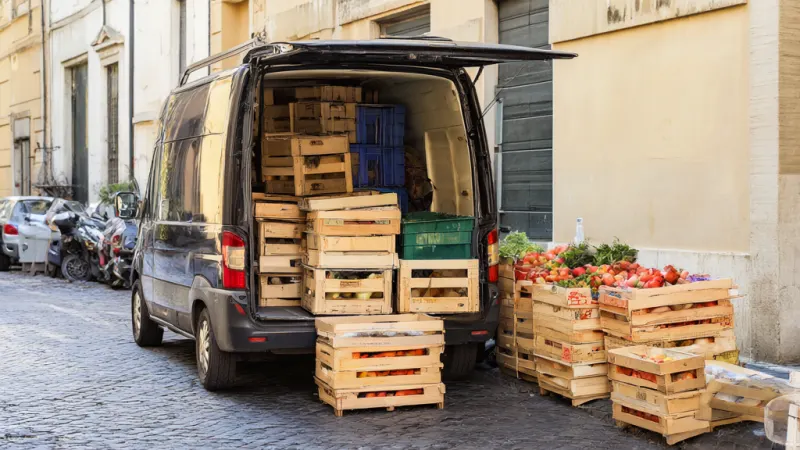
- Narrow lanes, sampietrini (Rome's cobblestones) and pedestrian zones mean small vehicles and more trips: transport may cost more.
- Historic palazzi often have limits on cooking, flames and decorations.
- Ask for a site visit: it is the only way to know where unloading happens and how far things have to be carried.
A reception in a palazzo near Piazza Navona, a corporate dinner on a terrace above Via del Corso, a party in a courtyard in Trastevere. The centre of Rome offers venues you will not find anywhere else. But for caterers it is the hardest part of the city: restricted access, narrow streets, stairs, restrictions. Here is what to know before choosing a supplier.
The ZTL: hours and permits
The historic centre is a ZTL, a restricted traffic zone. As an indication, the hours of the Centro Storico ZTL are as follows (always check on Roma Mobilità):
| ZTL | Days | Indicative hours |
|---|---|---|
| Daytime | Monday-Friday | 6:30-18:00 |
| Daytime | Saturday | 14:00-18:00 |
| Night | Friday and Saturday | 23:00-3:00 (suspended in August) |
These hours come from secondary sources and may change. The official source is Roma Mobilità (romamobilita.it), which also manages goods vehicle permits and temporary permits. The rules for goods vehicles in the ZTL have been subject to changes and legal challenges in recent years: ask the caterer how it plans to get in and whether the permit is included in the quote.
What this means in practice
- an event on a Friday evening requires loading by 18:00 with a permit, or entering after that;
- an event at Saturday lunchtime can make use of the morning, when the daytime ZTL is not active, according to the same sources;
- at the end of the evening on Fridays and Saturdays, leaving may fall within the night ZTL;
- some streets are also pedestrian areas that vehicles never enter.
Loading, unloading and walking distances
Many venues in the centre have no courtyard that vehicles can enter. The van stops where it can, and the equipment is carried by hand.
Ask the venue and the caterer:
- where the van stops: loading bay, courtyard, nearby square;
- how far things are carried on foot, and over what surface: cobblestones make trolleys and roll cages hard to use;
- whether several trips with small vehicles are needed;
- who pays any fines or towing charges.
If a vehicle or equipment needs to occupy the street for some time, a public land permit from Municipio I (the city district covering the centre) may be required. Check with the Municipio and the caterer.
Stairs, lifts and terraces
The historic palazzo often has:
- narrow stairs and no goods lift;
- small lifts, sometimes for four people, sometimes with building rules on when they can be used;
- terraces reachable only by a spiral staircase.
All of this affects timing, staff and the choice of menu. A buffet with lots of heavy equipment becomes complicated on the top floor with no lift. If the event is on a terrace, also read the guide to terrace parties in Rome.
The restrictions of historic palazzi
Many palazzi in the centre are protected as cultural heritage (Legislative Decree 42/2004, the Cultural Heritage Code). The owner or the venue sets the actual rules, but some limits are common:
- no naked flames in frescoed rooms or rooms with period furniture;
- no frying indoors, because of fumes and smells;
- cooking only in service rooms or the courtyard;
- no nails, tape or fixings on walls and floors;
- weight limits for decorations and platforms;
- a maximum number of guests per room.
These restrictions change the menu. If frying on site is not allowed, supplì (fried rice balls) and courgette flowers have to be prepared elsewhere and reheated, or replaced. Ask for the venue's rules before the tasting.
The venue's caterer or an outside one?
Some historic residences work with an exclusive caterer or a list of approved suppliers who already know the restrictions and the routes. Others accept outside caterers. Find out more about the difference in the guide to venues with exclusive or open catering.
Times, noise and neighbours
People live in the centre as well as work there. Palazzi have residents, and the rules on music and noise are stricter than at a villa outside the city.
- ask the venue for the time the music must end;
- ask for the time staff must leave and when take-down happens, which is often noisier than the party;
- avoid dropping glass into the bins late at night: ask the caterer whether it takes away the rubbish at the end of the evening.
A menu suited to the centre
With small kitchens or none at all, it makes sense to choose dishes that travel and reheat well:
- finger food and bowl dishes, easier to manage in tight spaces;
- pasta dishes only if there is a suitable kitchen to finish them on site;
- baked desserts and petits fours, such as small maritozzi (sweet cream-filled buns) or ricotta and sour cherry tart, linked to the Roman Jewish tradition of the nearby Ghetto.
For a gala dinner in a palazzo, read the guide to the corporate gala dinner in Rome.
Different areas, different problems
The historic centre is not all the same, and caterers know it:
- Tridente and Via del Corso: shopping streets, heavy foot traffic during the day, loading and unloading difficult at peak times;
- Trastevere: narrow lanes, many bars and busy nightlife in the evening, so unloading early often makes sense;
- Monti: slopes and narrow streets, palazzi with inner courtyards to check case by case;
- the Ghetto and the Portico d'Ottavia area: pedestrian areas and restrictions, but a Roman Jewish food tradition that lends itself well to a themed menu;
- Aventino and Celio: more greenery and more space, sometimes gardens and cloisters, but access to be checked.
Always give the exact address in your first message: for the caterer it is the first useful piece of information.
Questions to ask the caterer
- Have you worked at this venue or in this part of the centre before?
- How do you get into the ZTL? Is the permit included in the quote?
- Where does the van stop and how much is carried by hand?
- Is there a surcharge for transport and staff in the centre? Can you show it separately?
- Where will you set up the kitchen? Do you need power and water?
- Does the menu take into account the palazzo's bans on flames and frying?
- How long do you need for set-up and take-down?
- Who deals with rubbish and glass at the end of the evening?
- Who pays for any fines or damage to the palazzo?
- Can we do a site visit together with the venue?
In summary
In the centre, the caterer's experience of that particular area counts more than anywhere else in Rome. Always ask for a site visit, get access arrangements and surcharges in writing, and choose a menu that respects the palazzo's limits.
For corporate events in the centre, you will find caterers on the corporate catering page. When you have a venue and date, request a quote and give the address and floor straight away: the caterers can then assess the access.
Sources
- Roma Mobilità, ZTL and permits: https://romamobilita.it/it/servizi/ztl
- Legislative Decree 42/2004, Code of Cultural Heritage and Landscape, on Normattiva: https://www.normattiva.it