In short
- Music and service take turns: build one running order with the caterer and the musicians.
- DJs, bands and entertainers need space, power and a meal: tell the caterer.
- Cut-off times for music are set by the venue (and by noise rules): ask for them in writing.
- For SIAE, check on siae.it who has to handle the paperwork and how.
Music sets the pace of the evening. The caterer sets the pace of the kitchen. If the two don't talk, the first dance falls just as the mains go out, or guests sit in silence waiting for dessert. This guide explains how to get music, entertainment and service working together.
Who does what
- DJs, bands, musicians: they play and often act as hosts too (announcements, toasts, cake cutting).
- Entertainers: for children's parties, but also for corporate events with games or shows.
- Shows and performances: street artists, dancers, magicians, portrait artists, photo booths.
- Caterer: serves, keeps the kitchen's timing, clears the tables, prepares the cake and the bar.
- Venue: sets the rules on hours, volume, space and power.
Sometimes a caterer offering a turnkey service also provides the music. More often it is a separate supplier. For an overview of all the services, read the guide to catering add-on services.
One running order
This is the most useful tool. A single document, sent to all suppliers, with times and key moments. Here is an indicative example for a wedding with an afternoon ceremony: the times depend on season, venue and format.
| Moment | Caterer | Music |
|---|---|---|
| Guests arrive and aperitivo | Stations and waiters passing with trays | Background, acoustic or DJ at low volume |
| Couple's entrance | Guests at the tables, first course ready | Entrance song, announcement |
| Dinner | Courses in sequence | Background; short breaks between courses |
| Speeches and toasts | Glasses filled before the toast | Microphone ready, music off |
| Cake cutting | Cake on display, sparkling wine | Song chosen by the couple |
| First dance and party | Bar and desserts, clearing | Dance floor open |
| End | Bar closes, breakdown | Last song |
The same principles apply to a corporate dinner: the director's speeches and the awards go between courses, not while waiters are serving. The guide to the corporate gala dinner has a sample running order.
The delicate moments
Speeches and toasts
The caterer needs to know when they happen, to fill glasses beforehand and pause service during them. A speech with waiters moving between tables cannot be heard.
First dance
Many hold it after the cake cutting, when dinner is over. Others do it between the pasta and the main course. Either works, as long as the kitchen knows: a hot dish that waits ten minutes is no longer the same dish.
Entertainment during dinner
A show during dinner keeps guests in their seats, but slows the service. Agree with the caterer which break to fit it into and how long it lasts.
Space, power, walkways
Musicians and caterers use the same spaces and the same power supply. Clarify in advance:
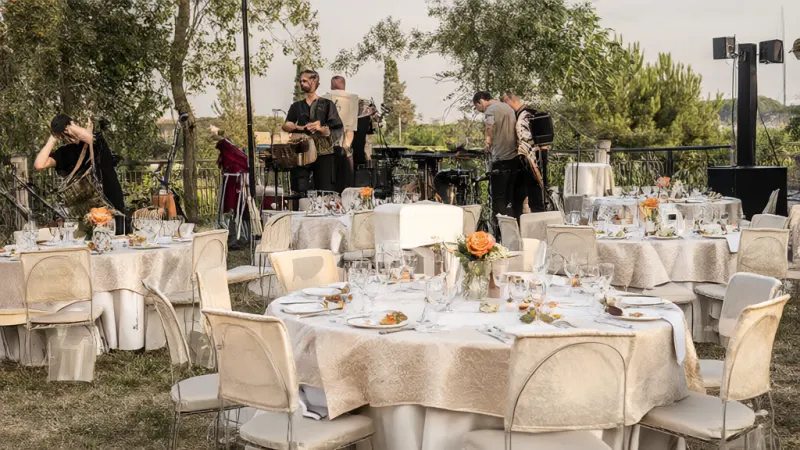
- where the music goes: not in front of the kitchen door, not on the waiters' route;
- power: sound system, lights and kitchen together can exceed the available supply, especially in a garden or a farmhouse. Have the venue and suppliers check it, and if a generator is needed decide who brings it;
- shelter: outdoors, equipment must be protected from rain and sun. It belongs in the plan B, together with marquees and gazebos;
- the dance floor: clear space near the music, away from the buffet and the bar.
Suppliers' meals
Musicians, DJs, photographers and entertainers work for many hours. It is common practice to provide a meal for them, but it is not automatic. Ask the caterer whether they offer a suppliers' menu, at what price, and where and when they can eat. Give the exact number.
Hours and noise
Many villas and farmhouses around Rome, along the Appia Antica as in the Castelli, have a cut-off time for outdoor music. Terraces in the centre have very close neighbours. The limits depend on the venue's rules, the local noise regulations and the event's permits.
Ask the venue, in writing:
- until what time music can be played outdoors and indoors;
- whether there are volume limits;
- whether the party can continue indoors after a certain time.
This time also sets the caterer's: there is no point paying for the bar until 2am if the music stops at midnight. For handling neighbours, read the guide to terrace parties in Rome.
SIAE and rights
Copyrighted music, played live or through speakers at an event, may require a permit and the payment of fees to SIAE, Italy's authors' and publishers' society. The rules depend on the type of event (private or open to the public), the place and how the music is played. SIAE sets the fees and procedures, and they may change.
We don't give precise guidance on who must pay and how much. Do two things:
- check on siae.it, or with the local office, the rules for your type of event;
- ask the venue and the musicians who handles the paperwork: sometimes the venue does, sometimes the DJ or the band, sometimes it is up to you.
Children's parties and entertainment
With children, entertainment is part of the service. The pizza or cake moment should be agreed with the entertainer, who knows when the children need a break. The caterer needs to know if there are games involving food or water. You will find more tips in the guide to catering for children's parties.
Questions to ask the caterer
- Can you help me build the running order for the evening?
- How much time do you need between courses?
- When should the speeches, toasts and first dance happen?
- Does your floor manager speak directly to the DJ or the band?
- How much power do you need? Is there enough for the sound system too?
- Do you offer a suppliers' menu? Where and when do they eat?
- Have you already worked at this venue? Do you know its hours for music?
To finish
Music and catering work well together when they hold the same running order and each has a contact person who talks to the other during the evening. Put them in touch before the event and send them the same document.
For weddings, see the wedding caterers; for birthdays and parties at home, the private party caterers. When you have a date, guest count and venue, request a quote and attach the running order you have in mind.
Sources
- SIAE, Società Italiana degli Autori ed Editori: https://www.siae.it