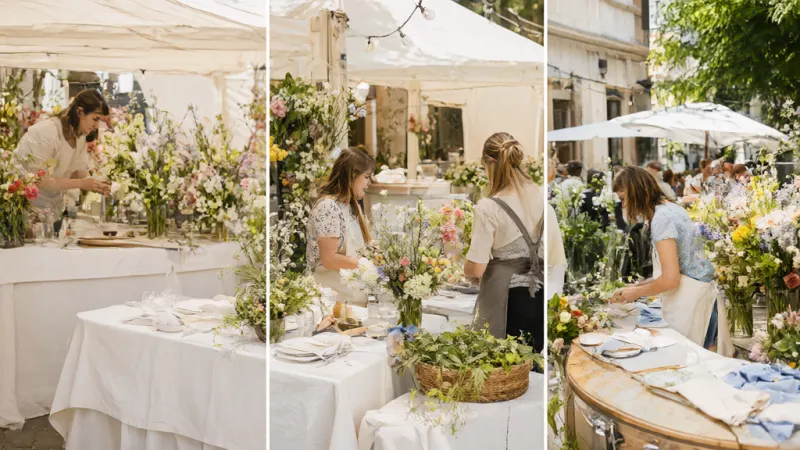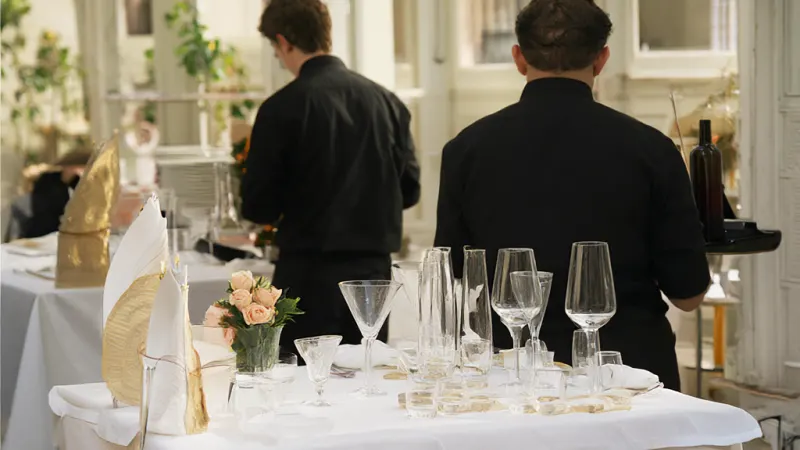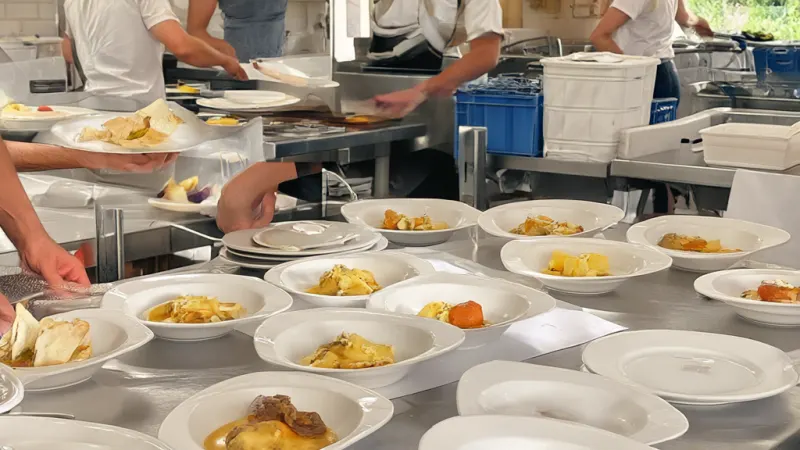
In short
- In the dining room the classic hierarchy is maître, chef de rang, commis; then barman, sommelier, hostess.
- In the kitchen there are chefs, cooks, kitchen assistants and dishwashers, led by a head of kitchen.
- The number of people per role depends on format, guests and space.
- In the quote, ask how many people and which roles are included, not just "staff".
"Staff included" is one of the vaguest lines in a catering quote. Behind it are different roles with specific tasks. Knowing them helps you judge whether the proposed service can handle your format and compare two quotes like for like.
The dining room
Maître
The maître directs the dining room. They coordinate the staff, set the pace of the courses together with the kitchen, and talk to the client or the wedding planner during the event. At a wedding, it is the maître who gives the cue for the couple's entrance, the serving of the pasta course and the cutting of the cake.
When you need one: at every event with table service. At small events the role can be covered by the caterer's manager.
Chef de rang
Responsible for a rang, a group of tables. They serve the courses, look after the wine and respond to the requests of guests in their section. The term comes from the French hospitality tradition, still used in Italian hotel schools.
When you need one: for table service, especially at weddings and gala dinners.
Commis waiter
Helps the chef de rang: brings dishes from the kitchen, clears, refills water and bread, prepares the stations. It is the entry-level role in the trade.
When you need one: in almost every format, buffets included, for refilling and tidying.
Waiter
In quotes, the word "waiter" (cameriere) often covers commis and chef de rang together. Always ask how experienced they are and what their task will be.
Runner
At large events, runners only carry dishes from the kitchen to the dining room, so the waiters stay at the tables. They speed up service when the kitchen is far away.
The bar and the wine
Barman
Makes cocktails, runs the bar counter and keeps track of ice, glasses and spirits. At an open bar, the barman is the central figure. Ask whether the barman belongs to the caterer or to an outside service, and how many drinks an hour they can make, based on their experience.
For bar formats and quantities, read the guide to the wedding open bar.
Sommelier
Recommends and serves the wines, checks their temperature and handles the pairing with the courses. In Italy there are training programmes recognised by the trade, such as those of the Associazione Italiana Sommelier (AIS). If the caterer offers a sommelier, ask what training they have.
When you need one: menus with a different wine for each course, gala dinners, events with fine labels. For a choice of local wines, from Frascati to Cesanese, the guide to Lazio wines for events gives you a starting point.
Welcome
Hostesses and stewards
They welcome guests, manage guest lists and registration, show people to their tables and accompany them. At corporate events and conferences they are essential. They often speak several languages.
Cloakroom
In winter, with many guests, you need someone dedicated to the coats. Ask who is responsible for items left there.
Hostesses and cloakroom staff can come from the caterer, the venue or an agency: be clear about who provides them.
The kitchen
Chef or head of kitchen
Decides the menu with the client, organises production and checks the quality of every dish leaving the kitchen. At events with cucina espressa (dishes cooked on site rather than arriving ready-made), the chef is present throughout the service.
Sous chef and chefs de partie
In larger brigades the sous chef is the chef's deputy. The capi partita (chefs de partie) each look after one section: pasta and first courses, mains, pastry, cold dishes.
Cooks and kitchen assistants
They prepare, cook and plate. At an event, plating is intense work: 200 identical plates in a few minutes.
Dishwasher
Washes crockery, pans and equipment, and keeps the kitchen clean during service. Without one, plates run out after the second course.
Coordination and support services
- Event manager: the caterer's point of contact for the client. At large events they neither cook nor serve: they coordinate.
- Set-up crew: they put up tables, buffets and stations, and take them down afterwards.
- Drivers: they bring food and equipment, often in refrigerated vehicles.
How many per role: what it depends on
The number of people per role is not fixed. It depends on:
- format: table service needs more chefs de rang and commis than a buffet;
- number of courses: more courses, more rounds;
- space: a kitchen far from the dining room needs runners;
- drinks: an open bar needs dedicated barmen;
- timings: a long event needs shifts.
To work through the numbers, read the guide on how many waiters you need.
Example: who is at a served wedding
To see how the roles combine, picture a wedding with an aperitivo in the garden, a dinner served at the table and an open bar. A typical team includes:
- an event manager, who talks to the couple and the wedding planner;
- a maître, who runs the dining room;
- several chefs de rang, each with their own group of tables;
- commis who carry dishes and clear;
- one or more barmen for the aperitivo and the open bar;
- in the kitchen, a chef, some cooks and kitchen assistants;
- at least one dishwasher, more if all plates and glasses are washable.
The exact numbers change with guests, spaces and menu. What matters is that every stage of the evening has someone responsible for it. If the quote only says "dining room staff", ask for the item to be broken down role by role: it is the only way to compare two offers.
Training and certificates
Anyone who handles or serves food must have suitable food hygiene training, under Regulation (EC) 852/2004 and regional rules. This applies to cooks but also to whoever portions food at the buffet. Ask the caterer how they train their staff and whether people coming from an agency hold the same certificates.
Questions to ask the caterer
- How many people are included in the quote, and in which roles?
- Is there a maître or dining room manager dedicated to our event?
- Are the waiters your employees, freelancers or from an agency?
- Is the barman included? For how many hours?
- Do you provide a sommelier? What training do they have?
- Are hostesses and cloakroom staff yours, or do we need to organise them?
- Will the chef be present during the event?
- Is washing the crockery included?
- How much does an extra hour cost for each role?
To finish
Knowing who does what lets you read the quote line by line and judge whether the service can handle your format. If you are a caterer looking for these roles, see the page on catering staff in Rome. If you are organising an event, request a quote and ask for the roles and hours of each person.