In short
- Every corporate format has its own timing and logic: a coffee break lasts 15-30 minutes, a gala dinner a whole evening.
- Ask for quotes with clear VAT and invoicing: for food served with staff, 10% normally applies.
- In central Rome, logistics run through the ZTL (restricted traffic zones): delivery times and permits need agreeing beforehand.
- Sustainability is not a detail: seasonal menus, less plastic, less waste.
A corporate event has a precise goal: to train, present, thank or motivate. The catering has to serve that goal without stealing the show. In this guide you will find the most requested formats, the administrative side and the logistical constraints typical of Rome.
Corporate catering formats
| Format | Typical length | What is served | Indicative range per person* |
|---|---|---|---|
| Welcome coffee / coffee break | 15-30 min | Coffee, tea, juices, pastries, fruit | €7-15 |
| Light lunch | 30-45 min | One-dish meal, salads, finger food, fruit | €12-18 |
| Aperitivo / networking | 1-2 hours | Finger food, drinks, possibly cocktails | €15-25 |
| Served lunch or dinner | 1.5-3 hours | Menu of courses | €40-60 and over |
| Gala dinner | An evening | Served menu, paired wines, careful set-up | on quotation |
*Indicative ranges, based on industry estimates. These are national averages: in Rome quotes may differ depending on menu, service and logistics.
Coffee break
A coffee break works if it is quick. With 100 participants and a 20-minute break, the queue at the coffee machine is the first problem to solve. Ask:
- how many coffee stations are planned and whether the coffee is espresso or from a dispenser;
- whether there is a lactose-free alternative and some packaged gluten-free products;
- whether there is more than one break in the day and how the offer changes.
Light lunch
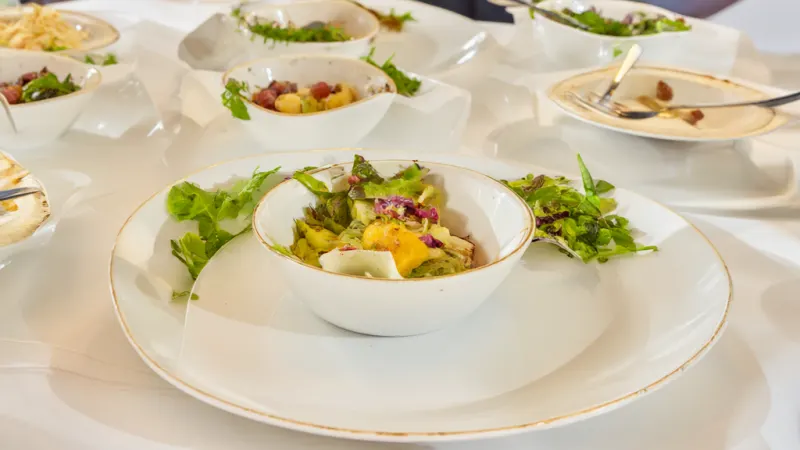
Lunch on a working day should be light and quick. Avoid heavy fried food and dishes that need a knife and fork while standing. Grain salads, seasonal vegetables, a cold or warm pasta dish and fruit work well. Alternatively, individual lunch boxes are practical for workshops in the room and reduce crowding at the buffet.
Conferences and congresses
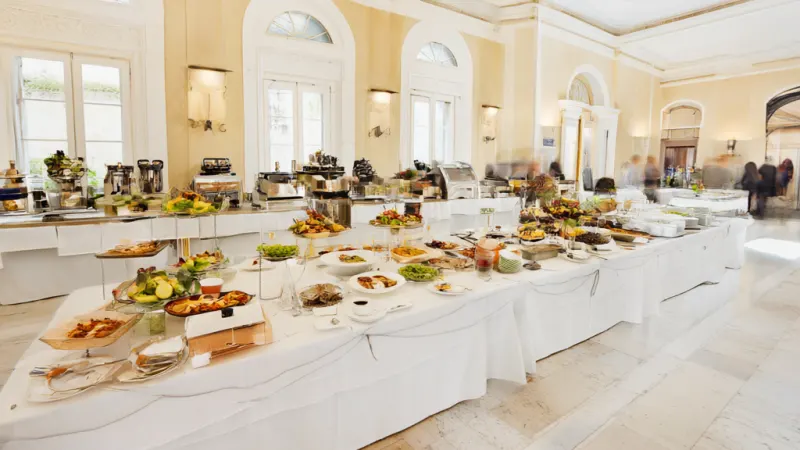
For events over several days, catering becomes an ongoing service: welcome coffee, coffee breaks, lunch, sometimes an evening aperitivo. Here consistency counts: menus that change every day, timing kept, staff who know the conference programme. Ask for a single contact who talks to the organising secretariat.
Gala dinners
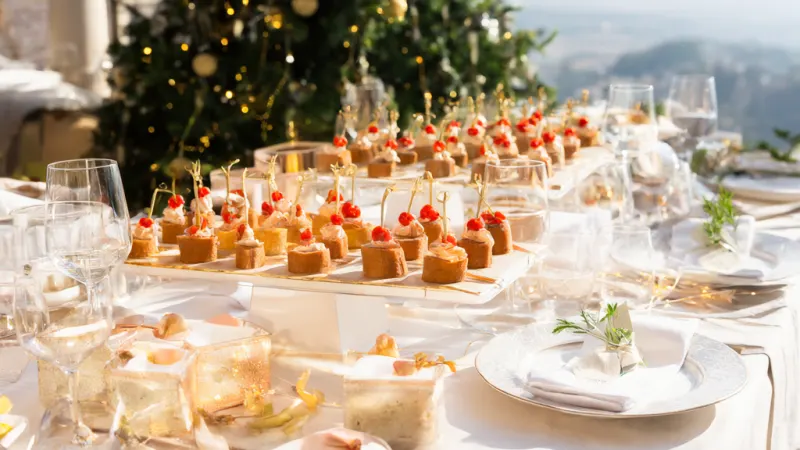
The gala dinner is the format in which the company's image matters most. Set-up, table setting, pace of service, wine pairing, and any official moments (speeches, awards) to be timed with the courses. Agree with the caterer on service timing against the running order: a 15-minute speech halfway through dinner means courses have to be kept warm.
Team building
Cooking classes, team challenges, fresh pasta, pizza or sushi workshops: food is a widely used tool for team building. Groups visiting Rome also enjoy a Roman cooking workshop, from cacio e pepe to supplì (fried rice balls). Check that the caterer has experience with hands-on formats, handles allergens in the workshops too, and has suitable equipment and insurance.
Administration: invoicing, VAT, payments
Corporate events have their own administrative needs. Clarify beforehand:
- Billing name and details (company name, VAT number, recipient code for the electronic invoice).
- VAT rate. For food and drink served with staff (personnel, equipment, assistance with consumption) VAT is normally charged at 10%. If the job is mainly a food delivery without service, it may be treated as a sale of goods, with the rates for the individual products. The correct classification and the deductibility of the expense should be checked with your finance department.
- Purchase order and CIG. If your organisation is a public body, there are specific procedures, such as the CIG tender code: give the caterer all the references required before the event.
- Payment terms. Many caterers ask companies for a deposit too. Agree in advance whether the balance is due after the event or at 30 days.
- Changes in the number of participants. At congresses registrations change until the last minute: set a date for the final number and a tolerance.
Logistics in Rome: EUR, the historic centre and the ZTL
Rome's ZTL
Rome has several Zone a Traffico Limitato (restricted traffic zones) with different hours. As an indication, the main ones include the following (check the current hours on Roma Mobilità):
| ZTL | Hours in force (indicative) |
|---|---|
| Centro Storico, daytime | Mon-Fri 6:30-18:00, Saturday 14:00-18:00 (public holidays excluded) |
| Centro Storico, night | Friday and Saturday 23:00-3:00 |
| Tridente (A1) | Mon-Fri 6:30-19:00, Saturday 10:00-19:00 |
| Trastevere, daytime | 6:30-10:00 (public holidays excluded) |
| Trastevere, night | Friday and Saturday 21:30-3:00, from May to October also Wednesday and Thursday |
| San Lorenzo, night | Friday and Saturday 21:30-3:00, from May to October also Wednesday and Thursday |
| Testaccio, night | Friday and Saturday 23:00-3:00 |
There is also a goods ZTL (ZTL Merci) with rules and time slots based on the weight and emission class of vehicles, for which a valid permit is needed.
The rules change often. Some recently announced changes:
- According to press reports, the access gates are due to read number plates on exit as well, starting with the Centro Storico; and time slots by category of goods are on the way for deliveries in the centre, along with an order on vans along the Via del Corso axis.
- The Roma Mobilità website reports that the effects of an order on goods traffic in the centre are suspended pending a decision by the TAR (the regional administrative court).
Before organising an event in the historic centre, check the current hours and permits on the official Roma Mobilità website and ask the caterer how it handles access: does it have a goods permit? Does it deliver outside the hours in force? Does it have to carry things by hand for the last stretch?
EUR and districts outside the centre
EUR is one of the areas of Rome with the highest concentration of company offices and conference venues. Compared with the historic centre, access for vans is generally easier and there are no ZTL. Still to be checked:
- the building's or conference centre's loading and unloading times;
- goods lifts, service entrances, distance between unloading point and room;
- any venue rules on outside suppliers (exclusive caterer or accredited suppliers).
Venues in the historic centre
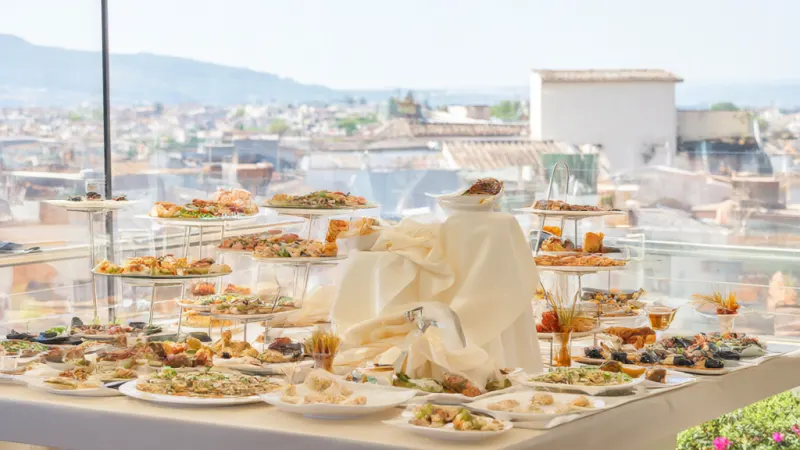
Historic palazzi, terraces and grand reception rooms are beautiful settings, but they need a caterer used to spaces without a kitchen, narrow stairs, heritage authority restrictions on set-up and strict timings. Always ask for a site visit before the final quote.
Sustainability in corporate catering
More and more companies include sustainability criteria when choosing suppliers. Here is what to ask, in concrete terms:
- Seasonal menus and local produce. Lazio offers local vegetables, cheeses, olive oil and wines all year round.
- Tableware. Reusable where possible; otherwise compostable. Avoid single-use plastic.
- Water. Jugs or dispensers instead of small bottles.
- Quantities. An accurate estimate of participants is the first tool against waste.
- Surplus. Ask how the caterer handles leftover food and whether it works with food recovery organisations, in line with hygiene rules.
- Transport. Optimised deliveries and low-emission vehicles are also an advantage for access to the ZTL.
Ask the caterer to put the measures it adopts in writing: it will also be useful for the event's sustainability report.
Quick checklist for the corporate event
- Event goal and catering format
- Number of participants and the date for the final number
- Timed programme with breaks and official moments
- Venue: access, kitchen, times, ZTL, any exclusive suppliers
- Diets and allergies collected at registration (see the guide to special diets)
- Billing details, VAT, payment terms
- A single caterer contact for the day
- Agreed sustainability measures
To check health requirements, contract and staff, use the checklist on how to choose a caterer. When you have the event details, request a quote.
Sources
- Roma Mobilità, ZTL section: https://romamobilita.it/it/servizi/ztl