In short
- Above 500 people the logistics change: more service points, dedicated kitchens, shifts and a written plan.
- Choose the caterer on the basis of similar events it has already served, not a generic promise.
- Safety and emergencies are planned with the organiser and the venue: check the obligations with the authorities.
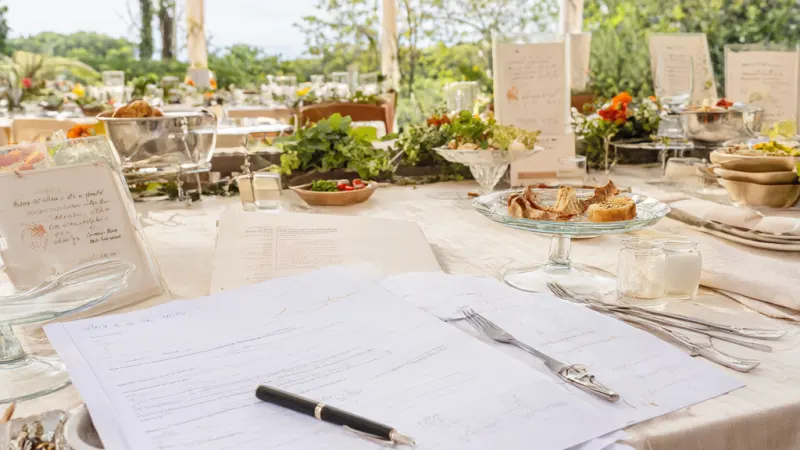
- A site visit, an operational plan and a test of the guest flows are worth more than any photo of the menu.
An event with 500, 1,500 or 5,000 people is not a small event multiplied. The spaces, timings, staff and responsibilities all change. This guide helps you understand what to ask a caterer when the numbers get big, in Rome and the surrounding area.
What changes above 500 people
With 80 guests, one kitchen and one team are enough. With 800 you need several kitchens or one very large kitchen, more service lines, a manager for each area and a clear chain of command.
The main differences:
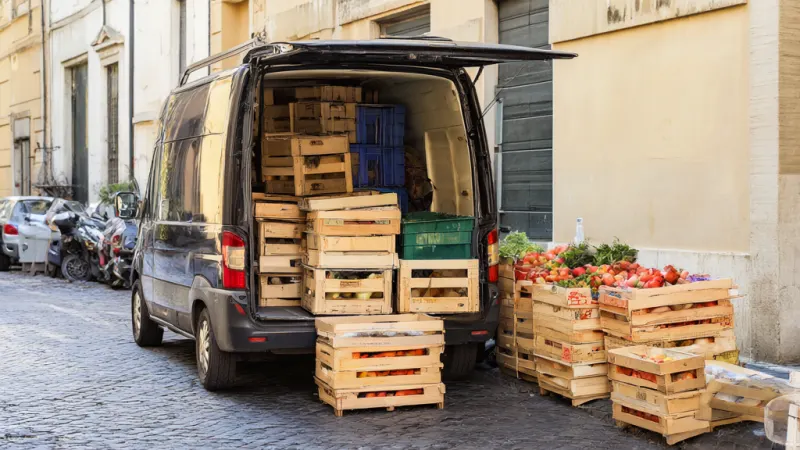
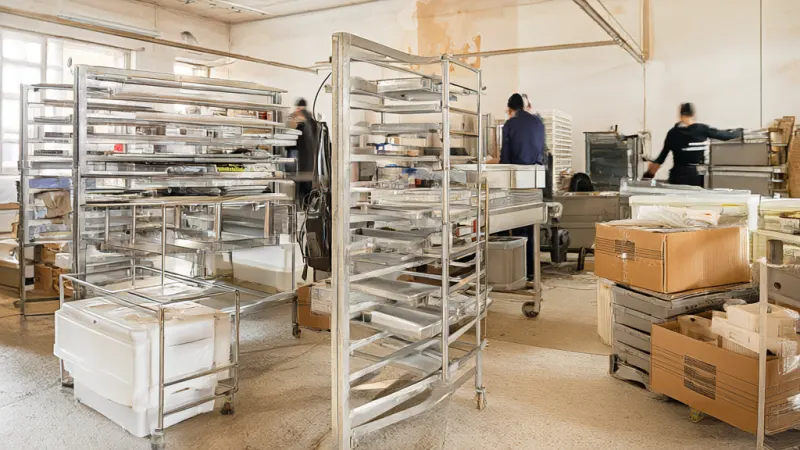
- Production: some dishes are prepared in a production kitchen and arrive on site for finishing. The rest is cooked on site, in equipped kitchens or field kitchens.
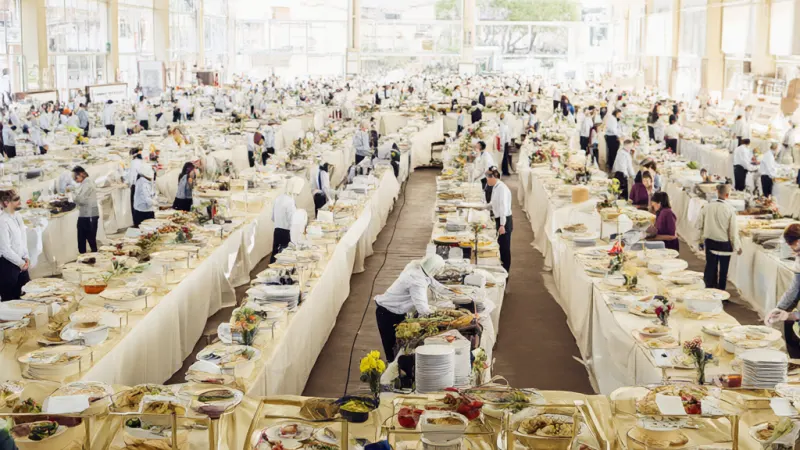
- Distribution: a single buffet creates half-hour queues. You need replicated islands or stations spread around.
- Timing: serving a thousand hot first courses in ten minutes is a logistics problem, not a recipe problem.
- Coordination: the caterer works alongside the organiser, the venue, the set-up crew, the sound and lighting company and security. Each has a point of contact.
In Rome this applies to conferences at EUR, corporate conventions, large weddings on estates outside the city, sporting events, festivals and concerts. For conferences there is a dedicated guide to conference catering in Rome.
Formats that work for large numbers
| Format | How it works | When it works |
|---|---|---|
| Buffet with replicated islands | The same stations repeated in several places | Standing dinners and lunches, 500-3,000 people |
| Station-based service | Each station serves a different dish | Festivals, corporate events |
| Served at the table | Courses served to numbered tables | Galas, large weddings, with plenty of staff |
| Boxed meals or lunch bags | Packed meals handed out | Conferences, sporting events, volunteers |
| Food court with several suppliers | Several caterers or food trucks in the same space | Festivals, events open to the public |
A seated, served meal for a thousand people can be done, but it needs a large team and strict timings between courses. Replicated islands are the most common solution because they spread guests across the space. The details of flows, stations and timings are in the guide on catering logistics for large numbers.
Field kitchens and equipment
When the venue does not have a suitable kitchen, the caterer sets up a field kitchen: a temporary structure with worktops, ovens, blast chillers, fridges, washing-up and separate areas for dirty and clean.
What to check:
- Space and position: the kitchen must be close to the service areas but separate from the public.
- Power: electric ovens and fridges use a lot of it. You need to know the available power or plan for generators.
- Gas: if the caterer uses gas cylinders or gas installations, specific fire safety rules apply. Check them with the fire brigade and the organiser.
- Water: supply and drainage for washing and cleaning.
- Hygiene: Regulation (EC) 852/2004 requires anyone producing and serving food to have a self-monitoring system based on HACCP principles, including in temporary structures.
For an event where food is produced in an unusual space, a health notification or a permit for temporary activity is usually also required, submitted through the council's one-stop shop for businesses (SUAP). Procedures change: check them with the SUAP and the relevant local health authority (ASL).
Staff and shifts
Staff are the most delicate item. A large event needs a range of roles:
- an event manager from the caterer, who talks to the organiser;
- area supervisors (kitchen, floor, bar, washing-up);
- cooks and kitchen assistants;
- waiters and station staff;
- bartenders;
- dishwashers and clearing staff.
With many hours of service you need shifts: those who set up cannot work right through to the breakdown. Ask the caterer how it organises changeovers and breaks, and how many of its staff are permanent compared with those it brings in for the event. You will find the list of roles in the guide to catering staff roles. If the caterer relies on staffing agencies, you can find out about them on the page on catering staff in Rome.
Safety and the emergency plan
A large event has safety obligations that do not depend on the caterer but involve it. The general rules are these, to be checked case by case:
- Public entertainment events may require the opinion of the Commission for the supervision of public entertainment venues (article 80 of the TULPS, Italy's consolidated public safety law), at council or prefecture level depending on capacity.
- Since 2017, after the events in Piazza San Carlo in Turin, the Ministry of the Interior has issued circulars on safety (the protection of people: escape routes, capacity, medical cover) and security (public order) for public events.
- The organiser prepares an emergency plan with escape routes, assembly points, and fire and medical cover.
What the caterer has to do within this framework:
- know the emergency plan and train its staff;
- not block escape routes with tables, trolleys or crates;
- keep fire extinguishers near the kitchens and follow the rules on open flames;
- have a contact person reachable at all times.
Do not improvise on these points: ask the organiser and the relevant authorities (council, Questura, fire brigade, ASL).
Allergens, water and rubbish
With thousands of guests, even simple things become big:
- Allergens: Regulation (EU) 1169/2011 requires information on the 14 allergens even for unpackaged dishes. With many stations, each station needs its own sign.
- Water: in summer the heat in Rome takes its toll. Plan water points for guests and staff.
- Rubbish: the volume is huge. You need a waste-sorting plan, containers and an agreed collection. Ask who handles it and who pays.
Questions to ask the caterer
- Which events of a similar size have you served? With which format and how many staff?
- Do you have a production kitchen? What do you prepare there and what on site?
- Do you need a field kitchen? Who sets it up and how much power does it need?
- Do you use gas? How do you comply with fire safety rules?
- How many service points do you plan? How long does it take to serve every guest?
- How do you organise staff shifts and breaks? How many are your own employees?
- Who is your single point of contact on the day of the event?
- How do you display allergens at each station?
- Who handles rubbish and cleaning? Are they included in the price?
- Do you have a plan B for rain, intense heat or delays to the programme?
To finish
A large event depends on the site visit, the operational plan and the right people in the right places. See the caterers that work with large numbers on the page catering for large events and, once you have dates, numbers and a location, request a quote from several suppliers, giving them all the same information.