In short
- Italian service (the plate comes ready from the kitchen) is the most common at receptions.
- French, English, Russian and guéridon service bring the serving dish into the room: more theatre, more staff.
- Buffet and tray service are the formats for aperitivi and standing receptions.
- The names are not the same in every manual: ask for the service to be described, don't rely on the label alone.
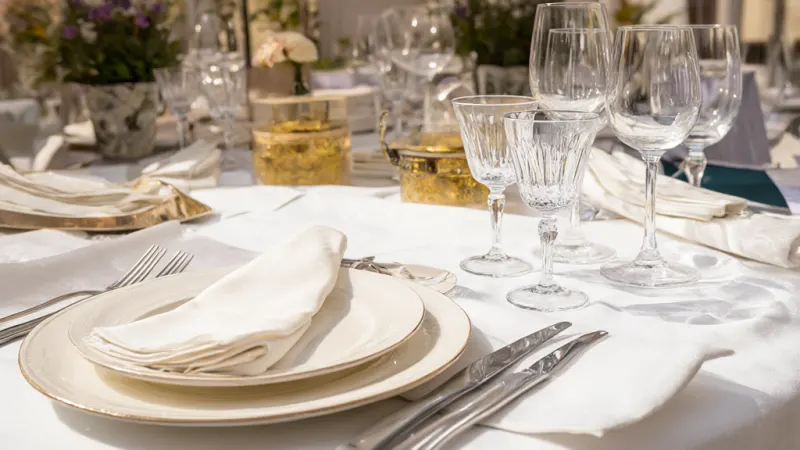
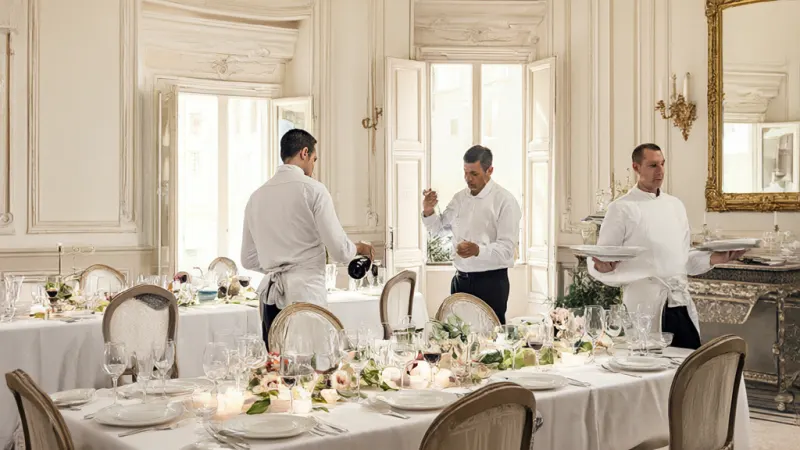
The style of service decides how many waiters you need, how long dinner lasts and what atmosphere the room will have. It is not a technical detail to leave to the caterer. Here are the banqueting service styles, how they work and when to use them.
A note on names
The definitions in this article follow the version most widely taught in Italian hospitality schools. Not everyone uses the same names, though. For example, some trade guides call guéridon service "English" and describe French service differently. Even the side from which food is served changes from one manual to another. English-speaking caterers may also use these terms differently.
The practical consequence is simple: when a caterer proposes "French service", ask who holds the dish, who portions it and where.
Italian service
How it works. The dish arrives plated from the kitchen and the waiter sets it in front of the guest. There is also a version with a cloche, the cover lifted at the table.
Pros. It is fast and consistent. The chef controls the portion and the plating. All tables receive the same dish at almost the same moment.
Cons. Less theatre in the room. To serve everyone together you need a well-organised kitchen and a suitable pass (the counter where plates leave the kitchen).
When to use it. Seated weddings, company dinners, conferences with a served lunch. It is the basis of most Italian receptions.
French service
How it works. The waiter presents the serving dish to the guest, usually from the left, and the guest helps themselves with the serving cutlery.
Pros. Elegant, and it lets the guest choose the quantity.
Cons. It is slow: each guest serves themselves one at a time. With many guests the dish goes cold. Not all guests are comfortable with serving cutlery.
When to use it. Small, formal dinners, few tables, guests used to ceremony.
There is also a historical meaning. Old-style "French service" put all the courses on the table together. "Russian" service, with courses one after another in a fixed order, spread in the mid-19th century and is the system we still use today.
English service
How it works. The waiter holds the serving dish and portions it onto the guest's plate, with tongs or a spoon and fork.
Pros. Faster than French service, more personal than a ready plate. The guest sees the whole dish.
Cons. It needs experienced staff. Portions can vary from one waiter to another.
When to use it. Side dishes, mains to be portioned, dinners with a medium number of guests and a classic touch.
Russian service
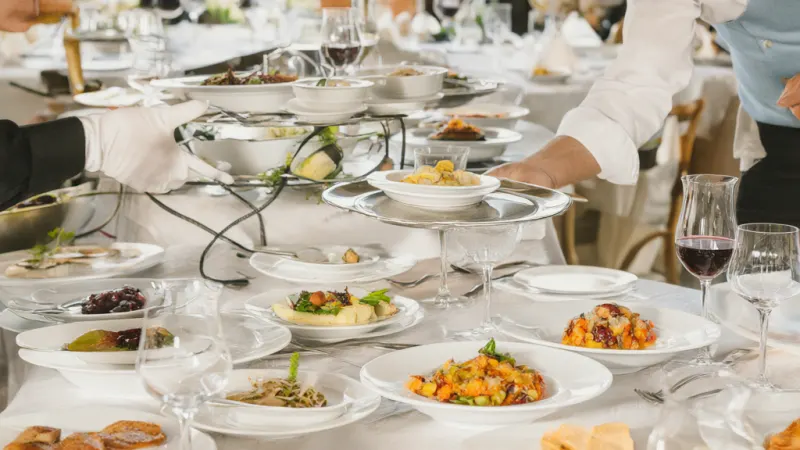
How it works. The whole dish is shown to the guests, then portioned on a trolley or side table and served onto plates. Often two people work together: one carves and one serves.
Pros. Very theatrical, it shows off whole dishes: a roast, a fish baked in salt, a savoury pie.
Cons. It takes time, space between the tables and more staff.
When to use it. A signature course within an Italian-service dinner, gala dinners with few tables.
Guéridon service
How it works. The guéridon is a small table or mobile trolley next to the guests' table. The waiter finishes the dish in front of the guests: portioning, carving, dressing, sometimes flambéing.
Pros. It is a show up close. It works well with dishes finished on the spot, such as a cacio e pepe tossed inside a wheel of pecorino.
Cons. Slow, suited to few covers. With open flames, check the venue's safety rules.
When to use it. Micro weddings, private dinners, a moment of show cooking within a larger event.
Buffet service
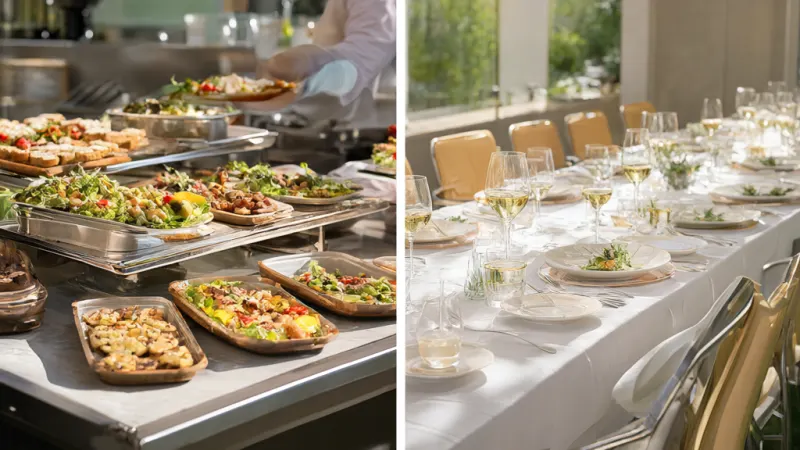
How it works. The dishes are on tables or food stations. Guests serve themselves or are helped by an attendant behind the table.
Pros. Convivial, guests free to move, suited to gardens and terraces. It allows plenty of choice.
Cons. Queues if there are too few stations. Larger quantities are needed because everyone chooses. In summer the temperature of cold and hot dishes must be monitored.
When to use it. Aperitivi, informal lunches, parties, themed stations at a wedding (raw fish, cheeses, pasta). For quantities, read the guide on how much food per person.
Tray service (flying service)
How it works. Waiters circulate among the guests with trays of finger food or glasses.
Pros. Guests don't have to move and the room stays clear. Ideal for aperitivi and standing receptions.
Cons. You need a good number of waiters so no area is left uncovered. Anyone stuck in a corner risks eating little.
When to use it. The aperitivo after the ceremony, corporate cocktails, openings. Ideas in the guide to the wedding aperitivo.
The comparison in a table
| Service | Who portions | Speed | Staff | Suits |
|---|---|---|---|---|
| Italian | Kitchen | High | Medium | Seated receptions |
| French | Guest | Low | Medium | Small, formal dinners |
| English | Waiter at the table | Medium | Medium-high | Mains and side dishes |
| Russian | Waiter at a trolley | Low | High | Whole dishes, galas |
| Guéridon | Waiter at the table | Low | High | Few covers, show |
| Buffet | Guest | Variable | Low-medium | Aperitivi, parties |
| Tray | Circulating waiter | High | Medium-high | Standing aperitivi |
The ratings are indicative: they depend on the menu, the spaces and the team's experience. For an order of magnitude on staffing, the guide on how many waiters you need gives the ratios with their sources.
Mixing service styles
In Roman practice almost no reception uses a single style. A typical sequence at a villa in the Castelli Romani: tray and station aperitivo in the garden, pasta and mains in Italian service, a guéridon moment for a traditional dish, a dessert buffet and a confettata (a table of sugared almonds). Each change of service is also a change in the rhythm of the party.
Questions to ask the caterer
- Which service do you propose for each stage of the event? Can you describe it in practice?
- How many waiters do you plan for each stage, and how many tables does each one look after?
- How much time passes between courses with the chosen service?
- Is there enough space between the tables for trolleys or a guéridon?
- For the buffet, how many stations and attendants? How do you keep temperatures?
- If we change the service, how does the quote change?
To continue
Choose the service based on your guests, the spaces and the time you have, then ask the caterer to put it in writing. To find out who does what in the dining room, read about the banqueting staff roles. If you are planning a wedding, look at the wedding caterers and request a quote stating the service you prefer.