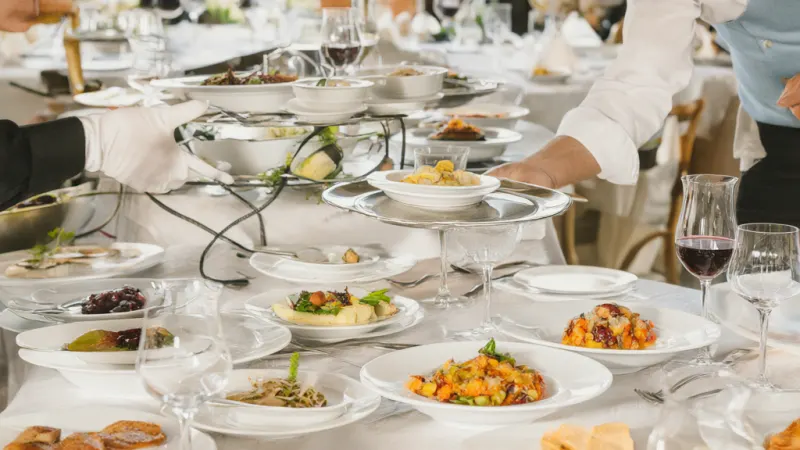
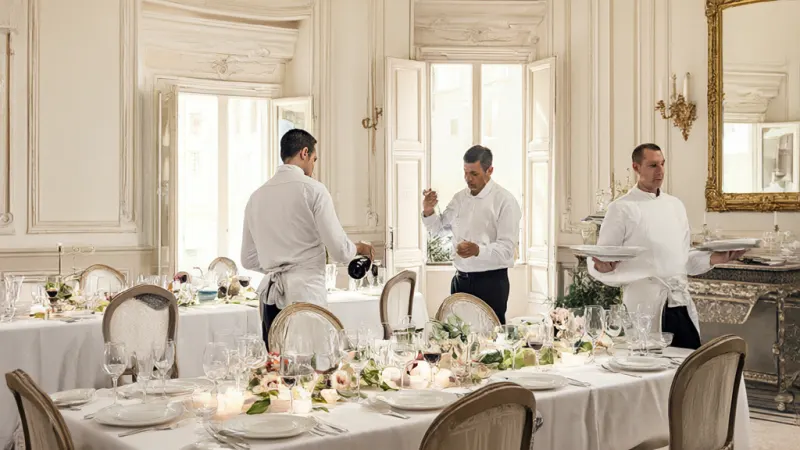
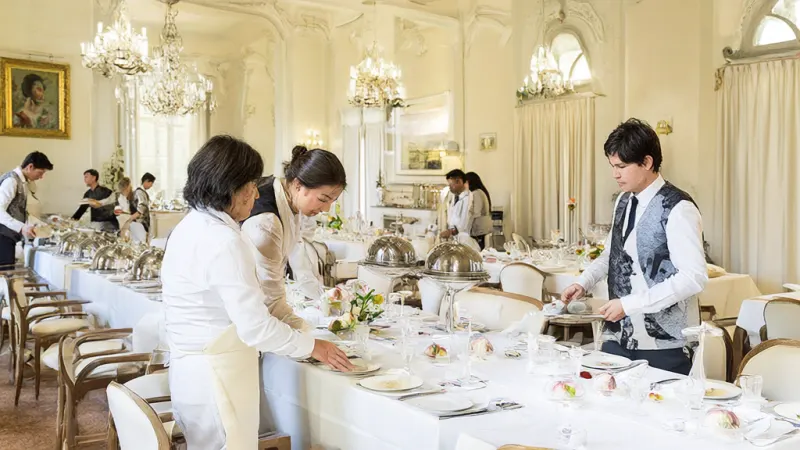
In Russian service (in Italian, servizio alla russa) the whole dish is shown to the guests, then portioned on a trolley or side table and served onto plates. Often two people work together: one carves and one serves. It shows off whole dishes, such as a roast, a salt-baked fish or a savoury pie.
It is very theatrical, but needs time, space between tables and more staff. That is why it is usually kept for one symbolic course within an Italian-style dinner, or for gala dinners with few tables. Historically the term also refers to the system of courses served one after another in a fixed order, which spread in the mid-19th century and is still used today.
What to ask
Ask which dish lends itself to it, how many staff are needed, how long the service lasts and whether there is enough room between tables for the trolleys. The differences from other services are in the guide to types of banqueting service; front-of-house roles in banqueting staff roles.