In short
- The table style comes from three choices: table and tablecloth, plates and glasses, centrepiece.
- Four styles cover almost every event: rustic, classic, minimal, Roman.
- The mise en place (arranging plates, cutlery and glasses) is the caterer's job.
- Show the same photos to the caterer and the florist: it is the quickest way to understand each other.
Guests spend most of the evening at the table. It is where the photos, the toasts and the conversations happen. The table style should suit the venue and the menu, and be comfortable for those eating and those serving. Here are the most common styles and how to put them together.
The three choices that make the style
| Choice | Options |
|---|---|
| Table and tablecloth | Round with a long cloth, bare wooden banquet table, rectangular with a runner |
| Plates, glasses, cutlery | Classic white, coloured ceramics, metal charger plates, crystal or simple glass |
| Centrepiece and details | Low or tall flowers, greenery, candles, place cards, printed menus |
Before choosing, check with the caterer what it already has: plates, glasses and table linen included in the price. The rest can be hired. For tableware and glassware hire, read the guide to glassware and tableware hire.
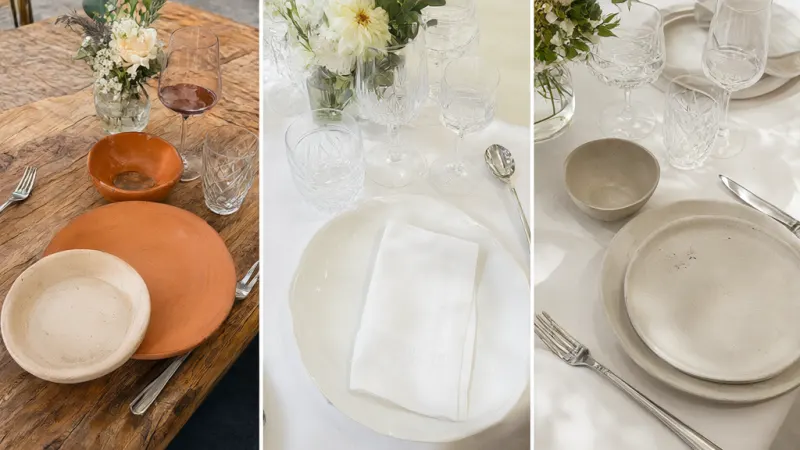
Rustic style
This is the style of farmhouses in the Roman countryside, of agriturismi (farm stays) in the Castelli Romani and of gardens with pergolas.
- Table: a long wooden banquet table, bare or with a linen or jute runner.
- Plates: matt ceramics in natural tones, sometimes deliberately mismatched.
- Glasses: simple glass, coloured too.
- Cutlery: matt metal or bronze.
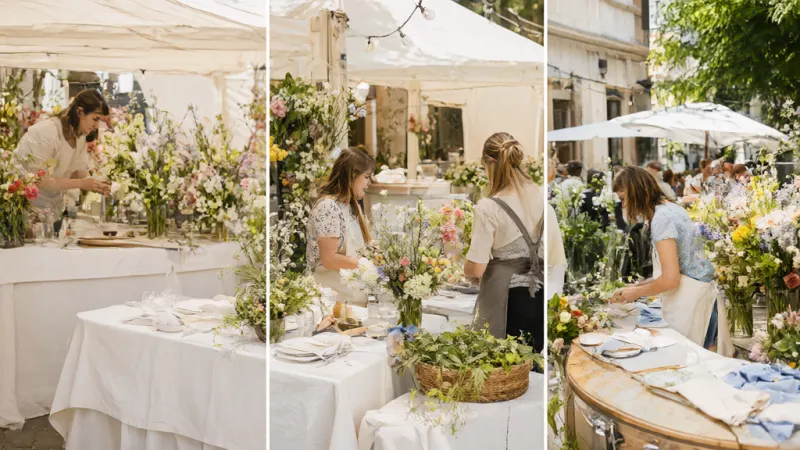
- Centrepiece: plenty of greenery, olive, wild flowers, seasonal fruit, candles in jars.
- Chairs: natural wood or bistro chairs.
It works with convivial menus and sharing dishes in the middle of the table. For tables and chairs, read the guide to event furniture hire.
Classic style
This is the style of historic villas and gala dinners.
- Table: round with a floor-length cloth, white or ivory.
- Plates: white porcelain, a silver, gold or glass charger plate.
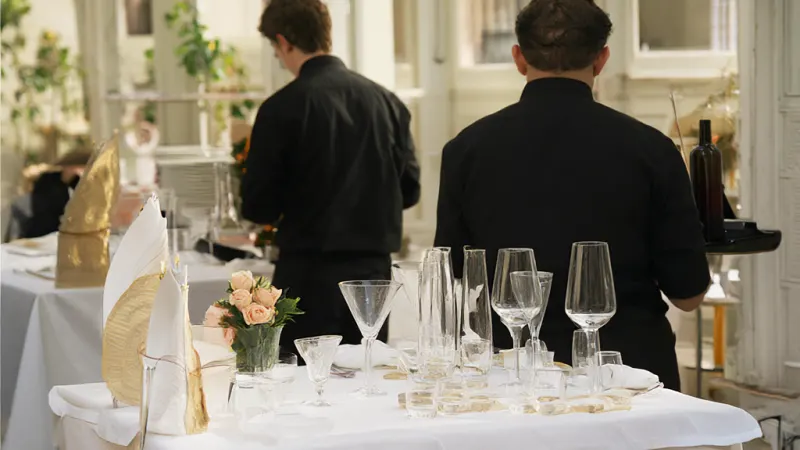
- Glasses: crystal stemware, one for water and one for each wine.
- Cutlery: silver or polished steel, a full set for each course.
- Centrepiece: flowers in one colour (white, powder pink, red), tall or low, candles.
- Chairs: Chiavari or Napoleon III.
This is the style in which the table setting shows most: everything has to be aligned.
Minimal style
For city terraces, corporate events and modern venues.
- Table: rectangular, white or grey tablecloth, or a bare top in a pale material.
- Plates: white, simple shapes, square too.
- Glasses: fine glass, no decoration.
- Cutlery: essential, matt or black.
- Centrepiece: a single stem in a vase, small candles, a little greenery.
- Chairs: transparent or designer chairs.
Fewer objects, so every object has to be perfect. A smeared glass stands out more.
Roman-themed style
Rome offers recognisable materials and colours. Three variations:
Trattoria
Red and white checked tablecloths, flasks of wine, bread in baskets, the menu written on a blackboard. It works for informal parties, birthdays and team building.
Roman villa
White linen, olive and bay, lemons in pots, hand-painted ceramics, candles. It recalls the gardens of the historic villas. It works for weddings and summer dinners.
Ancient Rome (in moderation)
Terracotta, wood, bay leaves, white and purple tones. A little goes a long way: a purple runner, a sprig of bay as a place card, metal cups for water.
In every variation, two or three references are enough: the menu does the rest, with dishes such as cacio e pepe, artichokes in season and mini maritozzi (sweet cream-filled buns).
Table setting: the basic rules
The mise en place is the arrangement of objects on the table. In its classic form:
| Element | Position |
|---|---|
| Plate | In the centre of the place setting, on a charger plate if used |
| Forks | On the left, in order of use from the outside in |
| Knives and spoon | On the right, blade facing the plate |
| Dessert cutlery | Above the plate, horizontal |
| Glasses | At the top right: water, red wine, white wine, flute |
| Napkin | On the plate or to the left |
| Bread plate | At the top left |
| Place card | Above the plate or on the napkin |
The number of pieces of cutlery and glasses follows the menu: you do not lay cutlery for courses that are not coming. Find out more in the guide to mise en place in banqueting.
Centrepieces: height and footprint
- Low: let people talk face to face. They are the safest choice.
- Tall: make an impression, but the widest part must sit above the eye level of seated guests.
- Footprint: leave room for serving dishes, bottles and the bread basket.
- Scent: strongly scented flowers near the food can be off-putting.
To choose seasonal flowers and arrangements, see the guide to flowers and centrepieces for events.
Comfort before looks
A beautiful but uncomfortable table spoils the dinner. Check that:
- every guest has room for their plate and elbows;
- the waiting staff can serve without moving decorations;
- candles are out of reach of sleeves and napkins;
- outdoors, the wind will not blow away menus and place cards.
Table and season in Rome
The table style goes hand in hand with the season. Some combinations that work in and around the city:
- Spring: pale tablecloths, wild flowers, small pots of herbs. The colours of broad beans, peas and artichokes look good on the table.
- Summer: white linen, lemons, olive greenery, clear glass. Outdoors, avoid dark tablecloths, which heat up in the sun.
- Autumn: warm tones, branches, leaves, pomegranates and grapes as centrepieces.
- Winter: velvet, dark greenery, candles (where allowed), gold details.
The venue suggests the rest. A terrace in Trastevere calls for lightness and little clutter; a farmhouse towards Bracciano can take wood and plenty of greenery; a frescoed room in a historic villa calls for a classic style that does not distract from the walls.
Questions to ask the caterer and florist
- Which plates, glasses and cutlery are included in the price? Can I see them?
- Do you have table linen in different colours and materials?
- Who prepares the table setting, and when?
- Can the wooden tables stay without a tablecloth?
- Do the centrepieces leave room for service?
- Are candles allowed at the venue?
- Can we do a trial of a fully laid table at the tasting?
- Who brings the place cards and printed menus?
To finish
The table style is chosen with the venue in mind and built with the caterer and florist. You will find ideas for weddings in the wedding catering section. Once you have decided on the style, request a quote and bring your reference photos.