In short
- Indicative industry ranges run from €7-15 for a coffee break to €35-70 for a full menu, up to €90-150 and more for a wedding.
- Within the same format, the price is driven by ingredients, number of courses, staff and drinks.
- Seafood and an open bar raise the bill, but there is no Italian source that says by how much.
- Every range is an order of magnitude: in Rome you will find quotes above and below it.
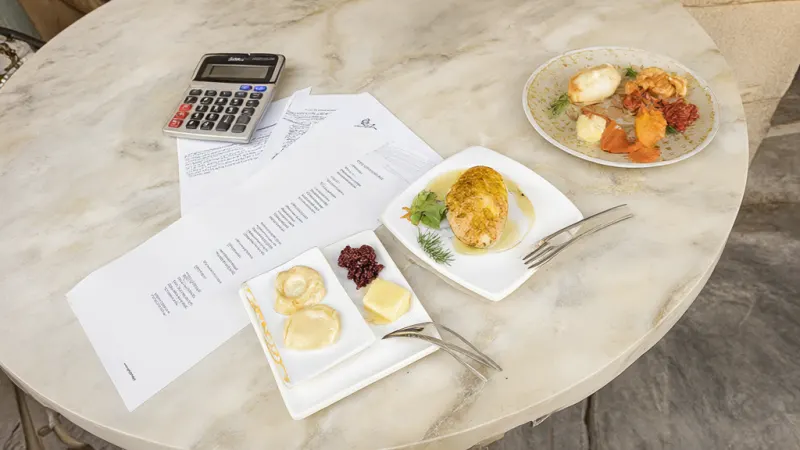
You want to know how much a certain type of menu costs before you ask for quotes. It is a sensible question: it helps you choose the format to fit your budget. Here you will find indicative per-person ranges for each type of menu and examples of what goes into them.
The figures are national averages published online, not a Rome price list. The general explanation of how the price is built is in the guide to how much catering costs in Rome. Here we focus on the menu.
Ranges by type of menu
| Type of menu | Range per person |
|---|---|
| Coffee break | €7-15 |
| Light lunch | €12-18 |
| Aperitivo | €15-20 |
| Basic apericena (an aperitivo generous enough to replace dinner) | around €10-20 |
| Cocktail (finger food) | €20-25 |
| Simple lunch or dinner | €20-50 |
| Full basic menu (starter, first course, main, side, dessert) | €35-70 |
| Served dinner with elaborate dishes | €40-60 and more |
| Wedding banquet | around €125 (average) |
| Seafood menu | above the equivalent meat menu |
| Open bar | separate item |
Two caveats. The ranges overlap: a generous cocktail can cost more than a simple lunch. And the estimates do not always say whether the price includes staff, drinks and VAT.
Menu examples, format by format
The examples below show what usually goes into each format. The dishes are chosen for Rome and for the season; the price to compare against is the one in the table.
Coffee break
Espresso or American coffee, tea, juices, water. Sweet and savoury baked goods: mini cornetti, mini pizzas, small focaccias, muffins, sometimes mini maritozzi and pizza bianca cut into squares. Seasonal fruit.
What moves the price: the number of breaks in the day, an espresso machine with a member of staff rather than flasks, artisan baked goods. More breaks in a day mean more services to pay for.
Finger food and apericena
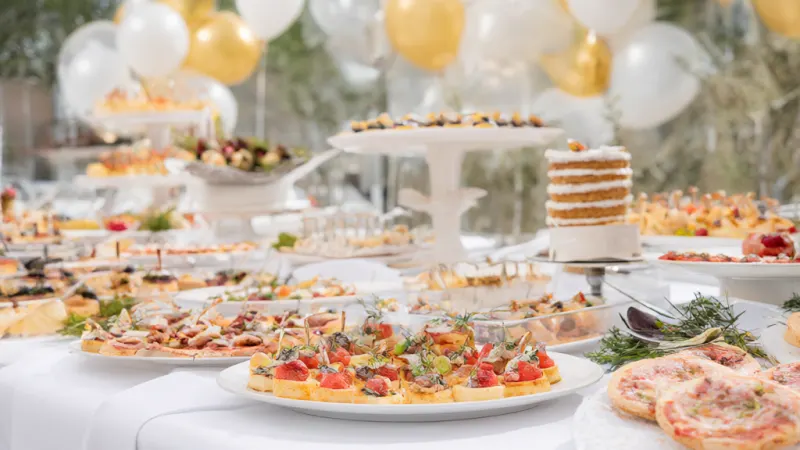
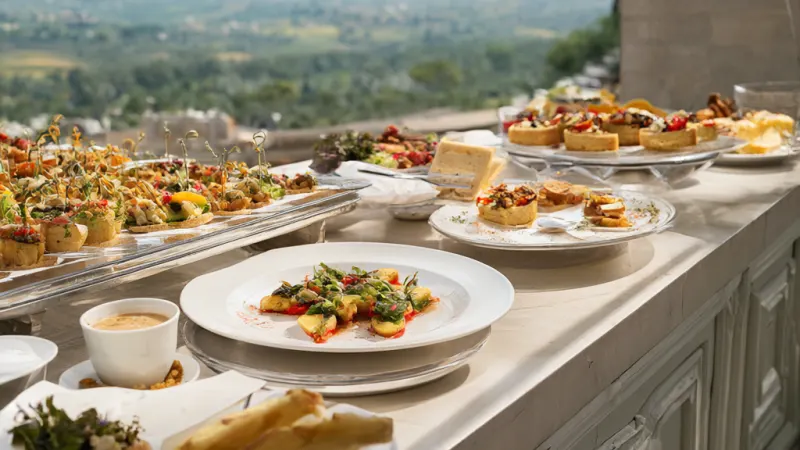
Bites to eat standing up. A spring example: croquettes and supplì (fried rice balls), fish tartare on spoons, bruschetta, ricotta and broad bean tartlets, cheeses with honey, a first course in a small bowl and a spoon dessert.
The price depends on how many pieces per person and how complex each piece is. A mini supplì and a prawn tartare do not cost the same. The apericena adds hot dishes and at least one first course, because it replaces dinner. For quantities, use the guide to food quantities per person.
Buffet
Guests serve themselves from one or more tables. An autumn example: roast vegetables, frittatas, spelt salad, a hot first course such as lasagne or rigatoni all'amatriciana, a main such as chicken with peppers, cheeses, desserts and fruit.
It usually costs less than a served meal with the same dishes, because it needs fewer waiters. The saving shrinks when there are many food stations, because each station needs its own staff.
Three served courses
Starter, first course, main with a side, plus dessert and coffee. A winter example: beef carpaccio with puntarelle, radicchio risotto, pork fillet with seasonal vegetables, chocolate fondant. In a Roman version: tonnarelli cacio e pepe, saltimbocca with sautéed chicory, ricotta and sour cherry tart.
This sits between the "simple lunch or dinner" (€20-50) and the "full basic menu" (€35-70). The price rises with table service, because every course has to be served and cleared for everyone at the same moment.
Four or five served courses
This adds a second starter, a second first course or a sorbet between courses. It is the classic structure of the gala dinner and the wedding banquet. Here the ranges are those of the elaborate dinner (€40-60 and more) and, for weddings, the average of around €125, which however also covers the aperitivo and desserts.
More courses mean more time, more crockery and more staff. Many couples today prefer three carefully made courses to five routine ones. Full examples are in the wedding menu examples.
Seafood menu
Raw fish, fried small fish, spaghetti alle vongole, catch from the Lazio coast. Industry guides note that a seafood menu raises the bill, but no source we have found measures the difference. The reason is simple: it depends on what is on the plate. Raw amberjack and marinated anchovies are worlds apart in price.
The most honest way to find out: ask the same caterer for the same menu in a meat version and a fish version.
Open bar
After the cake is cut, cocktails and spirits. It is almost always a separate item from the menu, priced by the hour, by consumption or per person. We have not found a reliable Italian price range. Industry guides confirm that a bar with only wine and beer costs less than a full bar with spirits. The formats are in the guide to the wedding open bar.
What moves the price within the same format
- Ingredients: raw fish, premium cuts and out-of-season produce cost more. Roman artichokes cost less in March than in October.
- Number of courses and pieces: this is the most direct lever.
- Cucina espressa (dishes cooked on site): it needs cooks on location and equipment.
- Staff: a served meal needs more waiters than a buffet. Industry guides suggest one waiter for every 15-20 guests for a served meal.
- Drinks: water, wine and coffee included or charged separately change the total a great deal.
- Number of guests: industry estimates indicate that with more guests the price per person can fall by 10-20%. It works the other way too: with few guests it rises.
- VAT: for catering with service it is normally 10%. Always check whether the price includes VAT.
Questions to ask the caterer
- Is the price per person inclusive or exclusive of VAT?
- How many pieces per person does the finger food include?
- How many courses are there, and are coffee and dessert included?
- Can you make me the same menu in a meat version and a fish version?
- Are drinks with the meal included? Which labels?
- Is the open bar by the hour, by consumption or per person? With how many bartenders?
- Are staff included in the menu price? For how many hours?
- Does the price change if the number of guests goes up or down?
- Which seasonal dishes would you suggest for my date?
Choosing the right menu
Start from the total budget, divide it by the number of guests and see which row of the table you fall into. Then choose the format that fits within it, including drinks and staff. The items usually left out of the price per person are in the guide to catering extra costs.
When you have a format and a number of guests, browse the list of caterers in Rome or those for apericena, and request a quote for the same menu from two or three suppliers.