In short
- For an aperitivo, industry estimates indicate €15-20 per person, for a simple lunch or dinner €20-50: these are national averages.
- The bill changes more between delivery on platters and a buffet with staff than between one menu and another.
- At home you save on the venue, but you need to think about space, crockery and rubbish.
- Always ask whether cake, drinks and VAT are included.
A birthday can be an aperitivo on a terrace in Monteverde, a 50th birthday party in a farmhouse outside Rome or an afternoon snack for children in the garden. The price of the buffet changes with the format, the number of guests and who handles the service. Here is how to find your way.
Indicative price ranges
There is no price list for a birthday buffet. There are, however, ranges by format published by Italian sources.
| Format | Indicative range per person |
|---|---|
| Basic apericena (an aperitivo generous enough to replace dinner) | around €10-20 |
| Aperitivo | €15-20 |
| Cocktail | €20-25 |
| Simple lunch or dinner | €20-50 |
| Full menu (starter, first course, main, side, dessert) | €35-70 |
The ranges overlap. A generous aperitivo with a hot first course and alcoholic drinks can cost as much as a simple dinner. The name of the format matters less than what is on the table and who serves it.
The three most common formats
Delivered buffet
Ready platters, delivered to your home or venue. You pay for food and transport. Everything else is up to you: setting up, keeping the buffet tidy, clearing away, dealing with rubbish. It works for parties at home with few guests, when someone in the family can lend a hand.
Buffet with staff
The caterer sets up the buffet, restocks it during the party and clears away at the end. The price goes up with the staff hours. Ask how many staff are planned and until what time: birthday parties tend to run long.
Apericena or party in a venue
The apericena replaces dinner: plenty of finger food, a few hot dishes, sometimes a pasta station. If the party is in a restaurant or a hall, the caterer may be the venue's own, or you can bring your own and pay the venue a fee. Ask before you book.
Home or venue: what changes on the bill
| Item | At home | In a hall or venue |
|---|---|---|
| Space hire | None | To pay, or included in the menu |
| Tables, chairs, crockery | Yours or hired | Often included |
| Kitchen for the caterer | Yours, if suitable | Usually available |
| Cleaning and rubbish | Your responsibility | Often the venue's |
| Neighbours and hours | To manage | Venue rules |
At home you save on hire, but you need room for the buffet, an empty fridge for drinks and a work surface for the caterer. Read the guide to catering at home to see what is really needed.
What to put on the buffet (and how much)
Industry guides suggest 4-6 pieces of finger food per person in the first hour and 2-3 for each hour after that: for a three-hour party that comes to around 8-12 pieces. For a short aperitivo before dinner, fewer will do. These are rough guidelines: you will find them explained in the guide to food quantities per person.
The birthday buffet has a few classics that people of all ages enjoy, and many caterers in Rome add a local speciality or two:
- pizza bianca and pizza rossa by the slice, also filled with mortadella;
- supplì (fried rice balls with a mozzarella centre) and croquettes, served hot;
- tramezzini, mini pizzas and savoury tarts;
- grilled vegetables, rice or grain salads, a baked pasta dish;
- in spring, mini artichokes; in summer, courgette flowers;
- for dessert, the cake, mini pastries, mini maritozzi or a fruit tart.
Street food (pizza, supplì, sandwiches) often costs less than elaborate finger food, and it is easier to serve to guests standing up.
Parties for little ones
If the birthday is a child's, the buffet changes. You need small portions, a few fried items served very hot, nothing spicy, soft drinks instead of wine and a dessert that is easy to eat with your hands. The accompanying adults eat too: count them in the quote as full guests, perhaps with an aperitivo of their own.
Items that push the price up
- Alcoholic drinks: wine, sparkling wine and cocktails can weigh as much as the food. Consider buying them yourself and ask whether the caterer charges to serve them.
- Cake: if it comes from the caterer, it is a separate item; if you bring it, there may be a cutting and serving fee.
- Staff overtime: every extra hour has a price.
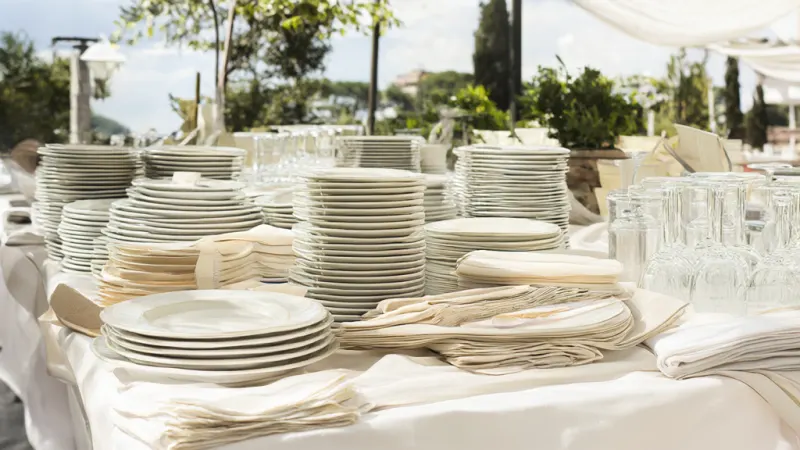
- Hire: tablecloths, ceramic plates, glassware, tables.
- Transport: a party in the Castelli Romani or on the coast costs more than a delivery in town.
- Minimum order: below a certain number of guests, the price per person goes up.
For the full list, read the guide to catering extra costs.
Questions to ask the caterer
- Is the price inclusive or exclusive of VAT?
- Is it delivery only, or are there staff? How many and until what time?
- How many pieces per person are planned?
- Are plates, glasses and tablecloths included? Disposable, or ceramic and glass?
- Is the cake included? If I bring it, is there a service charge?
- Are drinks included? Can I bring my own?
- Is there a children's menu or a reduced price for children?
- What is the minimum number of guests?
- Are there supplements for distance, or for a floor with no lift?
- Who takes the rubbish away at the end of the party?
How to spend less without looking short
Choose one format and do it well. A generous buffet with pizza, a first course, some fried items and a seasonal dessert is worth more than six kinds of skimpy finger food. Settle the number of guests early: last-minute changes cost money. And ask for two or three quotes with the same information, so you can compare them item by item.
If you are looking for caterers who do parties, see the birthday caterers or the guide to private parties in Rome. When you have a date, guests and a place, you can request a quote with no obligation.