In short
- Three formats: delivery, buffet with staff, chef and service at home. Price and space needed increase in that order.
- Before asking for a quote, measure space, sockets and fridge: the caterer will ask about them.
- In an apartment building, the building rules and the normal tolerability of noise are what count.
- Agree who takes away tableware and rubbish.
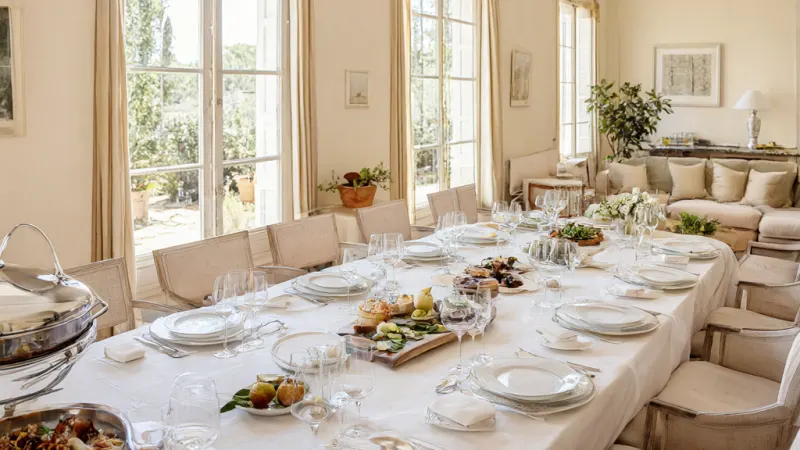
A party at home has the advantage of intimacy and of a venue you do not pay for. It also carries a risk: spending the evening in the kitchen. Home catering exists precisely to avoid that, but it works well only if your home is ready to receive it. Here is how to organise it, from a flat in Prati to a small house in Infernetto.
The three formats
| Format | What the caterer does | What is left to you | Suits |
|---|---|---|---|
| Delivery | Brings ready platters | Laying out, serving, clearing, rubbish | Small parties, aperitivi |
| Buffet with staff | Sets up the buffet, restocks it, clears away | Space and welcoming guests | Birthdays, graduations, christenings |
| Chef and service at home | Cooks on site and serves at the table | Kitchen and dining room available | Seated dinners, anniversaries |
Delivery is the simplest: just ask about the time and how the dishes arrive (hot, cold, to be reheated). With a buffet with staff you pay for the staff's hours but enjoy the party. Cooking to order at home (dishes prepared on the spot rather than arriving ready-made) gives the result closest to a restaurant, but needs a real kitchen and a few hours of work before the guests arrive.
What your home needs
Space
Think of three zones: where the buffet goes, where the caterer works and where the guests are. Guides on buffet receptions suggest about three metres of table for every twenty guests. In an average Roman living room this often means using two tables in different rooms, or moving the buffet onto the terrace.
Kitchen
Depending on the format, the caterer will ask for:
- clear worktops;
- oven and hob, if it reheats or cooks on site;
- an empty, or nearly empty, fridge for drinks and cold dishes;
- a sink for water;
- somewhere to put crates and containers.
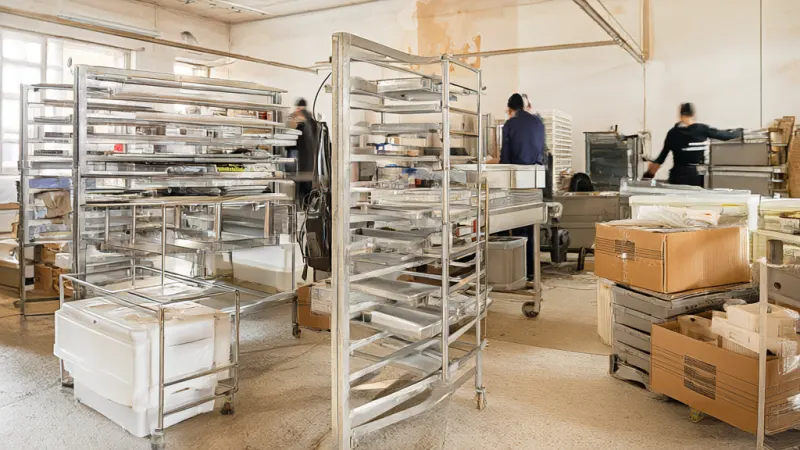
Many caterers bring their own food warmers, portable fridges and hotplates. Ask what they bring, so you know what to clear.
Power
Ovens, hotplates, coffee machines and portable fridges use a lot of power. Many Italian homes have a limited contracted power supply, and the meter can trip if everything is switched on at once. Check the power on your electricity bill and pass it on to the caterer: it will tell you whether precautions are needed, such as spreading appliances across different sockets or bringing gas equipment.
Bathroom and cloakroom
It sounds like a detail, but with 40 guests a single bathroom means a queue. Also plan where coats and bags will go in winter.
The apartment building
A private party at home does not usually need a council permit. But the rules of living together still apply.
The building rules. They may govern the use of the entrance hall, courtyard, lift and shared roof terrace, and set quiet hours. Read them beforehand, especially if the caterer has to pass through with trolleys or use shared spaces.
Noise. The Italian Civil Code (article 844) refers to the normal tolerability of nuisances, noise included. There is no single threshold that applies to everyone. Letting the neighbours know and setting a time for the music to stop almost always avoids problems.
Lift and stairs. The caterer will bring crates, insulated containers, sometimes tables. If the lift is small or there is none, say so when asking for the quote: more carrying by hand means more time and sometimes more staff.
For a party on a terrace, the guide to terrace parties in Rome covers wind, load limits and neighbours.
Arrival, parking and ZTL
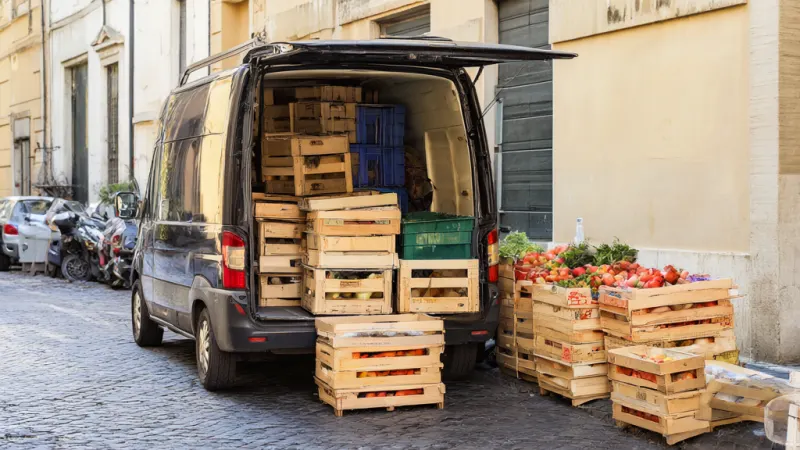
A van has to stop near the front door to unload. In many parts of Rome this is not easy. Tell the caterer:
- the exact address and floor;
- whether you are inside a ZTL (restricted traffic zone): in that case vehicle access needs a permit and follows set hours, as Roma Mobilità explains;
- whether there is a private driveway, a courtyard or somewhere to stop;
- what time it can arrive to set up.
In the historic centre, in Trastevere or in Rione Monti, it is worth asking who handles the permit. Outside the centre, in EUR or Roma Nord, the problem is more often parking.
Food safety and allergies
Anyone preparing and transporting food for an event must follow food hygiene law, starting with Regulation (EC) 852/2004 (the so-called HACCP system). As a client you can ask how hot and cold dishes are transported and how long they spend out of the fridge.
On allergens, the caterer must be able to tell you which ones the dishes contain, as EU Regulation 1169/2011 requires. If a guest is coeliac or has a serious allergy, say so straight away: in a home kitchen the risk of cross-contamination needs careful handling. You will find the general rules in the guide to special diets; for the details, check the official sources.
Rubbish and tidying up
At the end of a party there is a lot left over: plates, glasses, leftovers, bottles. Agree beforehand:
- whether the tableware belongs to the caterer and it takes it away dirty;
- whether it is disposable and who gets rid of it;
- who sorts the recycling and where it is left.
If your neighbourhood has door-to-door collection, the collection days are fixed: bear this in mind, especially for glass.
Questions to ask the caterer
- Which format do you suggest: delivery, buffet with staff or cooking at home?
- What do you need in the kitchen: oven, hob, fridge, worktops?
- What equipment do you bring?
- How much power do you need? Can we manage everything on the home supply?
- What time do you arrive and how long does set-up take?
- How many staff come and until what time do they stay?
- How do you handle stairs, a small lift or no lift?
- Do you take care of the ZTL permit?
- How do you transport hot and cold dishes?
- How do you handle allergies and coeliac disease in a home kitchen?
- Who takes away the tableware and rubbish?
To finish
Home catering works when the caterer knows your home before it arrives. Send the measurements, two photos of the kitchen and living room, the floor and the address: the quote will be more precise and the day of the party free of surprises.
For a party at home, look at the caterers for private parties or, for an aperitivo, the guide to the apericena at home. When you have the information, you can request a quote from several caterers.
Sources
- Regulation (EC) No 852/2004 on the hygiene of foodstuffs, EUR-Lex: https://eur-lex.europa.eu/legal-content/IT/TXT/?uri=CELEX:32004R0852
- Regulation (EU) No 1169/2011, EUR-Lex: https://eur-lex.europa.eu/legal-content/IT/TXT/?uri=CELEX:32011R1169
- Roma Mobilità, ZTL and permits: https://romamobilita.it/it/servizi/ztl