In short
- A good theme rests on a few strong elements: a backdrop, the lighting, the table, the uniforms.
- Rome offers ready-made themes: Dolce Vita, ancient Rome, Italian formal garden, Roman trattoria.
- The caterer translates the theme into menu, table setting and service.
- Materials and structures must respect the venue's rules: check first.
A themed event gives guests a clear idea as soon as they walk in: where they are and what kind of evening awaits them. It works for a birthday party, a product launch or a corporate dinner. But a badly done theme, with too many scattered objects, looks like a fancy-dress party. This guide helps you plan one with restraint.
How a theme is built
A theme is not a pile of decorations. It is a choice that runs through five elements:
| Element | What to do |
|---|---|
| Entrance | The first impression: a backdrop, an arch, a symbolic object |
| Lighting | Colour and intensity change the period and the atmosphere |
| Table | Tablecloths, plates, glasses and centrepieces that match |
| Music | The theme's soundtrack, even at low volume |
| People | Staff uniforms, any dress code for guests |
If you work on these five points, the theme comes across even on a modest budget. Extra props come later.
Roman themes
Dolce Vita
The reference is Federico Fellini's film and the Rome of Via Veneto. It works for evening parties, birthdays and corporate events with international guests.
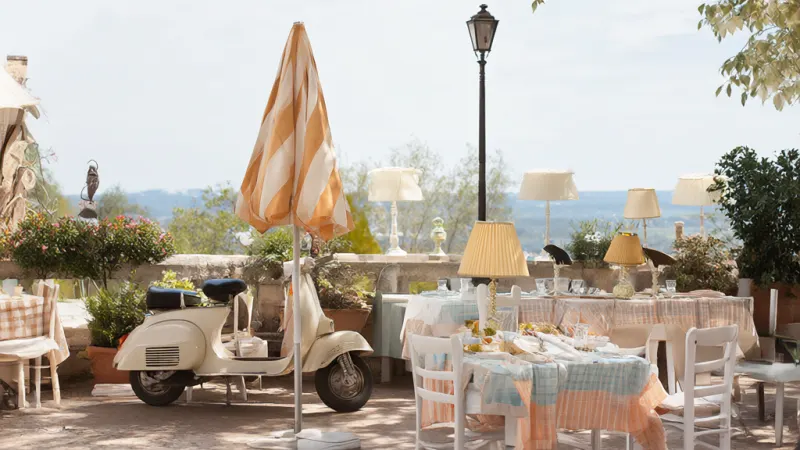
- Decor: black and white, warm lights, a Vespa or a vintage car at the entrance, Sixties-style photographs, a themed photo wall.
- Table: white tablecloths, coupe glasses, simple flowers.
- Menu: an Italian-style aperitivo, with spritz and sparkling wine, then classic Roman dishes such as cacio e pepe and saltimbocca.
- Music: Italian songs from the Fifties and Sixties.
Ancient Rome
Columns, drapes, olive, bay laurel, amphorae. It is a strong theme: use it sparingly so it doesn't slide into parody.
- Decor: columns and capitals, white and purple fabrics, olive and laurel, oil lamps (or lights that imitate them).
- Table: wood, terracotta, metal goblets, rustic bread.
- Menu: a nod to the ingredients of antiquity (honey, spelt, pulses, cheeses, olives, grapes). The recipes that have come down to us, such as those attributed to Apicius, are far from today's tastes: ask the caterer for a reinterpretation, not a reconstruction.
Italian formal garden
The reference is the historic Roman villas, with hedges, fountains and citrus trees in pots. It works for weddings and for spring and summer parties.
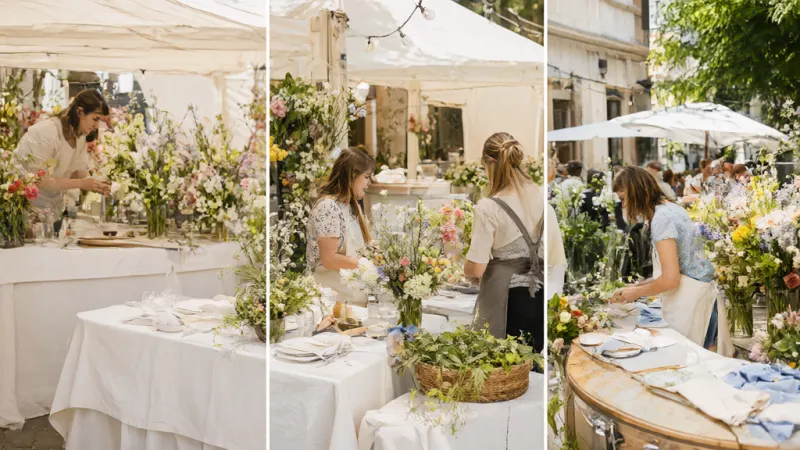
- Decor: lemon and orange trees in pots, box hedging, white flowers, statues or busts, lanterns.
- Table: linen tablecloths, white or hand-painted plates.
- Menu: seasonal vegetables, citrus fruit, herbs, fruit desserts.
Roman trattoria
For informal parties, birthdays and team building.
- Decor: checked tablecloths, straw-covered wine flasks, chalkboards with a handwritten menu, warm lights.
- Menu: supplì (fried rice balls), pizza bianca, carbonara, amatriciana, tiramisù or ricotta and sour cherry tart.
- Service: dishes in the middle of the table for sharing.
For Roman street food at a party, you will find ideas in the guide to Roman street food for events.
Other popular themes
| Theme | Key elements | Suits |
|---|---|---|
| The Twenties | Gold, black, feathers, crystal, jazz | Evening parties, corporate galas |
| Mediterranean | White and blue, ceramics, lemons, olive | Summer parties, weddings on the coast |
| Enchanted forest | Green, wood, moss, small lights | Autumn parties, children's events |
| Christmas | Green, red, gold, warm lights | December corporate dinners |
| Industrial | Metal, bare bulbs, raw wood | Corporate events, product launches |
For the Christmas theme there is a dedicated guide to Christmas decor for events.
Themes for corporate events
At a corporate event the theme must serve the message: a product launch, an anniversary, an award. The risk is that the theme hides the brand. It works when:
- the theme recalls a value or a story of the company;
- the theme's colours and the brand's colours sit well together;
- the stage and the branding stay legible.
Branding, stages and decor for companies are explained in the guide to decor for corporate events.
Lighting does half the work
A badly lit backdrop is a wooden panel. The same backdrop with the right lighting becomes a set. Ask the decorator to design lighting and set together, and read the guide to event lighting.
The caterer's role
The caterer can contribute to the theme in many ways:
- a menu that fits, even with just one signature dish;
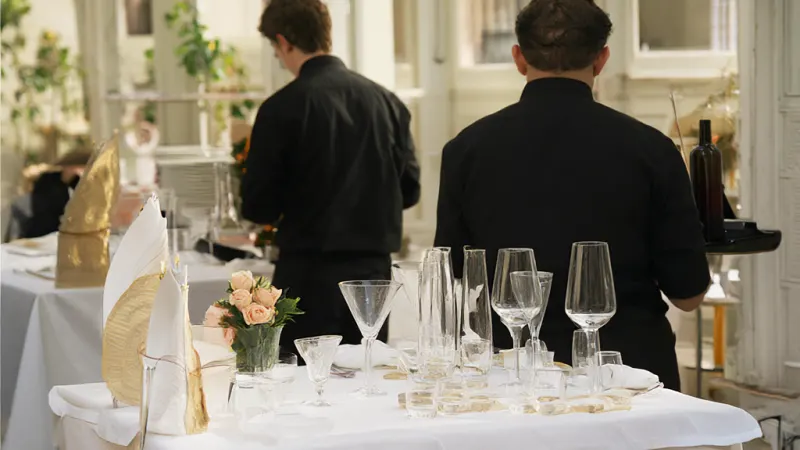
- a matching table setting: tablecloths, plates, glasses;
- signs and printed menus in the style of the theme;
- staff uniforms (for example waistcoats and bow ties for the Twenties);
- themed cocktails at the bar.
Discuss it at the tasting, and ask what costs extra.
Rules and safety
- Materials: in places open to the public, fabrics, panels and decorations may need a certified fire-reaction rating.
- Structures: tall backdrops and large structures must be assembled by professionals, with the required paperwork.
- Historic venues: many Roman villas and palazzi forbid fixings on walls, floors and trees.
- Open flames: real oil lamps and candles are not always allowed.
- Escape routes: no set may block them.
Ask the venue for its rules and share them with the decorator and the caterer.
The guests' dress code
A theme works better when guests join in, but not everyone likes dressing up. A few rules:
- suggest, don't impose: "smart dress with a Sixties touch" is easier than "costume required";
- put it in the invitation, with an example;
- have accessories at the entrance (hats, scarves, sunglasses) for those who arrive without;
- at corporate events, keep it understated: the theme is in the room, not necessarily in the clothes.
Questions to ask the decorator and the caterer
- Have you done this theme before? Can we see photos of real events?
- Which three or four elements make the theme clear?
- Do the materials have the required fire-reaction certification?
- How do you fix the set without damaging the venue?
- How long do set-up and take-down take?
- Can the caterer adapt menu, table and uniforms to the theme? At what cost?
- Who coordinates lighting, set and catering on the day?
- What does the quote include: transport, set-up, take-down?
To finish
A successful theme is made of a few well-chosen elements and suppliers who work together. You will find decorators and set designers on the page event decor in Rome and caterers for parties in the private parties section. When you have the theme, date and guest numbers, request a quote.