In short
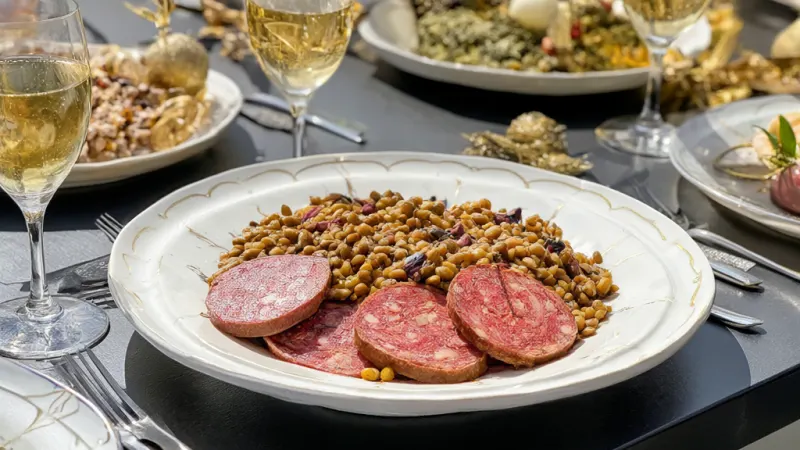
- The heart of the menu is national: lentils with cotechino or zampone just after midnight.
- The Roman touch comes from the season: Romanesco broccoli, puntarelle, chicory, fried food, pangiallo.
- A well-built cenone has light courses before midnight and a hot dish after the toast.
- Quantities depend on how long the party lasts: with music until late, plan a snack after 1am.
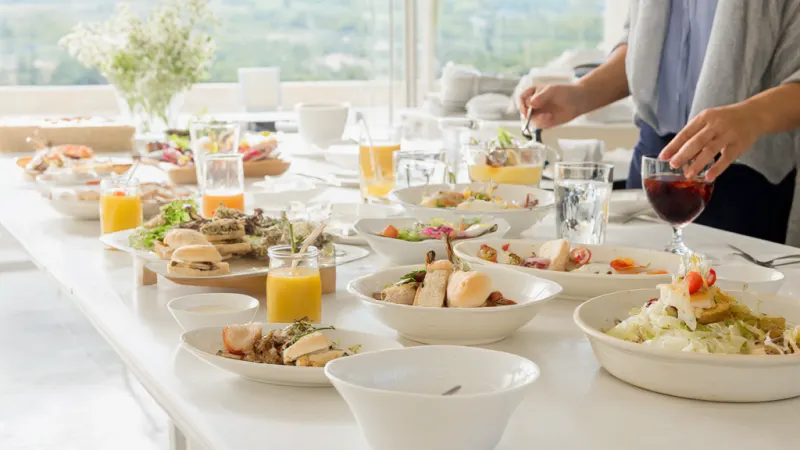
A New Year's Eve menu in Rome brings together two things: the midnight ritual, the same all over Italy, and the produce of the Roman winter. If you're working with a caterer, the point isn't to invent new dishes but to spread the courses well over an evening that lasts five or six hours.
Roman dishes are one option: many caterers in Rome also offer seafood, creative or international menus for New Year's Eve. The midnight ritual and the spacing of courses apply to all of them; for organising the evening, there's the guide to New Year's Eve catering in Rome.
The midnight ritual: lentils and cotechino
Lentils and cotechino (or zampone) are served after the toast, hot, in small portions. The tradition is national: lentils, small and round, recall coins and wish everyone a prosperous year.
Cotechino and zampone are Emilian products protected as IGP with the name "Modena". Cotechino is stuffed into a casing, zampone into the skin of a pig's trotter. Zampone makes more of a show if carved in front of the guests; cotechino is easier to portion.
Ask the caterer:
- whether it uses an IGP product or an artisan cotechino (and where it comes from);
- how it cooks it: pre-cooked to reheat, or raw and cooked for hours;
- whether it prepares the lentils separately for those who don't eat pork.
The Roman touch: December produce
At the end of December the Roman vegetable garden is full of winter vegetables. They're the basis for starters and sides with a clear identity.
- Romanesco broccoli, in batter or as a side.
- Puntarelle (chicory shoots) with an anchovy, garlic and vinegar dressing: a fresh starter that lightens the evening.
- Sautéed chicory, in the pan with garlic and chilli.
- Artichokes: according to Turismo Roma, Romanesco artichokes are available from January to May, so at New Year they're the first of the season and not always available. Ask the caterer whether it can get them.
- Fried food: battered salt cod, fried broccoli, mini supplì (fried rice balls).
For dessert, alongside panettone and pandoro, there's pangiallo, a Roman Christmas cake with dried fruit, nuts, honey and candied peel. You'll find more ideas in the guide to Roman desserts for events and in the calendar of seasonal produce in Rome.
Two sample menus for the cenone
These are examples to take to the caterer as a starting point, not fixed menus. Every caterer has its own style and will suggest variations.
Meat menu
| Moment | Dishes |
|---|---|
| Aperitivo (9pm) | Mini supplì, pizza bianca with mortadella, pecorino romano with honey, olives |
| Starter | Puntarelle with anchovies, chicory and pecorino flan |
| First course | Tonnarelli cacio e pepe or a seasonal lasagne |
| Main course | Roast veal with roast potatoes and Romanesco broccoli |
| Dessert (11pm) | Pangiallo, panettone, dried fruit and nuts |
| Midnight | Lentils with cotechino or zampone, spumante |
| After 1am | Spaghetti with garlic, oil and chilli (the end-of-party spaghettata) |
Seafood menu
| Moment | Dishes |
|---|---|
| Aperitivo (9pm) | Battered salt cod, fried broccoli, crostini with anchovies |
| Starter | Warm seafood salad, puntarelle |
| First course | Linguine with clams or pasta and broccoli in skate broth |
| Main course | Baked sea bass or sea bream with potatoes |
| Dessert (11pm) | Pangiallo, panettone, citrus fruit |
| Midnight | Lentils with cotechino (or lentils on their own), spumante |
Pasta and broccoli with arzilla (skate) is a dish from the Roman festive tradition: Roman guests love it, and it may surprise those from elsewhere. Ask to taste it at the tasting. For more ideas on the city's cooking, read the Roman cuisine catering menu.
How much you need
The quantities below are approximate: they depend on how many courses come before, the guests' ages and how long the party lasts. Use them to check the quote is reasonable, then trust the caterer's calculation.
| Item | Approximate quantity per person | Note |
|---|---|---|
| Lentils | A small tasting portion | After a full cenone nobody eats a whole plate |
| Cotechino or zampone | Two or three slices | Many guests take just one |
| Spumante for the toast | One glass, plus a margin | A 75 cl bottle fills about 6 flutes |
| End-of-year desserts | A slice of panettone or pangiallo | Plus dried fruit, nuts and citrus on the table |
| Snack after 1am | A small plate of pasta | Only if there's dancing until late |
The 6 flutes per bottle is simple arithmetic: 75 cl divided by a glass of about 12-13 cl. For all the other items (starters, pasta, drinks) you'll find tables in the guide to how much food per person at a buffet.
Drinks: from the toast to after dinner
At midnight you need bubbles. You can choose an Italian traditional-method or Charmat-method spumante, or stay in Lazio with a local sparkling wine. For dinner, local wines work well: a white such as Frascati with fish, a red such as Cesanese with roasts and cotechino. You'll find an overview in the guide to Lazio wines for events.
Also plan:
- plenty of water, still and sparkling;
- an alcohol-free alternative for the toast (for children, teetotal guests, drivers);
- coffee and amari after dessert.
Diets and allergies
On New Year's Eve you often have guests who don't eat pork, vegetarians or people with allergies. Collect their needs when you invite them, then pass them to the caterer with names and numbers.
- No pork: lentils cooked separately and an alternative to cotechino.
- Vegetarians and vegans: lentils are already plant-based, just don't dress them with the cotechino fat.
- Coeliac disease: watch out for fried food, pangiallo and panettone, which usually contain gluten.
EU Regulation 1169/2011 requires anyone serving food to give information on the 14 allergens for unpackaged dishes too: ask for the menu's allergen sheet. For more, there's the guide to special diets.
Questions to ask the caterer
- Is the menu you're proposing designed for 31 December, or is it your standard menu?
- Are the vegetables (puntarelle, broccoli, artichokes) in season, and where do they come from?
- Are the cotechino and zampone IGP or artisan? How do you cook them?
- Are the lentils included in the price or an extra?
- Can you prepare a pork-free and a vegetarian alternative?
- How many bottles of spumante do you plan? Can we bring our own?
- Do you plan a snack after 1am? How much does it cost?
- Can we have a tasting in November?
- Will you give us the allergen sheet for all the dishes?
To finish
A good New Year's Eve menu doesn't need to amaze: it needs to arrive hot at midnight and leave room for the party. Take one of the sample menus to the caterer, ask for its variations and compare several proposals. You'll find caterers who work at the end of the year on the New Year's Eve catering page and, if you want to organise the evening from scratch, the guide to New Year's Eve catering in Rome. Once you have the number of guests, request a quote.
Sources
- Turismo Roma, "I prodotti della campagna romana: le verdure romanesche protagoniste in cucina": https://turismoroma.it/it/node/127323
- Consorzio Zampone e Cotechino Modena IGP: https://www.modenaigp.it
- Regulation (EU) No 1169/2011, EUR-Lex: https://eur-lex.europa.eu/legal-content/IT/TXT/?uri=CELEX:32011R1169