In short
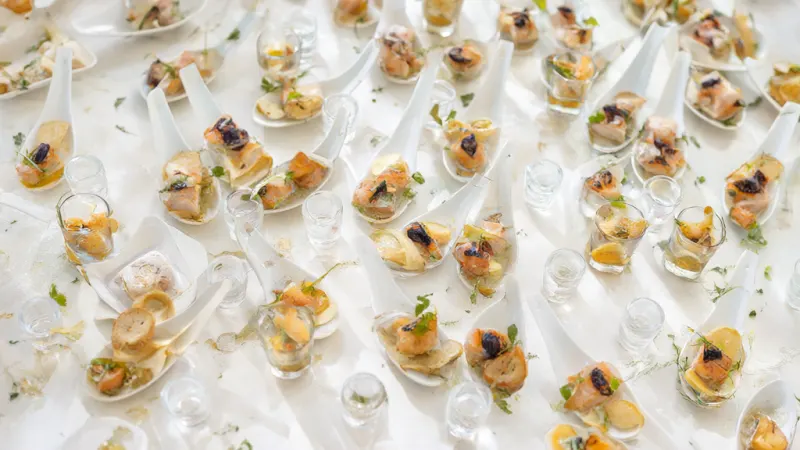
- Finger food works if each piece can be eaten in one or two bites, without a knife.
- Quantities are approximate: they change a lot depending on whether the finger food is an aperitivo or replaces dinner.
- The season decides the ingredients: artichokes in spring, courgette flowers in summer, mushrooms and chestnuts in autumn.
- Mix hot and cold, fried and not fried, and include plant-based and gluten-free pieces.
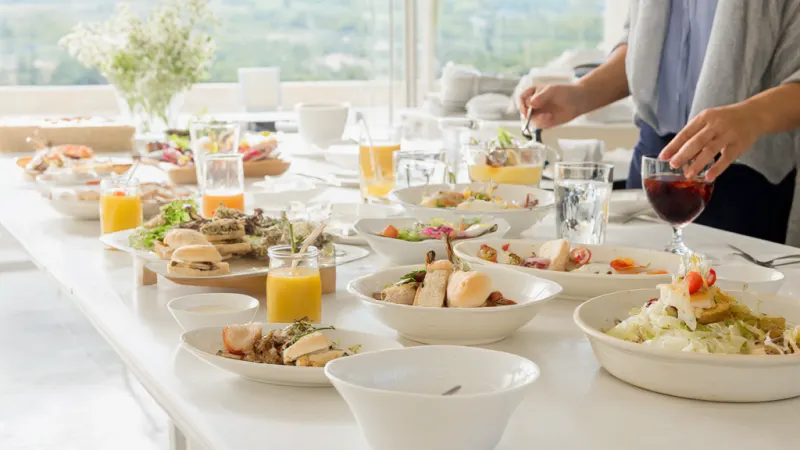
Finger food is the most common format in Rome for wedding drinks receptions, openings, graduation parties and terrace parties. A tray and a napkin are all it takes, and guests move around and talk. To do it well you need to make three choices: how many pieces, which pieces, and how to serve them.
What makes good finger food
A piece of finger food has to pass four tests.
- It can be eaten standing, with one hand, while the other holds a glass.
- It doesn't drip on clothes and formal outfits.
- It holds up over time: it is still good ten minutes after leaving the kitchen.
- It is recognisable: guests can tell what they are eating, or the waiter can tell them.
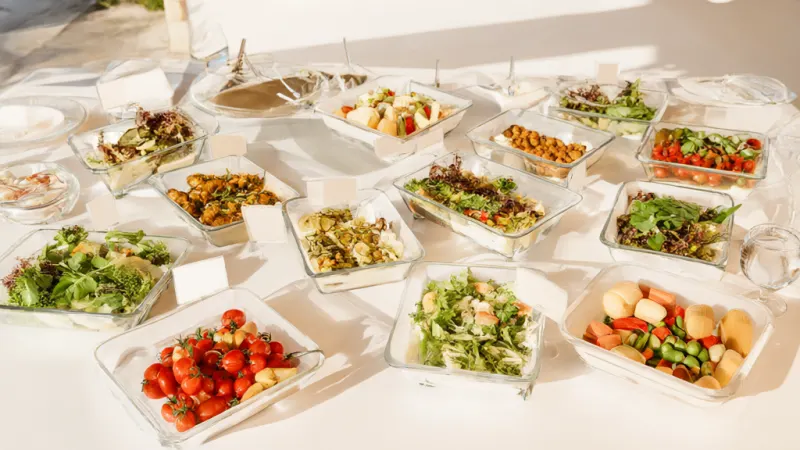
There are three common formats. Tray service (waiters move among the guests), the buffet (guests help themselves from the stations) and food stations (themed points, sometimes with a cook preparing food on the spot). Many events combine them.
How many pieces per person
There is no standard or official statistic. The figures in the table are approximate: caterers often use them as a starting point, but they depend on the time, the length of the event, the guests' ages and what comes next.
| Situation | Pieces per person (approx.) | Notes |
|---|---|---|
| Aperitivo before a served dinner | 6-10 | 45-60 minutes, dinner follows |
| Long wedding drinks reception (60-90 minutes) | 10-15 | Often with one or two food stations |
| Opening or 2-hour afternoon event | 8-12 | Guests coming and going |
| Finger food instead of dinner | 18-25 | With at least one bowl dish or a pasta course |
| Sweet finger food at the end of the evening | 2-4 | On top of the cake, if there is one |
Two practical rules:
- After 7pm people are hungry. An evening event with no dinner afterwards needs more pieces and something substantial, such as pasta served in a small cup.
- Less variety, more pieces of each type. Ten different types with one piece each create queues and disappointment. Five or six types, well repeated, work better.
To work out drinks and overall quantities, read the guide on how much food to plan for a buffet.
Finger food ideas by season
Every cuisine has dishes that suit a miniature format: Mediterranean, seafood, international, and Roman too. Below you'll find mixed ideas by season, with the produce Rome's caterers find fresh at that time. The calendar is approximate: the weather and the year can shift the windows by a few weeks. For artichokes, Turismo Roma gives the season as January to May, at their peak in March and April.
Spring
- Roman-style artichokes in wedges, on a crostino or in a spoon
- Mini Jewish-style fried artichokes (carciofi alla giudia), fried to order
- Fresh broad beans and pecorino romano in a small cup, the May classic
- A small glass of warm vignarola, a Roman spring vegetable stew
- Salmon tartare with asparagus, mini pea quiches
- Mini roll with pulled lamb (abbacchio) and chicory
Summer
- Courgette flowers with mozzarella and anchovy, battered and fried
- Concia, marinated fried courgettes, on rustic bread
- Stuffed cherry tomatoes, panzanella in a glass
- Aubergine parmigiana in cubes
- Melon and prosciutto skewers, or watermelon and feta for those who don't eat meat
- Gazpacho in a shot glass, fish ceviche in a spoon
Autumn
- Crostino with sautéed mushrooms
- Figs and prosciutto, while they last
- Mini supplì (fried rice balls) cacio e pepe or amatriciana style
- Mini burgers or bao with pulled pork
- Glazed chestnuts among the desserts
- Bruschetta with the new season's olive oil, at the end of the season
Winter
- Puntarelle (chicory shoots) with anchovy dressing in a small cup
- Meatballs in tomato sauce in a spoon
- Pasta e ceci in a small hot glass
- Romanesco broccoli tempura
- Battered salt cod, a classic of Roman fried food
- Mini mushroom vol-au-vents, savoy cabbage rolls
The full calendar is in the guide to seasonal produce. If you'd like an aperitivo of Roman cooking, many of these pieces come back in the guide to the Roman cuisine catering menu.
Hot, cold and fried: how to balance
An all-fried aperitivo becomes tiring after the third piece. An all-cold one feels like a packed lunch. The rule many caterers use is to alternate:
| Type | Examples | Watch out for |
|---|---|---|
| Cold | Crostini, tartare, small cups of vegetables | Cold chain on hot days |
| Hot, not fried | Meatballs, pasta in small cups, oven-baked bites | Food warmers and timing |
| Fried | Supplì, courgette flowers, tempura, olive ascolane (stuffed fried olives) | Fryer on site or reheating |
| Sweet | Choux buns, mini tarts, mini cheesecakes, mini maritozzi (Roman cream buns) | Cream and custard in the heat |
Fried food is at its peak straight from the fryer. If the venue doesn't allow a fryer (terraces, historic halls in the centre), ask how the pieces will be reheated and try the result at the tasting.
Service: trays, buffet or food stations
Tray service keeps things orderly and reaches guests who don't move around, such as grandparents and seated guests. It does, however, need more waiters.
The buffet usually costs less in staff, but creates queues if there are few stations. Plan more serving points for more guests.
Food stations get people moving: a sushi or raw seafood station, one with cured meats sliced on the spot, one with cheeses, one with pizza by the slice. They work well for long drinks receptions. Always ask the caterer how many staff they plan for each station.
Special diets and allergens
EU Regulation 1169/2011 requires information on the 14 allergens for food that is not pre-packed, so finger food too. In practice:
- ask for the allergen matrix for each piece;
- plan labels at the buffet with symbols for vegan, vegetarian and gluten-free;
- include at least two or three plant-based pieces and two or three gluten-free pieces prepared separately;
- for coeliac guests, be careful with fried food: a dedicated oil and fryer are needed.
You'll find the detail in the guide to catering for special diets.
Questions to ask the caterer
- How many pieces per person do you plan for my format and time of day?
- How many different types, and how many pieces of each?
- Is fried food made on site? Does the venue need power or gas?
- Is service by tray, buffet or mixed? How many waiters?
- What happens if the pieces run out before the end of the event?
- Do you have an allergen matrix and labels for the buffet?
- Which pieces are vegan and which gluten-free, and how do you keep them separate?
- Does the menu change if I move the event to another season?
- Can I taste the main pieces before signing?
Before asking for a quote
Give the caterer three details: number of guests, time, and whether the finger food is an aperitivo or the meal. With this information, quotes become comparable. You can explore the caterers in the finger food section and, when you're ready, request a quote from several suppliers.
Sources
- Turismo Roma, "I prodotti della campagna romana: le verdure romanesche protagoniste in cucina": https://turismoroma.it/it/node/127323
- Regulation (EU) No 1169/2011, EUR-Lex: https://eur-lex.europa.eu/legal-content/IT/TXT/?uri=CELEX:32011R1169